
Why Protein Fills You Up on Fewer Calories
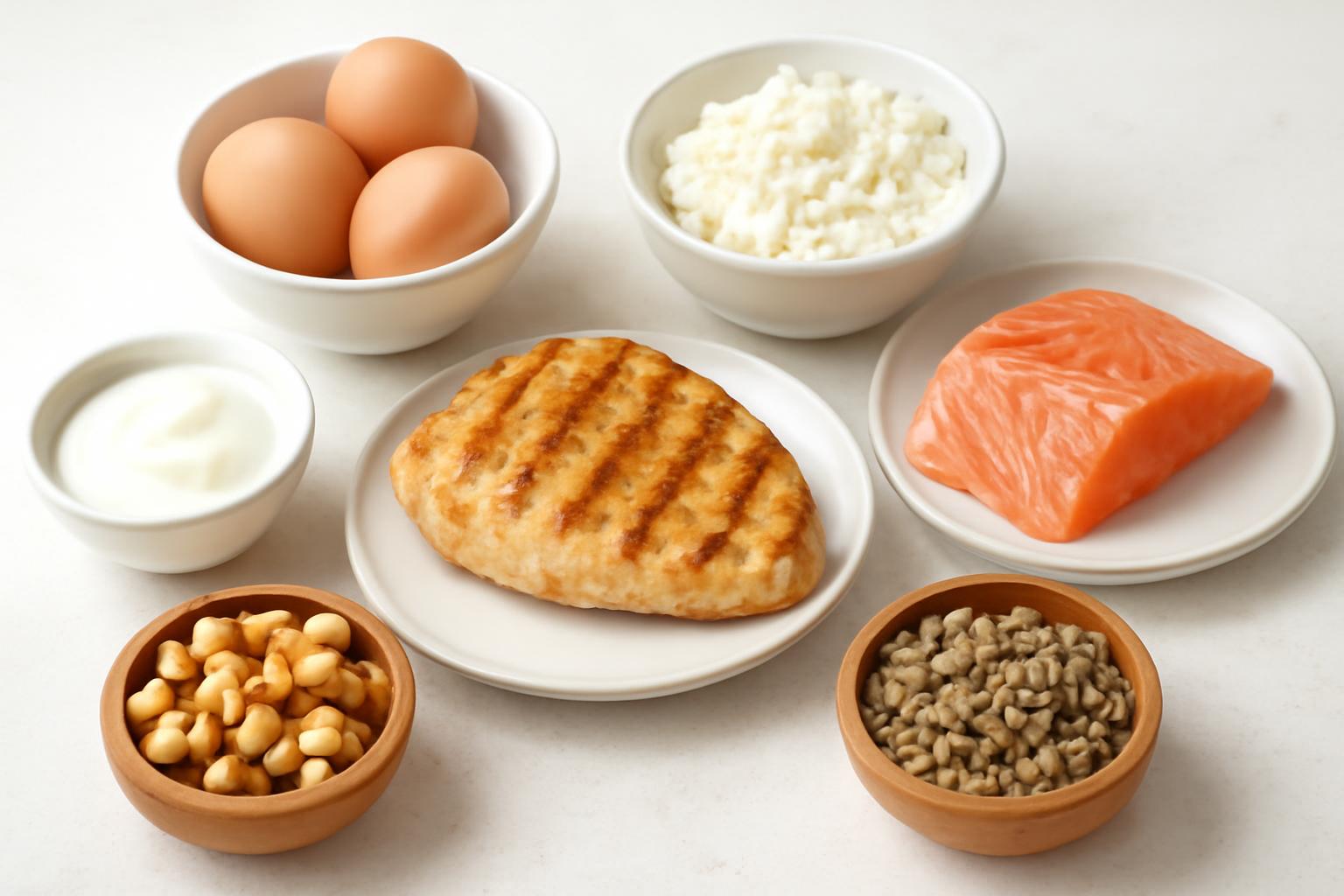
Lentils require nearly 13 kcal to deliver 1 g of protein, versus 4.7 kcal for egg whites. They add useful volume without matching lean proteins' efficiency.
Protein’s reputation for satiety is not marketing. There are three distinct mechanisms behind it, and together they explain why two diets with identical calorie counts can produce very different hunger levels and body composition outcomes.
Mechanism 1: Thermic effect reduces net calories
Protein costs 20–30% of its own calories to digest and absorb. This is the thermic effect of food (TEF). Eat 100 kcal of chicken breast and your body nets roughly 70–80 kcal of usable energy. The same 100 kcal of fat costs only 0–3 kcal to process; carbohydrates cost 5–10 kcal.
Practical consequence: a diet supplying 160g protein/day has an effective TEF cost of 128–160 kcal compared to roughly 32–40 kcal for the same calories from carbohydrates. That 90–120 kcal difference in net energy is meaningful over weeks.
Mechanism 2: Hormonal signaling
Protein stimulates peptide YY (PYY) and GLP-1 — both satiety hormones — more strongly than carbohydrates or fat. It also suppresses ghrelin (the hunger hormone) for longer post-meal. A 2005 study by Weigle et al. published in the American Journal of Clinical Nutrition found that increasing protein from 15% to 30% of calories caused spontaneous calorie intake to drop by 441 kcal/day without intentional restriction.
Mechanism 3: Protein turnover and muscle retention
In a calorie deficit, adequate protein intake preserves lean mass. This matters for calorie counting because muscle tissue burns roughly 13 kcal/kg/day at rest, versus approximately 4.5 kcal/kg/day for fat tissue. Losing muscle while losing weight reduces BMR — which is why two people who both lose 10 kg can end up with different maintenance calorie requirements depending on how much of that loss was fat versus lean mass.
The research consensus for deficit diets places optimal protein at 1.6–2.2g per kg of body weight per day for maintaining lean mass. At 75 kg body weight that is 120–165g protein/day.
Calorie density of common high-protein foods
| Food | Protein (per 100g) | Calories (per 100g) | kcal per gram of protein |
|---|---|---|---|
| Chicken breast (cooked) | 31g | 165 kcal | 5.3 |
| Egg whites (raw) | 11g | 52 kcal | 4.7 |
| Nonfat Greek yogurt | 10g | 59 kcal | 5.9 |
| Canned tuna (water) | 26g | 116 kcal | 4.5 |
| Lentils (cooked) | 9g | 116 kcal | 12.9 |
| Cottage cheese (2%) | 11g | 90 kcal | 8.2 |
| Tofu (firm) | 8g | 76 kcal | 9.5 |
| 80% lean ground beef (cooked) | 26g | 254 kcal | 9.8 |
The “kcal per gram of protein” column is the useful tracking metric. Chicken breast, canned tuna, and egg whites deliver the most protein per calorie. Ground beef delivers similar protein but at roughly double the calorie cost per gram, due to fat content.
What the numbers mean for tracking
If your goal is a high-protein, moderate-calorie diet:
- Prioritize lean animal proteins and nonfat dairy as your primary sources. They have the best protein-to-calorie ratios and the highest leucine content (which drives muscle protein synthesis).
- Legumes are useful volume food but are not efficient protein sources by calorie — lentils require nearly 13 kcal to deliver 1g of protein compared to 4.7 kcal for egg whites.
- Protein supplements (whey, casein) have ratios of roughly 4–5 kcal/g protein, comparable to lean meat, but provide no additional micronutrients.
The practical floor for protein intake when tracking calories is 1.2g/kg body weight. Below that threshold, evidence suggests accelerated muscle loss during deficit and reduced satiety signaling. Above 2.4g/kg there is diminishing return in body composition outcomes for most people.