
Gluten-Free Doesn't Mean Low Carb
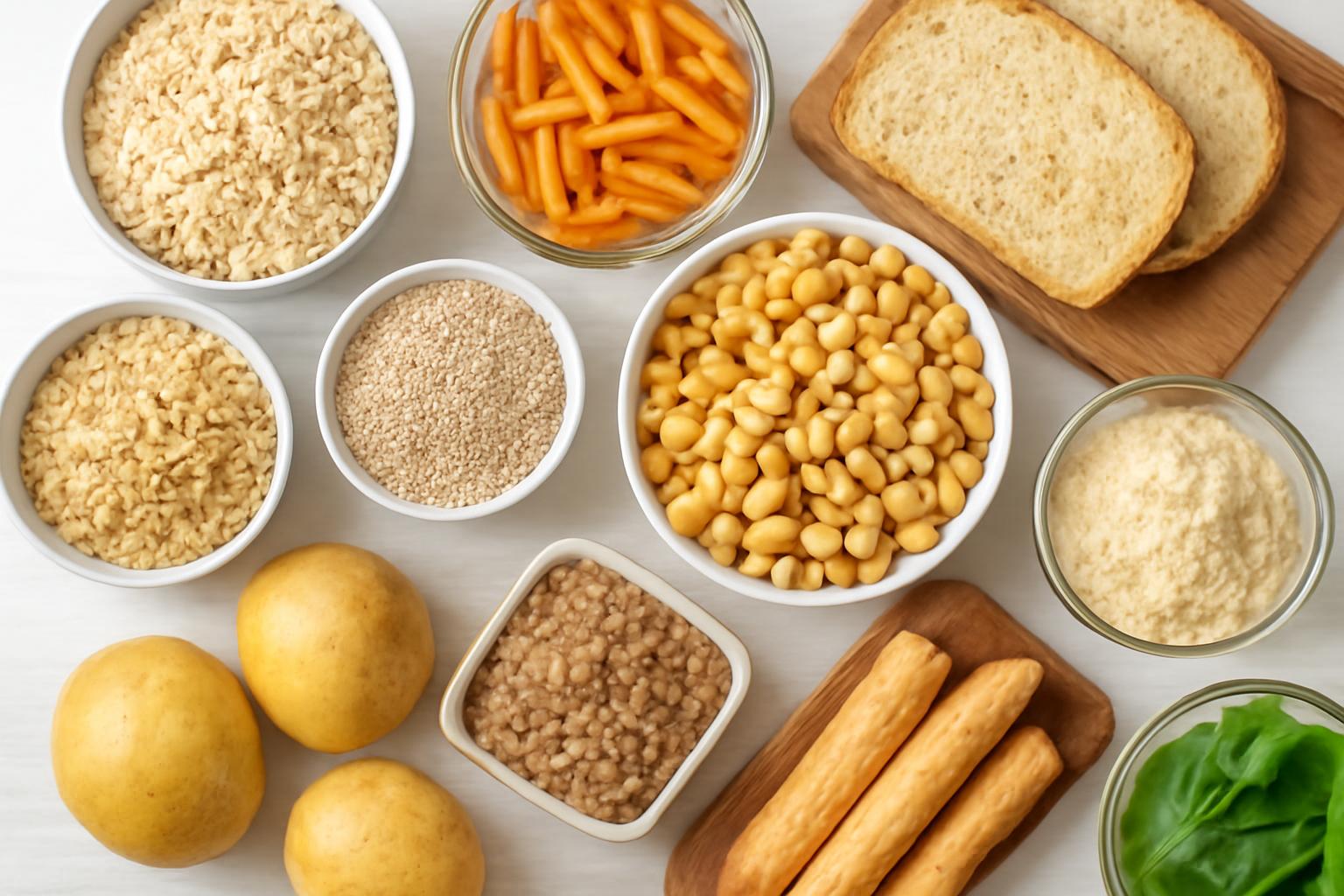
Gluten-free does not mean low carb. Carb quantity comes from Total Carbohydrate per serving, not the gluten-free claim.
No. Gluten-free food is not automatically low in carbohydrates. “Gluten-free” describes whether a food contains gluten, a group of proteins associated with wheat, barley, and rye. “Low carb” describes the amount of carbohydrate in a food or eating pattern. Those are different questions, so a product can be gluten-free and still contain a substantial amount of carbohydrate.
The practical shortcut is simple: use the gluten-free statement and ingredient list to evaluate gluten, then use the serving size and Total Carbohydrate line to evaluate carbs. Do not use one label claim as a substitute for the other.
Gluten and carbohydrate measure different things
The Celiac Disease Foundation defines gluten as the general name for proteins found in wheat, rye, barley, and triticale. Carbohydrate, by contrast, is a nutrient category that includes starches, sugars, and fiber.
That distinction creates four possible combinations:
| Food or product type | Gluten-free? | Low carb? | What decides it |
|---|---|---|---|
| Plain eggs | Naturally gluten-free | Usually very low in carbohydrate | The food itself, plus any added ingredients |
| Rice, potatoes, or gluten-free pasta | Can be gluten-free | Not automatically | Starch and the amount in one serving |
| Wheat-gluten products such as seitan | No | May have relatively little carbohydrate | Wheat gluten remains gluten even when the carb count is modest |
| A packaged snack or meal | Depends on formulation | Depends on its Nutrition Facts | The gluten claim, ingredients, serving size, and Total Carbohydrate all matter |
This is why gluten-free and low carb sometimes overlap without being synonyms. Removing wheat flour may remove one common source of both gluten and starch, but a manufacturer can replace it with rice flour, corn flour, potato starch, tapioca starch, sugar, or another carbohydrate-containing ingredient.
Why gluten-free foods can still be high in carbs
Many naturally gluten-free foods contain carbohydrate. Rice, potatoes, quinoa, and fruit are examples that do not need wheat, barley, or rye to provide starch or sugar. The FDA also notes that fruits, vegetables, and eggs can be naturally gluten-free; those examples span a wide range of carbohydrate levels.
Packaged substitutes make the difference especially visible. Gluten-free bread, crackers, cereal, cookies, and pasta still need structure and texture. Their recipes often rely on gluten-free grains and starches rather than eliminating carbohydrate.
For a concrete example, the current Canadian product page for Barilla Gluten Free Penne describes pasta made from corn and rice. The product is certified gluten-free, but corn flour and rice flour remain starch-based ingredients. That makes it a valid gluten-free pasta, not a promise that the pasta is low carb.
Formulas, package sizes, and nutrition panels can vary by product and market. Treat any example as an illustration, then read the package you are actually using.
Gluten-free foods that may be lower in carbs
Some foods happen to meet both descriptions. Examples can include plain eggs, unbreaded fish or meat, oils, and many non-starchy vegetables. Whether a packaged or prepared version still qualifies depends on what has been added. Breading, batter, sauces, marinades, sweeteners, and side dishes can change the carbohydrate count, gluten status, or both.
The reverse case matters too: a food can be low in carbohydrate but contain gluten. Seitan is made from wheat gluten. Some sauces, seasoning mixes, malt-containing products, and breaded foods can also introduce wheat or barley even when the main ingredient is otherwise low in carbs. The Foundation’s gluten guide lists less-obvious places where wheat or barley can appear, including sauces, salad dressings, soups, and malt products.
The useful conclusion is not that one food category is universally better. It is that each label answers a different question:
- Gluten-free: Does the food meet the applicable gluten standard?
- Total Carbohydrate: How many grams of carbohydrate are listed for one labeled serving?
- Calories: How much energy is listed for that serving?
- Sugars: How much of the carbohydrate is listed as sugar?
Calories, sugars, gluten, and total carbohydrate are related to food composition, but none of them can stand in for all the others.
How to check a packaged food correctly
1. Verify the gluten claim separately
In the United States, FDA rules require foods carrying a gluten-free claim to contain less than 20 parts per million of gluten and to meet ingredient restrictions. That standard is about gluten exposure; it does not set a carbohydrate limit. For an unpackaged restaurant dish, ask how the dish is prepared and whether the restaurant’s gluten-free claim follows the same standard.
2. Start with the serving size
The FDA’s Nutrition Facts guide explains that every nutrient amount on the panel refers to the labeled serving. If a package lists 20 grams of carbohydrate per serving and you eat two servings, the amount consumed is 40 grams. Compare products only after putting their serving sizes on equal footing.
3. Read Total Carbohydrate, not a front-label shortcut
Use the grams beside Total Carbohydrate for the labeled serving. Do not infer that number from a gluten-free badge, the calorie count, or the grams of sugar. Dietary fiber and sugars are components reported within the carbohydrate section, but the Total Carbohydrate line is the direct label value for this question.
4. Check the ingredients and the current package
Ingredients explain why two products with the same name can differ. A gluten-free loaf based on rice flour and tapioca starch will not have the same carbohydrate panel as one based on seeds and eggs. Recipes also change, and versions sold in different countries may use different serving sizes. Recheck both the gluten claim and Nutrition Facts instead of relying on an old online list.
Common questions
Is gluten a carbohydrate?
No. Gluten is a group of proteins. It often appears in foods that also contain carbohydrate because wheat-based bread and pasta contain both wheat proteins and starch, but that overlap does not make gluten a carbohydrate.
Is gluten-free bread lower in carbs than regular bread?
Not by definition. Either product may have more or less carbohydrate depending on its recipe and serving size. Compare the Total Carbohydrate grams for equal amounts and confirm the gluten-free claim separately.
Does gluten-free mean keto?
No. A gluten-free product can still be based on rice, corn, potato, tapioca, or sugar. A keto-labeled product can also contain wheat-derived ingredients. Neither term proves the other; the package must support both claims independently.
The bottom line
Gluten-free answers a protein and food-safety question; low carb answers a carbohydrate-quantity question. Some foods fit both categories, but many do not. For a packaged food, verify the gluten claim, read the serving size, and then check Total Carbohydrate. People managing celiac disease or another diagnosed condition should follow their clinician’s guidance rather than using a carb number to judge gluten safety.