
Decoding Margarita Alcohol Strength: From Recipe ABV to Standard Drink Equivalents
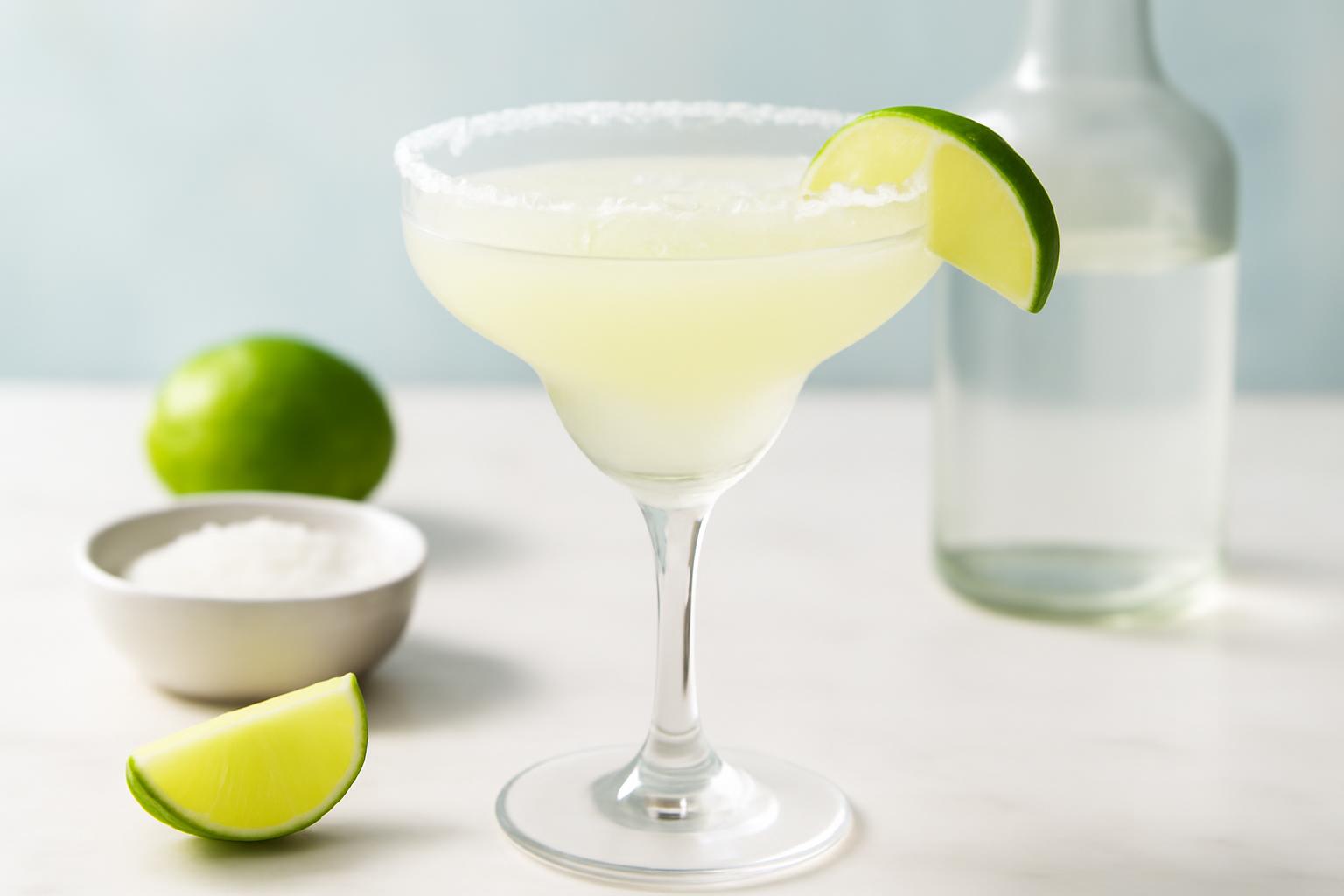
A classic 2 oz tequila plus 1 oz orange liqueur build has about 1.2 oz pure alcohol. Dilution changes its ABV when served up, on rocks or frozen.
A margarita is easy to underestimate because it tastes bright, cold, and citrusy rather than obviously spirit-forward. For anyone logging intake, that matters. Depending on the recipe, a single margarita can land much closer to two U.S. standard drinks than to one.
That is why the useful question is not just “what percent alcohol is in a margarita?” It is also: how much pure alcohol went in, how much water ended up in the glass after shaking or blending, and how large was the finished serving? Those are the numbers that make tracking cleaner, whether you are estimating calories, alcohol grams, or drink intake inside a broader TDEE Explained routine.
One quick note on units before the math starts: cocktail recipes in the U.S. usually use fluid ounces, and that is what “oz” means throughout this article. The approach here is the same recipe-first method used across CaloriePages and the measured drink guides collected in our CaloriePages articles: glass name second, actual pour first.
How Food Labels Calculate Calories (And Where the Number Can Be Wrong): Food labels use the Atwater system, not direct measurement. Here’s how the 4-4-9 factors work, why they allow a 20% margin of error, and what that means for tracking.
What Alcohol Content Means for Cocktails Like Margaritas
For cocktails, ABV means alcohol by volume: the volume of pure alcohol divided by the total volume of the finished drink, multiplied by 100. The total volume includes everything in the glass, including juice, syrup, and water added by shaking or melting ice, which is why cocktail ABV is a recipe calculation rather than a fixed label number (Franklin & Sons).
That definition matters, but ABV by itself is not the best tracking number. A smaller cocktail can have a higher ABV than a larger one while still containing less total alcohol. For intake logging, the more useful figures are pure alcohol volume, alcohol grams, and standard-drink equivalents. Margaritas vary more than beer or wine because both the recipe and the dilution vary more from one version to the next.
In U.S. standard-drink terms, the familiar benchmark is 1.5 oz of 40% spirits, 5 oz of wine, or 12 oz of beer. That spirits example contains 0.6 oz of pure alcohol, which is the comparison point that helps translate a cocktail into “how many drinks is this really?” (Grey Goose).
If you think in grams instead of ounces, the same logic still applies. The 120 ml margarita example discussed later is listed at 26 g of alcohol and 1.86 standard drinks, which implies the usual U.S. convention of roughly 14 g of alcohol per standard drink (DrinkMeter).
The practical takeaway is simple: use ABV to understand concentration, but use pure alcohol to understand intake. A margarita that tastes “lighter” because of lime, sweetness, or dilution may still contain a full cocktail’s worth of spirits.
Classic Margarita Recipe and Baseline Alcohol Content
A very common classic build is 2 oz tequila at 40% ABV, 1 oz orange liqueur at 40% ABV, and 1 oz lime juice. The pure alcohol math is straightforward: 2 × 0.40 = 0.8 oz from the tequila, plus 1 × 0.40 = 0.4 oz from the orange liqueur, for a total of 1.2 oz of pure alcohol. If you then assume a shaken drink finishes at about 5.3 oz after roughly 25% added water from ice, the result is about 22.6% ABV (Cocktail Democracy).
That baseline is useful because it describes a realistic homemade or properly built bar margarita: not a tiny undiluted shot in a stemmed glass, but a shaken sour with citrus and some dilution. It also explains why the drink can feel softer than it is. Lime and meltwater change concentration and texture, but they do not remove alcohol.
There is no single universal margarita ratio, though. Contemporary references still cluster around tequila, citrus, and sweetness, but not in exactly the same proportions. For example, Liquor.com’s house recipe uses 2 oz blanco tequila, 0.5 oz orange liqueur, 1 oz lime juice, and 0.5 oz agave syrup, which is still recognizably in the same tequila-sour family even though it shifts where the sweetness comes from (Liquor.com).
A similar point shows up in bartender-style recipe summaries that place the classic margarita around 2 oz tequila with roughly 0.75 to 1 oz triple sec and roughly 0.75 to 1 oz lime juice. The exact balance changes, but the drink usually remains tequila-led rather than turning into a completely different alcohol profile.
It also helps to keep different published examples separate instead of compressing them into one “average” number. A smaller 120 ml, or 4 oz, margarita example is listed at 27.5% ABV with 26 g of alcohol, 1.86 standard drinks, and 200 total calories. That is a different finished drink from the 5.3 oz shaken example above, not proof that every classic margarita is simultaneously all of those values at once (DrinkMeter).
For logging, the clean baseline is this: if your drink resembles the classic 2 oz tequila plus 1 oz orange liqueur build, treat it as about 1.2 oz of pure alcohol before you start worrying about whether it was served up, on the rocks, or frozen. That works out to about 2 U.S. standard drinks by the 0.6 oz benchmark.
Key Ingredients and Their Impact on Strength
The biggest drivers of alcohol content in a margarita are the tequila and the orange liqueur. Practical consumer guides commonly put tequila in roughly the 35% to 55% ABV range and triple sec or similar orange liqueurs around 15% to 40% ABV, while classic margaritas as mixed drinks often land around 20% to 30% ABV once everything is assembled (Batchwell).
That means two margaritas that look nearly identical can differ a lot in actual alcohol. If you hold the recipe ratio constant and switch from a 35% tequila to a 50% tequila, pure alcohol rises immediately. The same happens if you swap a lower-proof triple sec for a stronger orange liqueur. “Same recipe” on paper is not the same drink unless the bottle strengths match too.
Using the tequila and triple-sec ranges above together with the classic 5.3 oz shaken finish from the representative recipe, you can see how wide the band gets even before you change serving style:
| Build | Ingredients | Pure alcohol before dilution | Approx. ABV in a 5.3 oz finished drink |
|---|---|---|---|
| Lower-proof | 2 oz tequila at 35% + 1 oz triple sec at 15% + 1 oz lime | 0.85 oz | 16.0% |
| Middle build | 2 oz tequila at 40% + 1 oz liqueur at 30% + 1 oz lime | 1.10 oz | 20.8% |
| Higher-proof | 2 oz tequila at 50% + 1 oz liqueur at 40% + 1 oz lime | 1.40 oz | 26.4% |
These are simple arithmetic examples, but they explain why generic app entries for “margarita” are noisy. A tequila-forward build with a strong orange liqueur can be materially more alcoholic than a sweeter, lower-proof house version even if both are sold under the same menu name.
By contrast, lime juice, agave syrup, sour mix, simple syrup, and fruit purées change total volume but not alcohol amount. They lower final ABV by dilution, not by subtraction. A sweeter margarita may therefore taste less boozy while containing the same alcohol as a tarter one.
That distinction matters for calorie trackers too. Flavor intensity, sweetness, and smoothness affect perception; they do not tell you what the actual intake was. If you want a better estimate, the first things to check are the ounces poured and the ABV printed on the tequila and liqueur bottles.
Dilution and Preparation Effects
Preparation method changes margarita strength more than many casual drinkers realize. In recipe-based cocktail comparisons, a common shaken-drink assumption is about 25% added volume from ice melt, which is how a 4 oz ingredient build becomes a finished drink of roughly 5.3 oz. The same comparison also notes that drinks served over ice keep softening as the ice melts, so their ABV changes over the life of the drink even though the total alcohol does not (Cocktail Democracy).
That is the key split to remember:
- Alcohol in determines intake.
- Water in determines concentration.
If you put 1.2 oz of pure alcohol into a shaker tin, you still have 1.2 oz of pure alcohol after shaking. What changes is how much total liquid carries it and therefore how strong it tastes sip to sip.
A margarita served up is mostly done diluting once it is strained. A margarita on fresh rocks continues to dilute in the glass. A frozen margarita starts from a more diluted state because the blender incorporates much more ice. Those drinks can begin with similar spirit amounts but present them very differently.
That is why “this one tasted weaker” is not the same as “this one contained less alcohol.” A large frozen restaurant margarita may have a lower ABV than a short shaken serve, but if the glass is much bigger, total alcohol can still be substantial.
For trackers, the cleanest way to think about preparation is to answer two separate questions every time:
-
How much alcohol went in? This is the intake question.
-
How much total liquid ended up in the glass? This is the ABV question.
Once those are separated, most margarita math becomes much less confusing.
Margarita Variations: Classic vs Frozen vs Others
Variation names are less informative than ingredient amounts. “Classic,” “frozen,” “skinny,” and “Tommy’s” tell you something about style, but they do not tell you exact intake unless you also know the pour.
As a broad family range, classic margaritas are often estimated around 20% to 30% ABV, while frozen versions are often estimated around 15% to 20% because the extra ice increases dilution (Batchwell).
The biggest practical split is therefore classic versus frozen, but even that can mislead if you ignore serving size. A modest frozen margarita may truly be lower in concentration. A giant frozen margarita may still deliver a lot of alcohol simply because the serving is so large.
Tommy’s Margarita is a good example of why names alone are unreliable. In the standard description, it swaps orange liqueur for agave syrup rather than keeping both, which changes sweetness and often lowers alcohol if a full ounce of liqueur disappears from the drink. But the exact result still depends on the tequila pour and the finished size of the drink (Liquor.com).
“Skinny” margaritas work the same way. Lower sugar does not automatically mean lower alcohol. A skinny margarita only becomes meaningfully lighter on alcohol if the recipe uses smaller pours, lower-proof ingredients, or substantially more nonalcoholic volume.
Fruit, spice, and premium-label variations are equally unreliable signals. Strawberry purée, jalapeño, salt, Tajín, or a better tequila can change the flavor dramatically without changing intake very much. The menu label is therefore less useful than the ounces that actually went into the shaker.
For home bartending, this is a good reason to save your own default recipe in your notes app or tracker. For restaurant drinking, ask about pour size if you care about accuracy. Even a rough answer like “two ounces of tequila and half an ounce of orange liqueur” is far more useful than “house margarita.”
How to Calculate Alcohol Content in Your Margarita
If you want the exact alcohol content of your own margarita, use a simple three-step formula.
Step 1: Calculate pure alcohol from each alcoholic ingredient. Multiply each alcoholic ingredient’s volume by its ABV, then add those results together.
Step 2: Estimate total finished volume. Add all ingredients, then add the likely dilution from shaking, blending, or melting ice.
Step 3: Divide pure alcohol by total finished volume and multiply by 100. That gives you final ABV (Franklin & Sons).
So the classic 2:1:1-style example looks like this:
- 2 oz tequila at 40% ABV = 0.8 oz pure alcohol
- 1 oz orange liqueur at 40% ABV = 0.4 oz pure alcohol
- 1 oz lime juice = 0 oz alcohol
- total pure alcohol = 1.2 oz
If the drink finishes at about 5.3 oz after shaking, then:
- 1.2 ÷ 5.3 = 0.226
- 0.226 × 100 = 22.6% ABV
If you want alcohol in grams rather than fluid ounces, the conversion is short enough to do by hand. Using 29.6 mL per fluid ounce and an ethanol density of about 0.789 g/mL, 1.2 oz of pure alcohol is about 35.5 mL, and 35.5 × 0.789 comes out to roughly 28 g of alcohol. The same conversion logic appears in a worked margarita example where 1.15 oz of pure alcohol converts to about 26.9 g (Mathematics Stack Exchange).
That grams step is useful because many trackers handle alcohol better when you think in either grams or standard drinks. Once you know that a specific margarita contains about 28 g of alcohol, you no longer have to guess what “one margarita” means inside an app.
A second useful example is the tequila-heavy variation from that same grams calculation. A drink with 2.5 oz of 40% tequila and 0.5 oz of 30% triple sec contains 1.15 oz of pure alcohol, or about 26.9 g, before you count dilution. That is slightly less pure alcohol than the classic 2 oz tequila plus 1 oz 40% liqueur build, even though the tequila pour is larger, because the orange liqueur contribution is smaller and weaker.
Home pours versus bar pours are where many logs go wrong. A federal mixed-drink calculator notes that different bars, restaurants, and people often make the “same” cocktail somewhat differently, which is exactly why two margaritas with the same name can produce different numbers (NIAAA).
A few practical habits improve the estimate a lot:
- measure your tequila pour instead of eyeballing it
- check the actual ABV on the orange liqueur bottle
- count juice, syrup, and mix in total volume even though they add no alcohol
- assume more dilution for frozen drinks than for shaken drinks
- if the drink is served on the rocks, remember that ABV falls over time while total alcohol stays the same
If your goal is intake tracking rather than bartending perfection, you do not need two decimal places. But recipe-specific math is still far better than treating every margarita as “one drink.”
Comparisons: Margarita vs Beer, Wine, and Cocktails
Relative to U.S. standard servings, the classic 1.2 oz pure-alcohol margarita example is heavy. A representative 12 oz beer at 6% ABV contains 0.72 oz of alcohol, a 5 oz wine at 12% contains 0.6 oz, and the classic margarita example contains 1.2 oz (Cocktail Democracy).
Using the 0.6 oz standard-drink benchmark from the earlier ABV discussion, that comparison translates like this:
| Drink | Serving assumption | Pure alcohol | Approx. U.S. standard drinks |
|---|---|---|---|
| Beer | 12 oz at 6% ABV | 0.72 oz | 1.2 |
| Wine | 5 oz at 12% ABV | 0.60 oz | 1.0 |
| Margarita | classic shaken example | 1.20 oz | 2.0 |
That table is the simplest way to compare a margarita with beer or wine: not by whether it tastes harsh, but by how much pure alcohol it actually contains.
Against other cocktails, a representative margarita also sits in the stronger middle of the pack. In one recipe-based comparison using common ratios and dilution assumptions, a margarita was listed at 22.5% ABV with 1.2 oz of alcohol, compared with 1.31 oz for a Manhattan and 1.57 oz for a Mai Tai (Cocktail Democracy).
That matters because ABV alone can mislead. A margarita can have a lower concentration than a neat spirit or a short stirred cocktail and still contain more total alcohol than people expect because the serving is larger. For tracking, alcohol per serving beats percent alcohol in the glass almost every time.
Some consumer roundups quote margaritas closer to 33% ABV. One Pennsylvania DUI-law blog gives an approximate margarita figure of about 33% ABV while also stressing that mixed-drink strengths are only rough estimates that vary by brand, proof, mixers, and ice melt (Pennsylvania DUI lawyer blog).
In practical terms, that means a margarita is not “basically one light beer,” but it is also not a fixed object with one immutable number. The recipe tells you more than the glass name does.
Calories from Alcohol in Margaritas for Trackers
Alcohol contributes most of a margarita’s calories in many standard builds. In the published 120 ml, or 4 oz, margarita example discussed earlier, the drink is listed at 27.5% ABV, 26 g of alcohol, and 200 total calories, with about 182 of those calories coming from alcohol alone. That works out to about 7 kcal per gram of alcohol in that example, leaving only a small remainder for sugars and mixers.
That gives you a practical shortcut for logging:
- estimate alcohol grams
- multiply by about 7 kcal per gram
- add calories from syrup, juice, mix, or fruit
For the classic 1.2 oz pure-alcohol recipe example, the same conversion logic puts alcohol alone at roughly 28 g and therefore about 196 alcohol calories before you count sweetener or juice calories (Mathematics Stack Exchange).
This is a useful place to separate alcohol calories from cocktail calories.
Alcohol calories are real calories, but they are not especially filling in the way protein-heavy foods often are, a point explored in our piece on Protein and Calorie Density.
For tracking purposes, the right mindset is approximation rather than false precision. As our About page explains, number-based nutrition works best when you understand where the estimate came from and how much confidence it deserves. Cocktails are especially sensitive to pour size, proof, and dilution.
A workable logging rule looks like this:
- If the drink matches the classic 2 oz tequila + 1 oz 40% orange liqueur build: think roughly 1.2 oz pure alcohol, about 28 g alcohol, about 2 standard drinks, and roughly 196 alcohol calories before mixer calories.
- If the drink matches the smaller published 120 ml example: think 26 g alcohol, 1.86 standard drinks, and about 182 alcohol calories inside a 200-calorie drink.
Those are not the same margarita. They are two distinct, plausible margarita profiles. Keeping them separate fixes a lot of the confusion that shows up in drink logs.
The bottom line for trackers is straightforward: margaritas are trackable, but only if you estimate the actual recipe rather than the menu label. If you know the pours, the math is manageable. If you do not, your best move is to log a realistic range instead of a fake exact number.
Because bars vary, recipes vary, and individual responses vary, recipe math is useful for intake tracking but not for judging real-time impairment or blood alcohol concentration. Use it as a logging tool, not as a substitute for judgment.
What is the average ABV of a classic margarita?
A practical default is the low- to mid-20s ABV after dilution for a classic shaken margarita rather than one fixed universal number. Think of 20% to 30% as the broad family range and about 22.5% to 22.6% as a representative recipe-based example (Batchwell; Cocktail Democracy).
How much pure alcohol in a standard margarita serving?
A common classic build with 2 oz of 40% tequila and 1 oz of 40% orange liqueur contains about 1.2 oz of pure alcohol; dilution changes concentration, but not that alcohol amount (Cocktail Democracy).
Why is frozen margarita weaker?
Usually because the blender adds much more ice and therefore much more water to the finished drink. The alcohol may be similar to a shaken version, but it is spread through more total liquid, so the ABV falls.
Margarita standard drinks equivalent?
One published 120 ml margarita example is listed at 26 g of alcohol and 1.86 standard drinks, which is a good reminder that one cocktail can easily exceed one standard drink (DrinkMeter).
Tequila proof range for margaritas?
Published consumer guides commonly put tequila used in margaritas in about the 35% to 55% ABV range, with 40% ABV, or 80 proof, as a common baseline for standard recipes (Batchwell).
This article is for informational purposes only and is not medical, legal, or dietary advice. Drink responsibly and do not drive after drinking. For site policies, see our Terms of Use and Privacy Policy.