
Calculate Your Gin and Tonic in Real Time
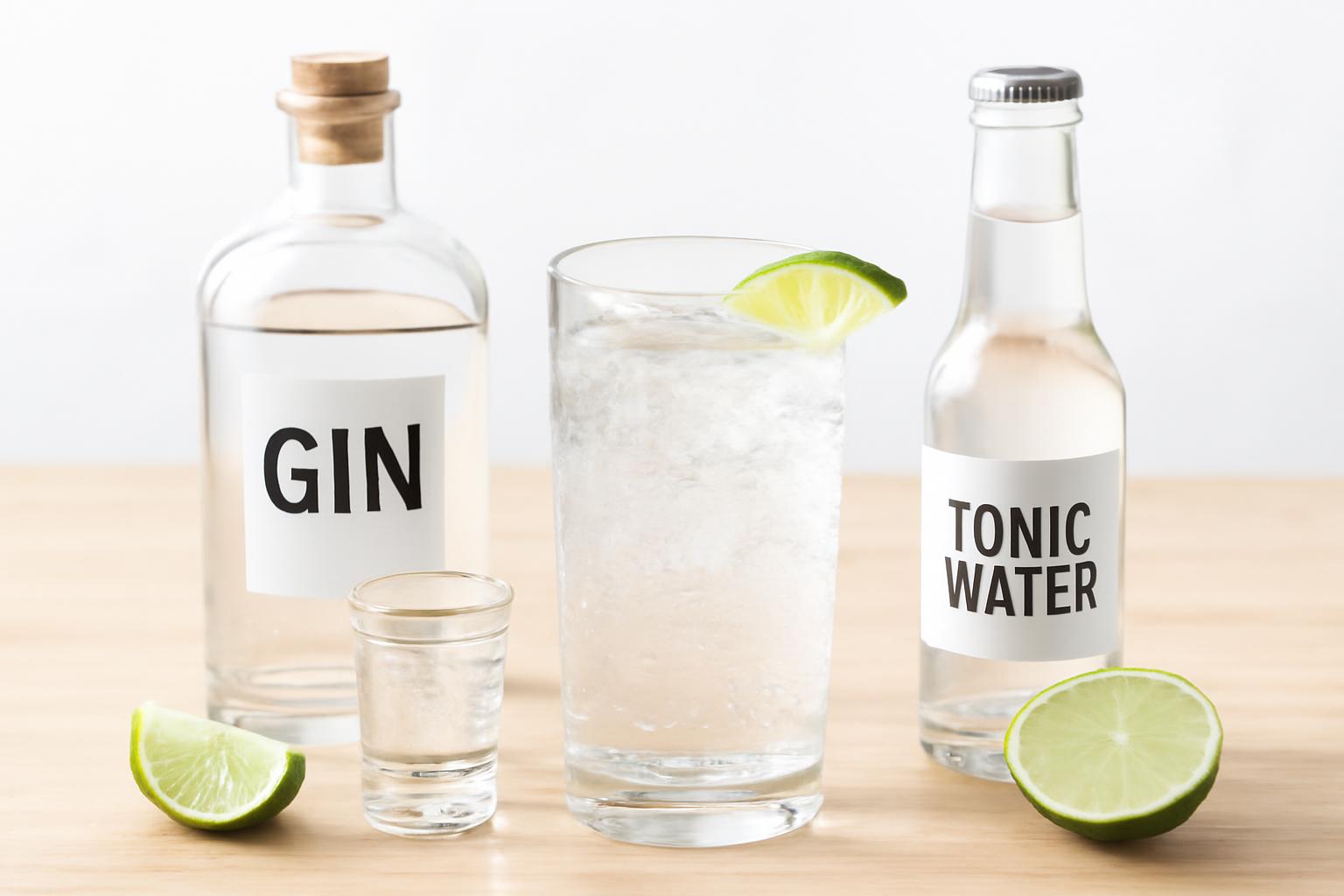
A 1.5 oz pour of 40% ABV gin with 4-6 oz of regular tonic has about 142-164 calories. Gin measure, strength and the tonic label change the total.
A gin and tonic made with 1.5 fluid ounces of 40% ABV gin and 4 to 6 fluid ounces of regular tonic water has about 142 to 164 calories using the label-based calculation below. Make the same drink with a zero-calorie diet tonic and it comes to about 99 calories, before any garnish.
Those are estimates, not a universal number. A larger gin pour, a stronger gin, more tonic, or a tonic brand with a different nutrition label changes the total. The most accurate approach is to measure both pours and use the tonic bottle’s label.
Gin and tonic calorie chart
The examples below use two transparent reference points:
- 40% ABV gin: about 99 calories per 1.5-ounce pour, calculated from the U.S. standard-drink definition and the FDA’s calorie factor for alcohol.
- Schweppes regular tonic: 130 calories per 12 ounces, or about 10.8 calories per ounce. Schweppes diet tonic: 0 calories per 12 ounces.
| Gin pour | Tonic pour | Regular tonic total | Diet tonic total |
|---|---|---|---|
| 1 oz gin | 4 oz tonic | about 109 calories | about 66 calories |
| 1.5 oz gin | 4 oz tonic | about 142 calories | about 99 calories |
| 1.5 oz gin | 6 oz tonic | about 164 calories | about 99 calories |
| 2 oz gin | 6 oz tonic | about 197 calories | about 132 calories |
| 2 oz gin | 8 oz tonic | about 219 calories | about 132 calories |
These totals exclude the garnish. They are rounded to the nearest whole calorie, so small differences are expected.
How the calculation works
You can estimate your own drink in two parts: calories from the gin plus calories from the tonic.
Step 1: Calculate the gin
The National Institute on Alcohol Abuse and Alcoholism says a U.S. standard drink contains about 14 grams of pure alcohol. That is the amount in 1.5 fluid ounces of 40% ABV distilled spirits, including gin.
The FDA Food Labeling Guide gives 7.07 calories per gram as the specific food factor for alcohol. That makes the estimate:
14 grams alcohol × 7.07 calories per gram = 98.98 calories
Rounded, a 1.5-ounce pour of 40% ABV gin contributes about 99 calories. Scaling that reference pour gives about 66 calories for 1 ounce and 132 calories for 2 ounces.
For a gin that is not 40% ABV, adjust the estimate in proportion to its strength:
Gin calories ≈ 99 × (gin ounces ÷ 1.5) × (ABV ÷ 40)
For example, 1.5 ounces of 47% ABV gin works out to about 116 calories: 99 × 1 × 47 ÷ 40. If the gin is sweetened or flavored, this alcohol-only formula may miss calories from other ingredients; use a product-specific label when one is available.
Step 2: Calculate the tonic
The Schweppes regular tonic water label lists 130 calories in 12 fluid ounces. Divide the label calories by the serving size, then multiply by the amount poured:
130 calories ÷ 12 ounces = about 10.8 calories per ounce
That makes 4 ounces about 43 calories, 6 ounces 65 calories, and 8 ounces about 87 calories. The Schweppes diet tonic water label lists 0 calories for a 12-ounce serving, so in these examples the gin supplies essentially all the listed calories in a diet gin and tonic.
Other brands are not required to match these figures. Premium, light, reduced-sugar, and regular tonics can all use different recipes and serving sizes.
Step 3: Add the two parts
For a 1.5-ounce gin pour with 6 ounces of the regular tonic used here:
99 gin calories + 65 tonic calories = about 164 calories
For the same gin pour with the diet tonic used here:
99 gin calories + 0 tonic calories = about 99 calories
This method is more useful than relying on one generic “gin and tonic” entry because it shows exactly which measure and label produced the answer.
What changes the calorie count most?
Regular tonic versus diet tonic
In this comparison, changing 6 ounces of regular tonic to diet tonic removes about 65 labeled calories. The difference comes from the products’ recipes: the regular label lists 33 grams of total carbohydrate and 33 grams of total sugar per 12 ounces, while the diet label lists zero for both.
“Light,” “low-calorie,” and “diet” do not guarantee the same value across brands. Read the calories and serving size on the exact bottle or can rather than choosing a value by the product name alone.
A single versus a double pour
Moving from 1.5 ounces to 2 ounces of the same 40% ABV gin adds about 33 calories by the formula above. A free-poured drink may contain more or less than the assumed measure, which is why measuring the gin matters when you want a usable estimate.
The alcohol amount changes too. The NIAAA reference is 1.5 ounces at 40% ABV for one U.S. standard drink; a 2-ounce pour at the same strength is about 1.33 standard drinks. Calorie count and alcohol amount are related, but they are not interchangeable measures of serving size or risk.
Gin strength and added ingredients
A higher-ABV gin contains more alcohol in the same volume and therefore more alcohol-derived calories. Some flavored gin products may also contain sugar or other caloric ingredients. When a manufacturer provides calories, that product-specific number should take priority over the alcohol-only estimate.
Does the garnish add calories?
The totals in the chart do not include a lime or other garnish. A plain citrus wedge is a separate ingredient, and its contribution depends on its actual size and how much is consumed. Rather than assigning every wedge the same number, add it from a food database or package label if that precision matters.
Sweetened lime cordial, syrup, juice blends, sugared rims, and candied garnishes are different from a plain wedge and can make a more noticeable difference. Measure and count those ingredients separately.
How to calculate the exact drink in your glass
- Measure the gin in fluid ounces rather than estimating the pour by eye.
- Note the gin’s ABV. Use the product’s calorie information if available; otherwise use the alcohol-based formula above.
- Measure the tonic and read its serving size and calories per serving.
- Calculate tonic calories as label calories ÷ label serving ounces × ounces poured.
- Add any juice, syrup, cordial, or consumed garnish separately.
For example, suppose your tonic lists 70 calories per 6.8-ounce bottle and you use half the bottle. Half contributes 35 calories. Add that number to the calories for your measured gin pour instead of substituting the Schweppes value from the chart.
Calories do not answer every nutrition question
A calorie total does not by itself tell you the drink’s carbohydrate, sugar, caffeine, gluten, or alcohol content. Check each question independently.
For example, the two Schweppes labels used here describe both products as caffeine-free, but only the regular tonic lists 33 grams of carbohydrate and sugar per 12 ounces. Those label facts do not establish whether every tonic or every gin is gluten-free. Ingredient, allergen, and manufacturer information for the exact products are the appropriate sources for that separate question.
Frequently asked questions
How many calories are in a gin and tonic with a 1-ounce pour?
Using 1 ounce of 40% ABV gin and 4 ounces of the regular tonic in this calculation gives about 109 calories. With the cited diet tonic, it is about 66 calories before garnish.
How many calories are in a double gin and tonic?
“Double” needs a stated measure. A 2-ounce pour of 40% ABV gin contributes about 132 calories. Add about 65 calories for 6 ounces of the regular tonic used here, for a total near 197. With the cited diet tonic, the same 2-ounce gin pour is about 132 calories before garnish.
Is tonic water zero-calorie?
Not always. The regular tonic label used here lists 130 calories per 12 ounces, while its diet counterpart lists zero. Check the exact product label because tonic recipes differ.
What is the simplest reliable estimate?
For a measured 1.5-ounce pour of 40% ABV gin, start with about 99 calories. Then add the tonic from its label. With 4 to 6 ounces of the regular tonic used here, the result is about 142 to 164 calories; with the cited diet tonic, it remains about 99 calories before garnish.