
Why Vape Calorie Claims Don't Hold Up
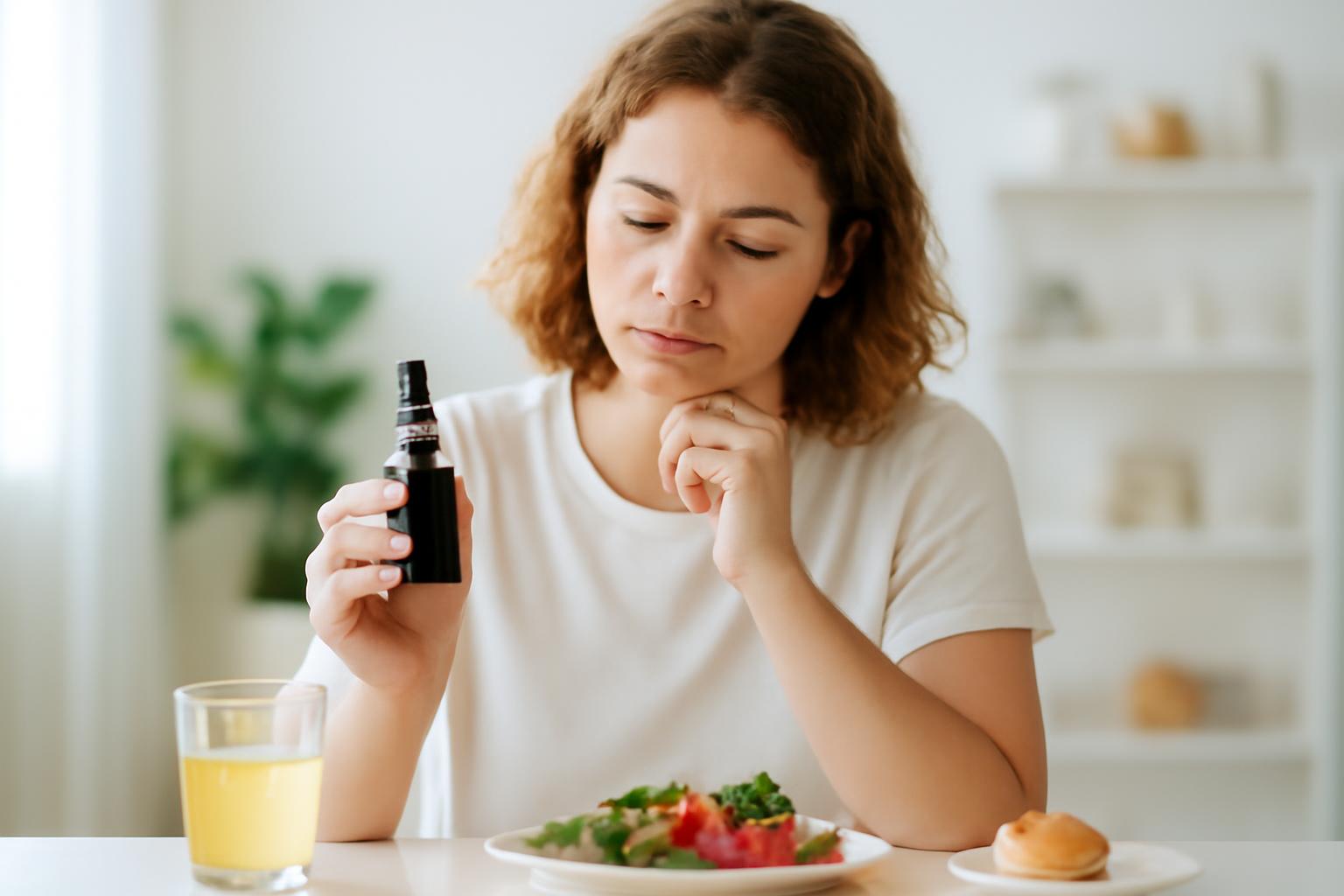
A defensible count would need the exact formula, aerosol produced per puff, amount retained or exhaled, and amount absorbed and metabolized.
Vape liquid contains ingredients that can have an energy value when they are used in food, but that does not give us a reliable number of dietary calories absorbed from vaping. A vape heats e-liquid into an aerosol that is inhaled; it is not eaten or drunk like a food. There is no sound, standard “calories per puff” figure you can enter in a food tracker.
So the most accurate short answer is: a vape may contain ingredients that are caloric in a food context, but the calories your body absorbs from ordinary vaping have not been established well enough to quote a dependable number. Claims that every puff has a precise calorie count—or that the count is definitely zero—go beyond the available evidence.
Why vape liquid and food calories are different questions
The device itself does not have nutritional calories. The relevant material is the e-liquid inside it. According to the U.S. Food and Drug Administration, e-liquid usually contains nicotine, flavorings, propylene glycol, vegetable glycerin, and other ingredients. The device heats that liquid to create an aerosol for inhalation.
Some of those same substances also appear in foods or other consumer products. That does not make their behavior identical across exposure routes. The National Academies’ review of e-cigarette constituent toxicology emphasizes that propylene glycol and glycerol are common e-liquid solvents and that evidence from ingestion does not automatically establish safety or effects when they are inhaled.
A food calorie is an estimate of energy available from something consumed and metabolized as food. U.S. nutrition-label rules in 21 CFR 101.9 apply to products intended for human consumption and specify accepted ways to calculate the energy shown on food labels. A vape is used by a different route, so applying a food-energy factor to the full amount of liquid in a pod would not tell you how much energy reaches the body from aerosol.
Why a precise calories-per-puff estimate is not dependable
An online calculation may multiply the amount of e-liquid used by a calorie factor for one or more ingredients. That produces a theoretical number for the liquid under the calculation’s assumptions—not a measured dietary dose from vaping.
Several unknowns stand between those two ideas:
- Formula: Propylene glycol, vegetable glycerin, nicotine, water, acids, and flavoring proportions vary by product.
- Liquid used: Devices consume different amounts per puff, and puff length and power settings change aerosol production.
- Where the aerosol goes: Some material remains in the device, some reaches the mouth and airways, some is exhaled, and some residue may be swallowed.
- What the body does with it: A food calculation does not measure respiratory deposition, absorption, or metabolism after inhalation.
Without product-specific measurements across all of those steps, a neat figure such as “X calories per puff” creates false precision. It is more honest to say the dietary contribution is unquantified than to recycle a number derived from an entire bottle or pod.
Do sweet vape flavors contain sugar?
Sweet taste does not prove that an e-liquid contains table sugar, nor does a flavor name provide a nutrition analysis. Flavor formulations differ, and labels for tobacco products are not interchangeable with Nutrition Facts labels for food.
If you need to know what is in a specific product, use the manufacturer’s current ingredient information rather than guessing from words such as “candy,” “dessert,” or “fruit.” Even then, an ingredient list will not establish calories absorbed per puff.
Will vaping affect weight or break a fast?
There is not enough evidence to treat vaping as either a known source of a specific calorie amount or a calorie-free weight-management tool. Body weight changes over time reflect overall energy intake and expenditure, while nicotine use can also involve appetite, dependence, withdrawal, sleep, and behavior. Those effects cannot be reduced to a speculative calorie count for vape aerosol.
For an ordinary food diary, do not invent a precise entry for vaping. If you are fasting for a blood test, procedure, surgery, religious practice, or a clinician-directed treatment, follow the relevant instructions. “No calories” may not be the only rule: nicotine use, inhalation, medications, and procedure-specific safety can matter. Ask the clinician or facility whether vaping is allowed rather than assuming a guessed calorie value settles the question.
Vaping should not be started or continued as a way to suppress appetite or control weight. Nicotine is addictive, and the health considerations are more important than an unverified energy estimate.
The established health risks matter more than the calorie estimate
Vape aerosol is not harmless water vapor. The Centers for Disease Control and Prevention says that no tobacco product, including e-cigarettes, is safe. Most e-cigarettes contain addictive nicotine, and aerosol can contain potentially harmful substances such as cancer-causing chemicals, heavy metals, volatile organic compounds, and tiny particles that can reach deep into the lungs.
The CDC also notes that some flavorings may be safe to eat but not to inhale because the lungs and gut process substances differently. That distinction is directly relevant here: a substance’s food use or food-energy value cannot be treated as proof of its inhalation effects.
Nicotine-free products are not automatically risk-free. They still create an aerosol from a variable formulation, and the absence of nicotine does not turn that aerosol into food or clean air. For adults who smoke cigarettes, FDA says switching completely to e-cigarettes may reduce exposure to many harmful chemicals compared with continued smoking, but vaping is not risk-free and dual use does not provide the full potential benefit of switching.
Practical takeaways
- Do not rely on a universal calorie number for a puff, pod, cartridge, or disposable vape.
- Do not convert the theoretical food energy of the entire e-liquid volume into “calories absorbed.” The exposure route and actual absorbed amount are different questions.
- Check the exact product’s current information when ingredient details matter; formulas vary.
- Follow clinician or facility instructions for medical fasting rather than making a calorie-based assumption.
- Keep e-liquid away from children and pets. Nicotine liquid can cause poisoning if swallowed, inhaled, or absorbed through the skin or eyes.
- Treat vaping as a tobacco and inhalation-health issue, not as a calorie-control method.
Frequently asked questions
How many calories are in one vape puff?
There is no validated universal number. A defensible calculation would need the exact formula, aerosol produced per puff, amount retained or exhaled, and amount absorbed and metabolized. Those values vary and are not established by a standard food label.
Do disposable vapes have calories?
Disposable vapes contain e-liquid much like other device types, so the same distinction applies: ingredients may have food-energy values, but that does not provide a measured dietary-calorie dose from inhaling the aerosol.
Is vaping zero calories?
“Zero” is more certain than the evidence allows. The better answer is that the absorbed dietary energy from vaping has not been reliably quantified and should not be represented by a made-up number.
Can vaping make you gain weight?
You cannot predict weight change from a speculative vape-calorie estimate. Vaping and nicotine can affect health and behavior in ways that are separate from food calories. Anyone concerned about unexplained weight change, appetite, nicotine dependence, or quitting should discuss it with an appropriate health professional.
Bottom line
Vape liquid is not nutritionally identical to “nothing,” because it contains real chemical ingredients. But it is equally misleading to assign inhaled aerosol the full theoretical calories of swallowed e-liquid. No reliable, standard calories-per-puff value has been established. Avoid false precision, follow medical fasting instructions when relevant, and give the documented risks of nicotine and inhaled aerosol far more weight than an uncertain calorie estimate.