
Traditional Sake Is Generally Gluten-Free
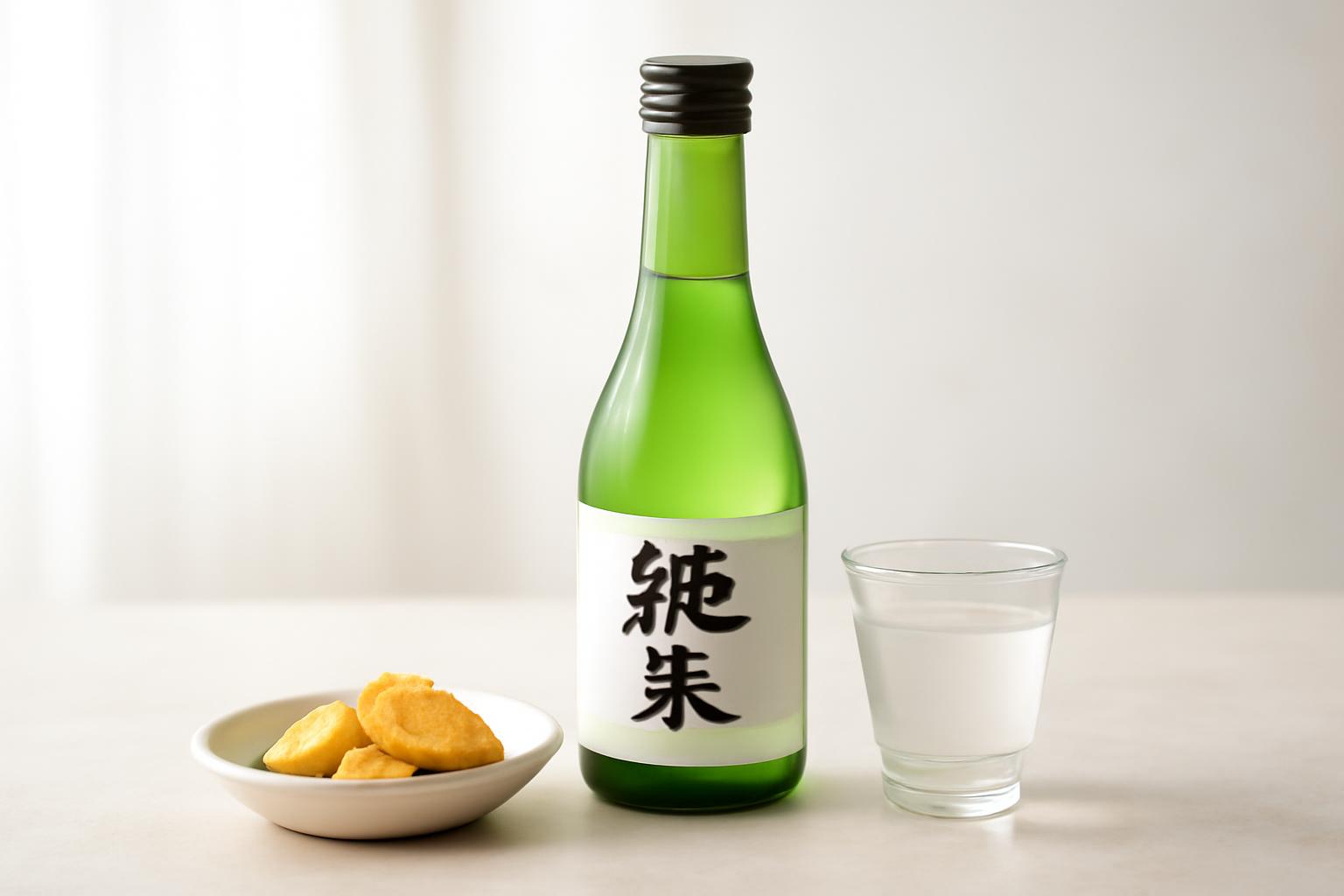
For strict avoidance, plain junmai with clear producer information is the simplest pick. Flavored sake, cocktails and shared bar tools need separate checks.
Plain, traditionally made sake is generally gluten-free because its core ingredients are rice, rice koji, water, and yeast—not wheat, barley, or rye. But that is not a guarantee for every bottle or every drink described as sake. Flavored products, ordinary or non-premium sake with extra ingredients, cocktails, shared serving equipment, and restaurant uncertainty all deserve a separate check.
If you need to avoid gluten strictly, the simplest choice is a plain junmai sake with a clear ingredient statement or a gluten-free claim from the producer. When the label is unclear, verify the exact product with the brewery rather than assuming that a brand-wide answer covers every variety.
Why traditional sake is usually gluten-free
Sake is a fermented drink, not a distilled spirit and not literally a wine. The Japan Sake and Shochu Makers Association describes its basic ingredients as rice, koji, and water. Koji in sake is made by cultivating koji fungus on rice; it helps convert rice starch into sugars that yeast can ferment.
None of those basic ingredients is wheat, barley, or rye. That is why a straightforward bottle of traditional sake starts from a gluten-free ingredient set.
The word koji can cause confusion because koji is used in many fermented foods and can be grown on different substrates. For sake, however, the relevant ingredient is rice koji. The important question is not whether every food called “koji” is gluten-free; it is what substrate and other ingredients were used in the specific drink.
Junmai versus sake with added brewing alcohol
“Junmai” is especially useful shorthand for a cautious shopper. According to the association’s guide to reading sake labels, junmai sake is made with rice and rice koji and does not include added neutral brewing alcohol. A label may show junmai, junmai ginjo, or junmai daiginjo.
Not every premium sake is junmai. Some specially designated styles, such as honjozo or non-junmai ginjo, may include a limited amount of neutral brewing alcohol. Added distilled alcohol does not automatically make a product gluten-containing. U.S. TTB guidance on gluten statements explains that distillation removes protein, including gluten, when good manufacturing practices prevent gluten from being introduced afterward. Still, a person choosing a finished fermented beverage should rely on the actual bottle and producer information, not on that fact alone.
When sake needs a closer look
The short answer changes from “generally yes” to “verify first” in several common situations.
Flavored, infused, sparkling, and dessert-style products
Fruit-flavored sake, canned sake cocktails, cream-style drinks, infusions, and other specialty products can contain more than the traditional base ingredients. A flavoring, color, sweetener, mixer, or post-fermentation addition may have its own gluten risk. The word “sake” on the front does not establish that every added ingredient is gluten-free.
Check the full ingredient and allergen information for the exact variety. If the package provides little detail, look for the producer’s product page or contact the producer. A plain sake from a brewery and that brewery’s flavored line should be treated as different products.
Ordinary sake and unclear house pours
Non-premium sake, often called futsushu, can allow a broader range of ingredients than specially designated sake. Beyond Celiac’s sake guidance recommends premium sake and identifies junmai as the most cautious option for people with celiac disease; it advises extra care with non-premium or unidentified house sake because additives may be unclear.
At a restaurant, “house sake” is not an ingredient list. Ask to see the bottle. Record the producer and exact product name, then check that product rather than relying on whether it is served hot or cold. Serving temperature says nothing reliable about gluten content.
Cocktails and shared service
A confirmed gluten-free sake can become part of a drink that is not confirmed gluten-free. Soy sauce containing wheat, malt-based ingredients, flavored syrups, beer, garnishes, or a premixed base can change the answer. Shared shakers, strainers, measuring tools, and glass-rimming stations can also create cross-contact.
Ask two separate questions: “Is this exact sake gluten-free?” and “Are every mixer and the preparation process gluten-free?” That distinction is particularly important for someone with celiac disease or a medically necessary gluten-free diet.
A producer statement applies only as far as it says
Manufacturer information can be the clearest evidence for a named product or range. For example, Hakutsuru’s U.S. FAQ says its sake is free of gluten, colorings, flavorings, and preservatives. That is useful first-party evidence for Hakutsuru’s stated products, but it should not be stretched into a guarantee about unrelated breweries or every sake-style beverage.
Formulas and packaging can also change. Recheck the current label when buying a new variety or when the package differs from the one you previously verified.
How to choose sake when you avoid gluten
Use this quick decision process at a store or restaurant:
- Identify the exact product. Get the brewery, product name, and variety—not just “sake.”
- Prefer a plain junmai. Junmai narrows the ingredient set to rice and rice koji, with water used in production. “Junmai ginjo” and “junmai daiginjo” are also junmai styles.
- Read the label and product page. Look for ingredients, allergen information, a gluten-free statement, and any mention of flavors or infusions.
- Treat specialty drinks separately. Verify flavored, sparkling, canned, cloudy, infused, or cocktail products on their own merits. Cloudiness or sweetness alone does not prove that gluten is present, but neither confirms its absence.
- Ask about cross-contact. This matters at facilities or bars that also handle wheat beer, malt beverages, wheat-containing sauces, or shared cocktail equipment.
- Contact the producer when evidence is incomplete. Ask whether the exact product contains wheat, barley, rye, or derivatives; whether any ingredients are added after fermentation; and what cross-contact controls apply.
A missing “gluten-free” statement is not proof that a product contains gluten. In the United States, the claim is voluntary. The FDA’s food-labeling overview says foods under its rule that use the claim must contain less than 20 parts per million of gluten, while most alcoholic beverages fall under TTB oversight. TTB, in turn, places responsibility on alcohol producers to ensure that gluten claims are accurate and supported, including controls for ingredients and cross-contact.
The practical lesson is simple: a specific, substantiated producer statement is stronger than an assumption based on the absence or presence of a logo.
Can someone with celiac disease drink sake?
Many people with celiac disease choose verified plain or premium sake, and specialist guidance commonly points to junmai as the most straightforward option. But an article cannot certify an unlabeled bottle or account for an individual’s medical needs.
If your gluten avoidance is medically necessary, use the strictest version of the checklist: select a clearly identified product, confirm it with the current label or brewery, avoid unverified flavors and house pours, and ask about preparation cross-contact. If your clinician has given you more restrictive advice, follow that advice.
Also keep the questions separate: gluten-free does not mean alcohol-free, low-calorie, low-carbohydrate, or suitable for every health condition. Those are different properties and require different information. Sake is an alcoholic beverage, so serving size, alcohol content, medications, pregnancy, liver health, and personal limits are separate considerations from gluten.
Bottom line
Traditional plain sake is generally gluten-free because it is based on rice, rice koji, water, and yeast. A plain junmai with clear producer information is the easiest bottle to verify. Do not extend that answer automatically to flavored sake, futsushu, cocktails, house pours, or every product made by the same brand.
When the stakes are high, choose the exact product—not the category—and confirm both its ingredients and the way it will be served.