
Check Your Eel Sauce Label for Hidden Gluten
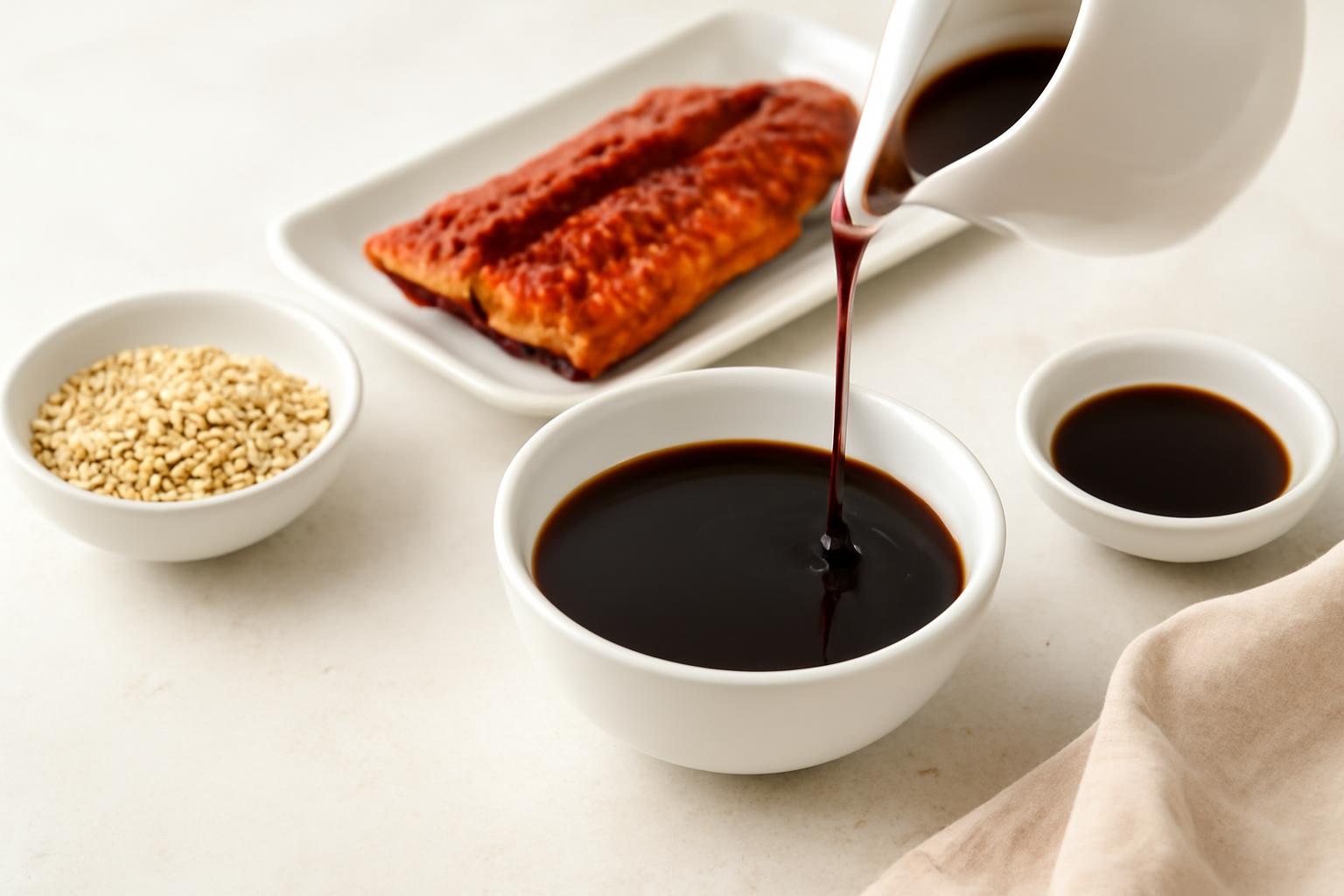
Regular soy sauce may contain wheat. Even verified gluten-free eel sauce can pick up gluten from shared restaurant tools or preparation.
Eel sauce is not automatically gluten free. Many versions use soy sauce, and regular soy sauce may contain wheat. Other eel sauces are made with gluten-free soy sauce or tamari and are explicitly labeled gluten free. The only reliable answer is for the exact bottle or restaurant recipe in front of you.
For a packaged sauce, look for a current “gluten-free” claim and read the ingredient and allergen statements. At a restaurant, ask which product or recipe is used and how cross-contact is prevented. The words eel sauce, unagi sauce, or sushi sauce do not settle the question by themselves.
Why the answer changes from one eel sauce to another
Eel sauce is a sweet, savory glaze used on sushi and other dishes. Its name describes the style and common use of the sauce, not a standardized ingredient list. One manufacturer may build the sauce around regular soy sauce, while another may use a gluten-free soy sauce formulation.
Soy sauce is the ingredient that deserves the first look. For a concrete comparison, Kikkoman’s regular soy sauce lists water, soybeans, wheat, and salt. Its separate gluten-free tamari lists water, soybeans, salt, and sugar and carries a certified gluten-free claim. That product-level difference is why “it contains soy sauce” is not enough information: the exact kind matters.
Tamari can be a useful gluten-free alternative, but do not treat the word tamari as a guarantee. Formulas and production controls vary. Confirm the gluten-free claim on the specific label rather than relying only on the sauce category.
Other ingredients vary too. Sweeteners, starches, rice wine, vinegar, coloring, and flavorings may appear in commercial formulas. Read the complete label each time, especially after a packaging or recipe change.
A real gluten-free eel sauce example
Gluten-free eel sauce does exist. Otafuku’s Gluten Free Sushi Sauce is described by the manufacturer as a traditional unagi, or eel, sauce. Its posted ingredient list includes water, sugar, dextrose, gluten-free soy sauce made from water, soybeans, and salt, modified corn starch, sweet cooking rice wine, vinegar, date juice concentrate, and ginger puree. The label identifies soy as an allergen and does not list eel as an ingredient.
That example proves that an eel-style sauce can be made with gluten-free soy sauce. It does not prove that every bottle at the grocery store or every drizzle at a sushi restaurant uses the same formula.
If you are buying a packaged sauce in the United States, an explicit gluten-free claim carries more meaning than a vague impression from the ingredients. The FDA’s gluten-free labeling guide says foods using “gluten-free,” “no gluten,” “free of gluten,” or “without gluten” must contain less than 20 parts per million of gluten and must meet the rule’s ingredient conditions. A third-party certification can add another verification signal, but FDA does not endorse a particular certification program.
A quick package check
Use this order when evaluating a bottle:
- Find the exact product name. Similar bottles from one brand may have different formulas.
- Look for a gluten-free statement or certification. Do not assume a sauce is gluten free because wheat is not prominent on the front.
- Read the full ingredient list. Regular soy sauce, wheat, barley, rye, malt, or an unclear sauce blend calls for more checking.
- Read the allergen statement. A “contains wheat” statement is a clear stop for a gluten-free diet, but the absence of that statement is not by itself a gluten-free guarantee because gluten can also come from barley or rye.
- Check the current label, not an old photo or list. Manufacturers can reformulate products.
If the package has no gluten-free claim and the ingredients are unclear, contact the manufacturer or choose a clearly labeled alternative.
How to ask about eel sauce at a restaurant
A menu may call a dish gluten free while its finishing sauce comes from a different bottle or shared station. Ask about the sauce before ordering, not after it reaches the table.
Useful questions include:
- Is the eel or unagi sauce itself labeled gluten free?
- Can I see the bottle or ingredient list?
- Is it made with regular soy sauce, gluten-free soy sauce, or tamari?
- Is the same squeeze bottle, brush, spoon, pan, or prep surface used with sauces that contain wheat?
- Can the dish be prepared without the sauce if the staff cannot confirm it?
The Celiac Disease Foundation’s dining guidance recommends asking whether marinades and sauces contain soy sauce or teriyaki sauce and asking about clean or separate prep space, cookware, utensils, grills, and fryers. It also warns diners not to assume a dish is gluten free. Those questions matter for eel sauce because a verified sauce can still encounter gluten through shared tools or preparation.
For celiac disease or another medically necessary gluten-free diet, “probably” is not a useful confirmation. If the restaurant cannot identify the product or explain its handling, order the dish without eel sauce or choose another option you can verify.
Gluten free does not mean low calorie or low carb
Gluten content, calories, carbohydrate, sugar, sodium, and alcohol are separate questions. A gluten-free claim answers the gluten question; it does not promise a particular nutrition profile.
For example, Otafuku’s posted nutrition panel lists a serving as 1 tablespoon (19 grams), with 40 calories, 9 grams of carbohydrate, 9 grams of total and added sugars, and 330 milligrams of sodium. That is one product and one stated serving, not a universal value for eel sauce. Another brand, homemade reduction, or restaurant pour can differ, and a larger drizzle changes the amount consumed.
The same separation applies to alcohol. Otafuku’s ingredient list includes sweet cooking rice wine, whose sub-ingredients include alcohol. Someone avoiding alcohol should check that issue independently rather than treating “gluten free” as an answer.
When tracking nutrition, use the panel for the exact sauce and estimate the portion actually served. When avoiding gluten, use the gluten-free label, complete ingredients, and cross-contact information. One check cannot replace the other.
If you make eel sauce at home
The simplest control is to start with a soy sauce or tamari that is explicitly labeled gluten free, then verify every other ingredient in your chosen recipe. Do not substitute a regular soy sauce merely because it is fermented, dark, or traditionally brewed: the regular Kikkoman example above still lists wheat.
Keep preparation separate from gluten-containing sauces if cross-contact matters in your household. Use clean measuring tools, cookware, and storage containers, and label the finished sauce so it is not confused with a conventional version.
Bottom line
Eel sauce can be gluten free, but the name alone does not make it so. Regular soy sauce may introduce wheat; a verified gluten-free soy sauce or tamari can make a suitable alternative. Check the exact package for a gluten-free claim and current ingredients. At restaurants, confirm both the sauce and the handling process. If either answer is uncertain, skip the sauce rather than guessing.