
Burrata Nutrition Depends on the Portion, Not Just the Ball
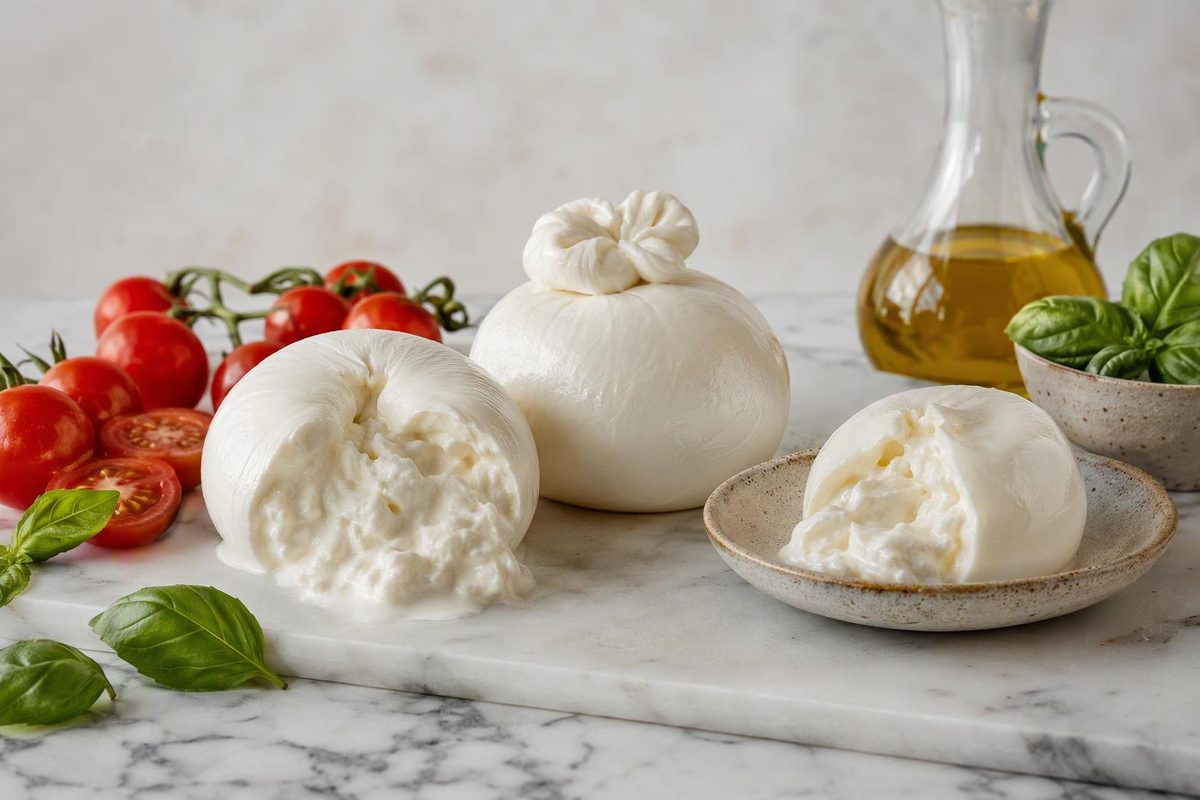
Compare burrata calories, protein, fat and carbs per ounce and 100 g, then estimate a whole ball using two product-specific nutrition labels.
For 100 g of plain burrata, the two products compared here provide about 250–256 calories, 21–24 g of fat and 8–11 g of protein. Those are label-based examples, not a universal range for every burrata. A whole ball can weigh much more than the serving on its label.
Burrata has a fresh mozzarella exterior with a filling of mozzarella pieces and cream. That creamy center is why a plain mozzarella entry is not an exact substitute when logging it. BelGioioso describes its filling as mozzarella soaked in heavy cream.
Nutrition per ounce and per 100 g
The table uses a U.S. retailer’s listing for BelGioioso and Galbani’s UK manufacturer page, checked October 10, 2026. The BelGioioso 100 g column is calculated from its labeled 28 g serving; Galbani publishes values directly per 100 g.
| Nutrient | BelGioioso, 1 labeled oz (28 g) | BelGioioso, 100 g, calculated | Galbani, 100 g |
|---|---|---|---|
| Calories | 70 | 250 | 256 |
| Total fat | 6 g | 21.4 g | 24 g |
| Saturated fat | 4 g | 14.3 g | 15 g |
| Protein | 3 g | 10.7 g | 8 g |
| Carbohydrate | 1 g | 3.6 g | 2 g |
| Total sugars | 0 g | 0 g | 2 g |
| Sodium | 60 mg | 214 mg | Not listed |
| Salt | Not listed | Not listed | 0.54 g |
Sources: BelGioioso nutrition listing at Fairway and Galbani Burrata 150 g. Calculated values inherit the rounding in the original label; the extra decimal is arithmetic, not extra measurement precision. Salt and sodium are different label measures, so do not compare those two rows directly.
How many calories are in a whole ball?
“One ball” is not a fixed serving size. Use the pack’s cheese weight and ball count:
- BelGioioso’s 16 oz, four-ball pack: each ball is nominally 4 oz, or four labeled servings. That gives a label-based estimate of 280 calories, 24 g fat, 16 g saturated fat, 12 g protein and 4 g carbohydrate per ball.
- Galbani’s 150 g product: eating 150 g of cheese gives a label-based estimate of 384 calories, 36 g fat, 22.5 g saturated fat, 12 g protein and 3 g carbohydrate.
These totals come from the BelGioioso retail listing and Galbani manufacturer page. They should not be transferred to a differently sized ball or another brand without checking its label.
For any weighed portion:
Portion calories = labeled calories × portion weight ÷ labeled serving weight.
For example, 60 g of the BelGioioso product calculates to 70 × 60 ÷ 28 = 150 calories. Weigh the cheese you eat, including its creamy filling, rather than adding the packing water to the portion.
What the numbers mean for a meal
Burrata supplies protein, but these labels show substantially more fat than protein. Saturated fat scales with the portion too: the BelGioioso retail listing gives 20% of the Daily Value per ounce, making a four-serving ball 80% by label arithmetic. That is useful portion information, not a verdict on the food.
When logging a burrata salad or appetizer, enter the cheese separately from olive oil, bread, pesto and other accompaniments. The burrata label covers the cheese—not the finished plate. Use your package’s current nutrition panel over an online listing if they differ.