
Corn Facts: Nutrition Content, Calories, Potential Health Benefits and Evidence Limits
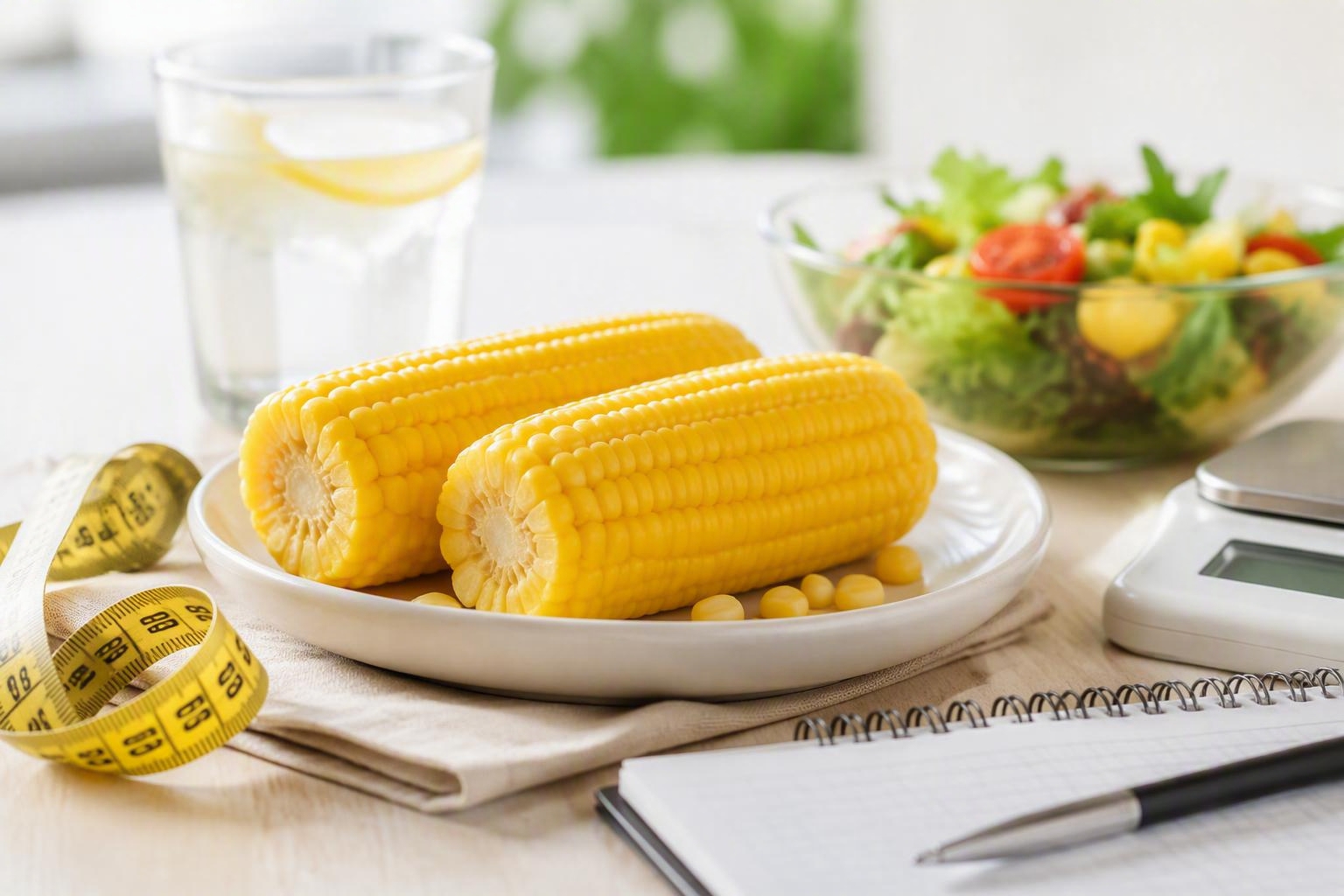
At 100 g, sweet corn has 86 calories and dry mature corn 365. Fiber and carotenoids may support digestion and eye health, but direct human evidence is limited.
Overview
Plain corn is a carbohydrate food that also supplies fiber, protein and bioactive compounds, but its calorie count depends heavily on form and serving. A half cup of sweet corn has about 98 calories, while 100 grams of dry mature corn has about 365 calories versus 86 calories for the same weight of sweet corn (ScienceDirect).
That form-and-serving dependence is the recurring theme of this guide. Corn’s fiber and its carotenoids (lutein and zeaxanthin) support plausible digestive and eye-health functions, though direct human clinical evidence for eating corn remains limited. Because corn is a starchy vegetable, its carbohydrate content matters for blood sugar, so portion and meal composition become the practical levers rather than avoidance.
Corn nutrition facts and calories by serving
Corn’s calorie and macronutrient figures only make sense when tied to a specific form and serving, so the table below groups three commonly cited references rather than presenting one universal number. According to the Cleveland Clinic, a half cup of corn (about one medium ear) supplies roughly 98 calories, 23.5 grams of carbohydrates, 2 grams of fiber, 3 grams of protein and 0.78 grams of fat, with 3.78 grams of sugar and 5 milligrams of sodium. The USDA’s SNAP-Ed guide lists a full 145-gram cup at 125 calories, 27 grams of carbohydrates and 2 grams of fat. Corn phytochemistry research reports that every 100 grams of sweet corn provides 86 calories, while 100 grams of dry mature corn provides 365 calories.
| Serving | Calories | Carbohydrates | Fiber | Protein | Fat | Sugar |
|---|---|---|---|---|---|---|
| Half cup / one medium ear (Cleveland Clinic) | ~98 | 23.5 g | 2 g | 3 g | 0.78 g | 3.78 g |
| 1 cup, 145 g (USDA SNAP-Ed) | 125 | 27 g | Not listed in source | Not listed in source | 2 g | Not listed in source |
| 100 g sweet corn (ScienceDirect) | 86 | Not listed in source | Not listed in source | Not listed in source | Not listed in source | Not listed in source |
| 100 g dry mature corn (ScienceDirect) | 365 | Not listed in source | Not listed in source | Not listed in source | Not listed in source | Not listed in source |
These figures come from different sources measuring different forms, so they should be read side by side rather than averaged. The supplied evidence does not provide a single, matched set of numbers for raw, boiled, canned and frozen sweet corn on both the same 100-gram basis and the same household serving, so this article does not fabricate a normalized four-way table. To compare preservation formats accurately, a reader would need figures for all four forms measured on identical weight and portion bases, which is exactly what the available sources do not offer together. The practical takeaway: when logging corn, match the number to the specific form and serving you are actually eating.
Why corn calorie counts vary
Corn calorie counts vary mostly because of water content, kernel maturity, product form and the serving basis used. The clearest illustration comes from corn phytochemistry research, which reports 365 calories per 100 grams of dry mature corn against 86 calories per 100 grams of sweet corn (ScienceDirect).
Those two numbers describe genuinely different foods measured at the same weight. Dry mature corn is the concentrated grain used for cornmeal and similar products, so a given weight packs more starch and energy. Sweet corn is harvested young and full of liquid, so much of its weight is water rather than calories. Neither figure is wrong, and neither should be applied to the other form. When a source quotes a calorie count, the deciding factors are always the same: is it dry or water-rich corn, and is the number stated per 100 grams, per cup or per ear.
Health benefits of corn and the limits of the evidence
Corn contains nutrients and bioactive compounds with plausible roles in digestive and eye health, but nutrient presence, a plausible mechanism and a proven clinical outcome are three different levels of evidence. Corn supplies fiber that can support digestion and carotenoids that may support vision, and whole grain corn intake has been associated with lower chronic-disease risk in the literature (ScienceDirect).
The sections below keep each benefit tied to its actual support. Fiber’s effect on stool bulk and gut bacteria is a recognized digestive function, and lutein and zeaxanthin are established eye-relevant compounds. What remains less certain is whether eating corn specifically produces measurable disease-prevention outcomes in people, a gap the evidence-strength section addresses directly.
Fiber and digestive health
Corn’s fiber supports normal digestive function in two distinct ways. According to the Cleveland Clinic, corn is high in insoluble fiber, which bulks up stool and helps prevent constipation.
A half-cup serving of corn supplies about 2 grams of fiber, per the Cleveland Clinic, which contributes toward daily fiber intake alongside other foods. Beyond adding bulk, the Cleveland Clinic notes that corn fiber also acts as a prebiotic, meaning it feeds the beneficial bacteria in the gut. These are digestive-function effects: helping regularity and providing material that gut bacteria can use. They are not the same as treating a digestive disease, and the claim here stays at the level of supporting normal bowel function rather than resolving a medical condition. For a reader, the practical point is that corn can be one contributor to a fiber-adequate diet, not a standalone remedy.
Lutein, zeaxanthin and eye health
Yellow corn contains lutein and zeaxanthin, antioxidants that may support eye health. According to the Cleveland Clinic, a medium ear of yellow corn has almost 900 micrograms of these two antioxidants, and it cites a 2018 study suggesting they promote healthy vision and eyes.
Healthline similarly notes that dietary intake of carotenoids like zeaxanthin and lutein may boost eye health. The wording matters: these compounds are linked to eye health and may support it, which is different from proving that eating corn prevents specific eye diseases. It is also worth noting that corn is not only yellow. The broader research literature describes corn as containing several phytochemical families, including carotenoids, anthocyanins and polyphenols (Orion Journals). The supplied evidence supports yellow corn’s lutein and zeaxanthin most clearly and does not give exact carotenoid or anthocyanin concentrations for blue or purple varieties, so this article does not rank corn colors or assign them specific numbers. The reasonable takeaway is that yellow corn is a source of two eye-relevant carotenoids, among a wider set of plant compounds corn carries.
How strong is the evidence?
The honest answer is that corn’s claimed health benefits rest on a mix of evidence levels, and direct human clinical proof for eating corn is still limited. The strongest current support is mechanistic and preclinical rather than outcome-based in people.
It helps to separate three kinds of evidence that often get blended together. First, there are associations from whole-grain research: corn phytochemistry research states that regular consumption of whole grain corn lowers the risk of chronic diseases such as cardiovascular disease, type 2 diabetes and obesity and improves digestive health, while explicitly adding that further studies on corn’s bioactive compounds are needed (ScienceDirect). Second, there is work on isolated compounds and mechanisms: a systematic review of corn’s bioactive compounds analyzed 33 studies, including in vitro, in silico and review articles, and found that anthocyanins, carotenoids, polyphenols, phytosterols, dietary fiber, resistant starch, fatty acids and peptides show antioxidant, anti-inflammatory, hypoglycemic, antihypertensive and microbiota-modulating effects linked to prevention of several chronic conditions (Orion Journals). Third, and critically, that same review states that while preclinical evidence strongly supports corn’s nutraceutical value, clinical studies in humans remain scarce, underscoring the need for translational research.
For a reader, this means corn’s benefits are best described as plausible and mechanistically supported, not as established clinical outcomes from eating corn itself. Claims that specific corn servings prevent specific diseases go beyond what the current human evidence shows.
Corn, blood sugar and diabetes meal planning
Corn can raise blood sugar because it is a starchy vegetable that contains carbohydrates and sugar, but it can still fit a diabetes-aware diet when portioned. According to WebMD, corn is a starchy vegetable like potatoes and peas, so it has sugar and carbohydrates that can raise blood glucose, and people with diabetes do not necessarily need to avoid it but should watch portion sizes.
Corn’s carbohydrate profile has a mitigating side. The Cleveland Clinic describes corn as having a low-sugar, high-fiber, complex-carb profile that places it low on the glycemic index, with the body breaking down low-glycemic foods gradually for a slower energy release. This is why corn can be described as relatively slow-releasing yet still capable of raising blood glucose: the deciding factors are portion, form, what it is eaten with and individual response.
For portioning, current guidance gives concrete anchors. The Mayo Clinic Health System states that a half cup of corn, or a small ear of corn, contains 15 grams of carbohydrate and counts as one carbohydrate food choice. The American Diabetes Association’s Diabetes Plate method places corn among quality carbohydrates such as starchy vegetables and directs filling one-quarter of a nine-inch plate with these carbohydrate foods, filling half the plate with non-starchy vegetables, and eating carbohydrates alongside a lean protein while choosing higher-fiber options where possible (Plan Your Diabetes Plate).
A practical way to apply this uses the supplied anchors together:
- Count a half cup of corn or a small ear as one carbohydrate choice using the Mayo Clinic Health System’s meal-planning estimate of 15 grams of carbohydrate, while noting that the Cleveland Clinic lists a higher 23.5 grams for a nominal half-cup serving. When precise carbohydrate counting matters, rely on the product label, a measured serving or individualized clinical guidance.
- Keep corn within the one-quarter carbohydrate section of the plate rather than letting it crowd out non-starchy vegetables (American Diabetes Association).
- Pair the corn with a lean protein source, as the plate method advises.
- Check individual response, since the Diabetes Plate guidance recommends checking blood glucose before and one to two hours after eating to see how these foods affect you.
That last point matters because glycemic response is individual. General glycemic-index framing describes typical behavior, but the practical test is how a given portion of corn, in a given meal, affects a specific person’s glucose.
Sweet corn, whole-grain corn and refined corn products
Sweet corn, whole-grain corn and refined corn products are not nutritionally interchangeable, and the main reason is how much of the whole kernel each retains. According to Healthline, whole grain corn is more nutritious because it is rich in fiber and many vitamins, minerals and antioxidants, while refined corn products such as tortilla chips offer fewer health benefits.
The mechanism behind that difference is where corn’s beneficial compounds sit. Corn phytochemistry research reports that the majority of corn’s health-relevant phytochemicals are in the bran and germ fractions rather than the endosperm, with about 87% of total phenolic content in the bran and germ (ScienceDirect). The same source notes that corn flour containing ground germ, endosperm and bran carries more bioactive compounds than refined cornstarch or refined corn oil. In other words, refining that strips the bran and germ removes much of what makes whole-kernel corn valuable beyond starch. The matrix below compares the three forms on supported criteria.
| Corn form | Typical classification | Retained kernel components | Practical nutrition implication |
|---|---|---|---|
| Sweet corn | Vegetable (harvested young and soft) | Whole kernel, water-rich | Eaten on or off the cob; carbohydrate food that also supplies fiber and, in yellow corn, lutein and zeaxanthin |
| Whole-grain corn | Grain (dry, mature kernel) | Bran, germ and endosperm | More fiber and bioactive compounds; about 87% of phenolics sit in the retained bran and germ |
| Refined corn products | Grain-derived, refined | Mostly endosperm; bran and germ largely removed | Fewer bioactive compounds; refined cornstarch and corn oil lose much of the phenolic content |
Not every corn product fits neatly into one row, and composition varies by how a specific item is made, so treat the matrix as a directional guide rather than a fixed nutrient label. The consistent principle is that keeping the bran and germ keeps more of corn’s non-starch value.
Why corn can be a vegetable or a grain
Corn is classified as either a vegetable or a grain depending on when it is harvested and how it is used. According to WebMD, when kernels are harvested full of liquid and soft, corn is considered a vegetable; when kernels are harvested dry and fully mature, corn is a grain.
That single distinction explains a lot of the apparent contradiction in corn labeling. The Cleveland Clinic makes the same point in practical terms: corn eaten fresh on or off the cob behaves as a vegetable, while corn in products such as cereal, grits and tortillas behaves as a grain. WebMD notes that the dry, mature form is what becomes cornmeal for corn bread, tortillas, chips and crackers, or is eaten as popcorn. So the label is not contradictory, it is form-dependent, and knowing which form you have tells you which nutritional context applies.
Choosing and preparing corn: practical considerations
Choosing corn well comes down to matching the form to your goal and paying attention to what gets added during preparation. For fiber and bioactive value, whole grain corn is the more nutrient-dense choice, since Healthline notes it is richer in fiber, vitamins, minerals and antioxidants than refined corn products such as tortilla chips.
Preparation choices can also reduce certain anti-nutrient concerns. Healthline notes that phytic acid in corn impairs absorption of dietary minerals such as iron and zinc from the same meal, and that soaking, sprouting and fermenting corn can reduce phytic acid levels substantially. Beyond that, much of corn’s practical healthfulness depends on portion and on what accompanies it, since a serving of plain corn is nutritionally different from the same corn loaded with added fats or salt. The two subsections below cover how to compare preservation formats and which cautions the evidence actually supports.
Fresh, frozen and canned corn: what to compare
The supplied evidence does not establish that fresh, frozen or canned corn is universally more nutritious than the others, so the useful comparison is about additions and labeling rather than ranking the base corn. Instead of assuming one format wins, compare what is actually in the package and on the plate.
When choosing among fresh, frozen and canned corn, focus on a few comparable points:
- Check the ingredient list for additions such as salt, sugar, butter or cream, which change the sodium, sugar and fat content beyond the corn itself.
- Compare the stated serving size so calorie and carbohydrate figures are measured on the same basis.
- Distinguish the corn from its toppings, since a plain cooked ear and a creamed or buttered preparation are not nutritionally equivalent.
The corn kernel itself is the constant across formats; the additions are the variable. A reader tracking calories or carbohydrates should log the corn and its additions separately when possible, because the sauce or seasoning can contribute meaningfully to the total.
Tolerability, food-safety and gluten cautions
A few supported cautions are worth knowing, and they mostly concern anti-nutrients, contamination and processed-product labeling rather than the corn kernel being inherently risky. Plain corn is also naturally gluten-free, which matters for readers avoiding gluten.
On tolerability, Healthline notes that corn’s phytic acid can reduce absorption of iron and zinc from the same meal, and that soaking, sprouting and fermenting can substantially lower phytic acid. On food safety, both Healthline and WebMD note that corn can become contaminated by fungi that produce toxins known as mycotoxins, which are considered a significant health concern; sound storage and sourcing help limit this risk. On gluten, the Cleveland Clinic states that corn is naturally gluten-free, making corn and corn products a useful option for people with celiac disease or gluten sensitivity, but it advises reading labels carefully because some corn-based products may have added gluten. The supplied evidence does not detail specific individual reactions to corn beyond these points, so this article does not extend into claims it cannot support.
The consistent thread across cautions is that the corn itself is generally well tolerated and gluten-free, while the decision-relevant risks come from processing, contamination and what a given product adds. Reading the ingredient list and matching the portion to your goals resolves most of these concerns in practice.