
Is Red Wine Vinegar Halal?
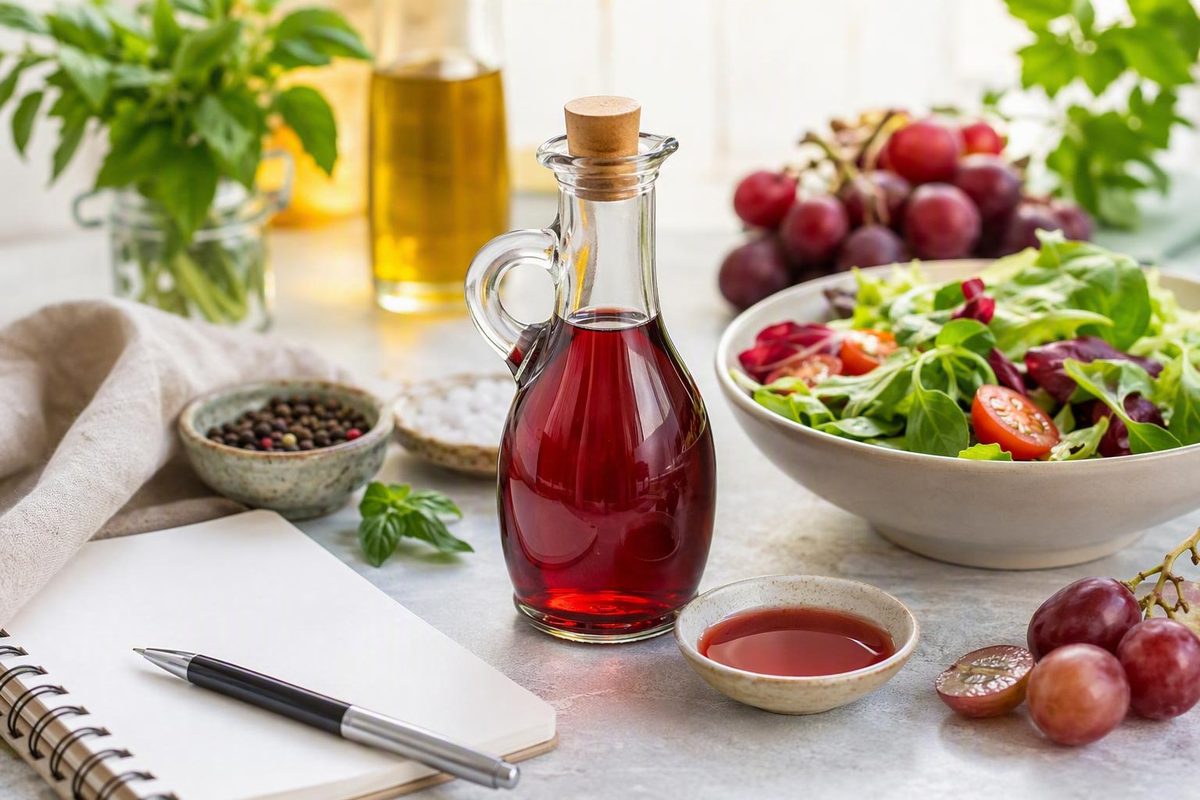
Complete conversion is the key. Under the cited guidance, wine added after production makes it unacceptable. Use five scenarios and four questions to check yours.
Is Red Wine Vinegar Halal?
Overview
Red wine vinegar is generally considered halal by many cited Islamic sources when the wine has genuinely transformed into vinegar and no wine or alcohol is added afterward. The deciding factors are whether that transformation is complete and whether the specific product has been altered after production — so a certified bottle is straightforward, while an unclear one deserves verification.
Three widely referenced discussions support this framing. Raleigh Masjid answers that red wine vinegar is considered halal because of the lack of trace alcohol left in the final product, while warning that vinegar with wine added after bottling is not halal. IslamQA summarizes that wine which turns to vinegar by itself is permissible, though scholars disagree about wine deliberately treated into vinegar. One Stop Halal explains that many scholars consider red wine vinegar halal because alcohol completely transforms into acetic acid, in line with the principle of istihalah. The rest of this article explains the reasoning and gives you practical checks for a specific bottle, dish, or ingredient list.
How red wine becomes vinegar
The reason a wine-derived product can be discussed so differently once it becomes vinegar is that vinegar production fundamentally changes the substance involved. Vinegar is made by oxidizing a form of alcohol: the ethanol in the starting liquid is converted into acetic acid, the sour compound that defines vinegar. IslamQA’s questioner frames this directly — all vinegar is made from oxidizing a form of alcohol, which is why ordinary vinegar is generally treated as halal in the first place.
In consumer terms, the wine stops being wine. The intoxicating component is what makes wine haram, and vinegar production converts that component into something else entirely. One Stop Halal describes this as the conversion of ethanol into acetic acid during vinegar production, and notes that many scholars view red wine vinegar as halal precisely because the alcohol completely transforms.
This transformation is why the halal discussion around red wine vinegar is not the same as the discussion around wine itself. The question scholars ask is not “was this once wine?” but “has it genuinely stopped being wine, and how did that happen?” Fermentation and oxidation together produce a new substance with a new name, new properties, and a new use — a bottle of red wine vinegar on a shelf is a souring agent for salads and sauces, not a beverage.
That said, the transformation argument only carries weight when the transformation is real and complete. If a product still contains wine, or has wine reintroduced later, the reasoning above no longer applies — which is exactly where the practical checks in later sections come in.
Why rulings can differ
If you have seen conflicting answers online, it is usually because scholars agree on the core principle but differ on specific scenarios. The shared principle is transformation, often discussed under the fiqh concept of istihalah: when an impure or prohibited substance genuinely changes into a different substance, the ruling can change with it. One Stop Halal presents this as the central argument many scholars use — red wine vinegar is halal because the alcohol has completely transformed into acetic acid, aligning with istihalah.
Where answers diverge is in the details of how the transformation happened and what the final product actually contains. IslamQA distinguishes between wine that turns to vinegar by itself, which its summary treats as permissible, and wine that is deliberately treated into vinegar, where scholarly disagreement exists. Raleigh Masjid adds a separate, product-level concern: even genuine vinegar becomes problematic if wine is added after bottling.
Different scholars and halal authorities weigh these scenarios differently, which is why one source may give an unqualified “yes” while another attaches conditions. The supplied sources do not map every school of thought or certifier position, so this article does not attempt that. The practical takeaway is simpler: the disagreements cluster around two questions — how the vinegar was made, and whether anything was added afterward. If either question is unclear for the product in front of you, treat that as a signal to verify rather than assume, and consult a trusted scholar or certifier for your own situation.
Natural transformation versus deliberate conversion
The distinction that most often explains conflicting rulings is whether the wine became vinegar on its own or was deliberately converted. According to IslamQA’s summary, when wine turns to vinegar by itself, it is permissible — this is the least contested case. The disagreement arises when wine is deliberately treated or processed into vinegar, where the same source explains that scholars hold differing views.
For a shopper, this matters because commercial red wine vinegar is a manufactured product, and its label rarely explains how the conversion happened. That does not automatically make it impermissible — many cited sources, including One Stop Halal, argue the complete transformation into acetic acid is what counts — but it does explain why some readers prefer halal-certified vinegar, which removes the need to judge the production method themselves.
If this distinction matters to you or to the scholarly opinion you follow, the practical move is to look for certification or ask the manufacturer about the production process rather than guessing from the bottle.
Wine added after vinegar production
A separate and more decisive red flag is wine or alcohol added after the vinegar is already made. Raleigh Masjid warns explicitly that vinegar with wine added after bottling is not halal. This is a different issue from transformation: the vinegar itself may have fully converted, but reintroducing wine puts actual wine back into the product.
This is why reading the full ingredient list matters, not just the product name. A bottle labeled simply “red wine vinegar” is a different situation from one whose ingredients mention added wine or a wine flavoring introduced after fermentation. Gourmet or specialty products are the place to be most attentive, since flavor additions are more common there.
If an ingredient list or product description suggests wine was added to the finished vinegar, treat that product as not acceptable under the guidance cited here, and choose a plain or certified alternative instead.
A practical decision matrix
Most real-world decisions about red wine vinegar fall into a handful of scenarios, and the reasoning above maps cleanly onto them. The matrix below combines the transformation principle from One Stop Halal, the natural-versus-deliberate distinction from IslamQA, and the post-production warning from Raleigh Masjid into practical next steps.
| Scenario | What the cited sources support | Practical next step |
|---|---|---|
| Halal-certified red wine vinegar | Certification addresses production and ingredient questions for you | Accept; confirm the halal logo and certification details on the packaging |
| Plain red wine vinegar, no added wine on the ingredient list | Many cited sources treat fully transformed vinegar as halal (istihalah) | Generally acceptable per those sources; verify further if you follow a stricter opinion |
| Production method unclear, and the natural-vs-deliberate distinction matters to you | Scholarly disagreement exists over deliberately converted wine vinegar (IslamQA) | Ask the manufacturer about the process, or choose a certified product |
| Uncertainty about residual alcohol in the final product | Raleigh Masjid’s reasoning relies on no trace alcohol remaining | Ask the manufacturer or certifier whether alcohol remains in the final product |
| Wine or alcohol added after vinegar production | Not halal per Raleigh Masjid | Avoid; choose a plain or certified alternative |
No matrix can replace guidance from a scholar or certifier you trust, especially for edge cases. But for everyday shopping and cooking, these five rows cover the situations you are most likely to face, and each one has a concrete action rather than an open-ended worry.
What to check on the bottle or label
When you are standing in the aisle with a bottle in hand, a short check answers most of the questions raised so far. The goal is to confirm two things: that the product is genuinely vinegar, and that nothing was added after production that would change its status.
Work through these checks in order:
- Ingredient list. Look for a simple declaration such as “red wine vinegar.” Investigate further if you see wording that suggests added wine, alcohol, or wine-based flavoring in the finished product — Raleigh Masjid flags wine added after bottling as making the vinegar not halal.
- Halal logo and certification. A recognized halal logo with certification details is the strongest shortcut, because a certifier has already evaluated the production process and ingredients.
- Registration or certification number. Where a certification number appears, it lets you confirm the claim with the certifying body rather than relying on the logo alone.
- Production wording. Phrases describing the product as flavored with wine or blended with wine after fermentation should trigger further questions before you buy.
If the label passes all of these checks, most of the cited guidance supports using the product. If any check fails or leaves you unsure, the next two subsections cover what to clarify — starting with residual alcohol, then the specific questions worth asking.
Residual alcohol questions
Residual alcohol is worth understanding because it sits at the heart of the most common halal reasoning. Raleigh Masjid’s answer considers red wine vinegar halal specifically because of the lack of trace alcohol left in it — the position rests on no alcohol remaining in the final product.
The supplied sources do not publish a universal numeric threshold for acceptable residual alcohol, and commercial products are not all made identically, so this article will not invent one. What you can do is treat residual alcohol as a verification question rather than an assumption: if a product’s labeling or description raises doubt about whether alcohol remains, ask the manufacturer or a certifier directly, or defer to a halal-certified product where that question has already been answered. If you follow a scholar with a specific position on trace alcohol, bring their criteria to that conversation.
Questions to ask the manufacturer or certifier
When a label leaves gaps, a short email or message to the manufacturer — or a query to the certifying body, if one is listed — usually resolves them. Keep the questions specific so the answers are usable.
- How is your red wine vinegar produced, and is the wine fully converted into vinegar?
- Does any alcohol remain in the final product?
- Is any wine, alcohol, or wine-based flavoring added after the vinegar is made or bottled?
- Is the product halal certified, and by which body? Can you share the certification or registration number?
These four questions map directly onto the concerns raised by the cited sources: transformation, residual alcohol, post-production addition, and certification. Clear answers to all four give you what you need to decide; vague or evasive answers are themselves useful information, and a reasonable prompt to pick a different product.
Restaurants, sauces, dressings, and packaged foods
Foods that list red wine vinegar as an ingredient follow the same logic as the bottle itself, but with less visibility. The ingredient in a vinaigrette, marinade, or packaged sauce is subject to the same reasoning — One Stop Halal notes that many scholars treat red wine vinegar as halal because the alcohol has fully transformed into acetic acid — so the presence of “red wine vinegar” on an ingredient list is not, by itself, a reason to avoid a dish.
The complication is that you often cannot verify the details. A restaurant dressing may not come with an ingredient list at all, and a packaged food’s list tells you the vinegar is there but not how it was produced or whether the dish also contains actual wine as a separate ingredient. A few practical habits help:
- At restaurants, ask whether a dressing, marinade, or sauce contains wine itself, not just wine vinegar — the two are different questions.
- On packaged foods, scan the full ingredient list for wine listed separately from the vinegar.
- When the answer is unclear and the dish matters to you, ask staff to check with the kitchen, or choose an option without the uncertainty.
The same decision matrix from earlier applies here: transformed vinegar with no added wine is the generally accepted case, while confirmed wine as an ingredient is a different situation entirely. When you cannot get clarity, choosing an alternative dish is a legitimate and low-cost resolution.
How red wine vinegar compares with common alternatives
If you prefer to sidestep the red wine vinegar question altogether, several common vinegars can substitute in most recipes — though each carries its own verification questions rather than automatic certainty. One Stop Halal covers red wine vinegar within the broader landscape of vinegar production, and the same transformation logic applies across vinegar types: every vinegar starts from an alcohol-containing liquid, as the IslamQA question itself notes about wine and spirit vinegar.
In practice, the comparison looks like this. Apple cider vinegar and white vinegar do not start from grape wine, which removes the specific association many readers are uneasy about, but they still involve fermentation and alcohol conversion, so certification remains the cleanest assurance for cautious readers. Spirit vinegar is made from a distilled alcohol base, which is exactly the case raised in the IslamQA question, so it invites the same transformation questions as wine vinegar rather than fewer. Balsamic vinegar is grape-based like red wine vinegar, and some products involve wine-related production or additions, so its ingredient list deserves the same scrutiny you would give a red wine vinegar label.
The honest summary is that switching vinegars changes the question, not the need to ask one. For any vinegar type, the same two checks resolve most doubt: read the ingredient list for added wine or alcohol, and prefer halal-certified products when you want the production question answered for you. If uncertainty remains for a product you rely on regularly, a one-time question to the manufacturer or a trusted certifier settles it more durably than switching brands blindly.