
Malt Vinegar Demystified: Barley Origins, Label Math, and Practical Kitchen Facts
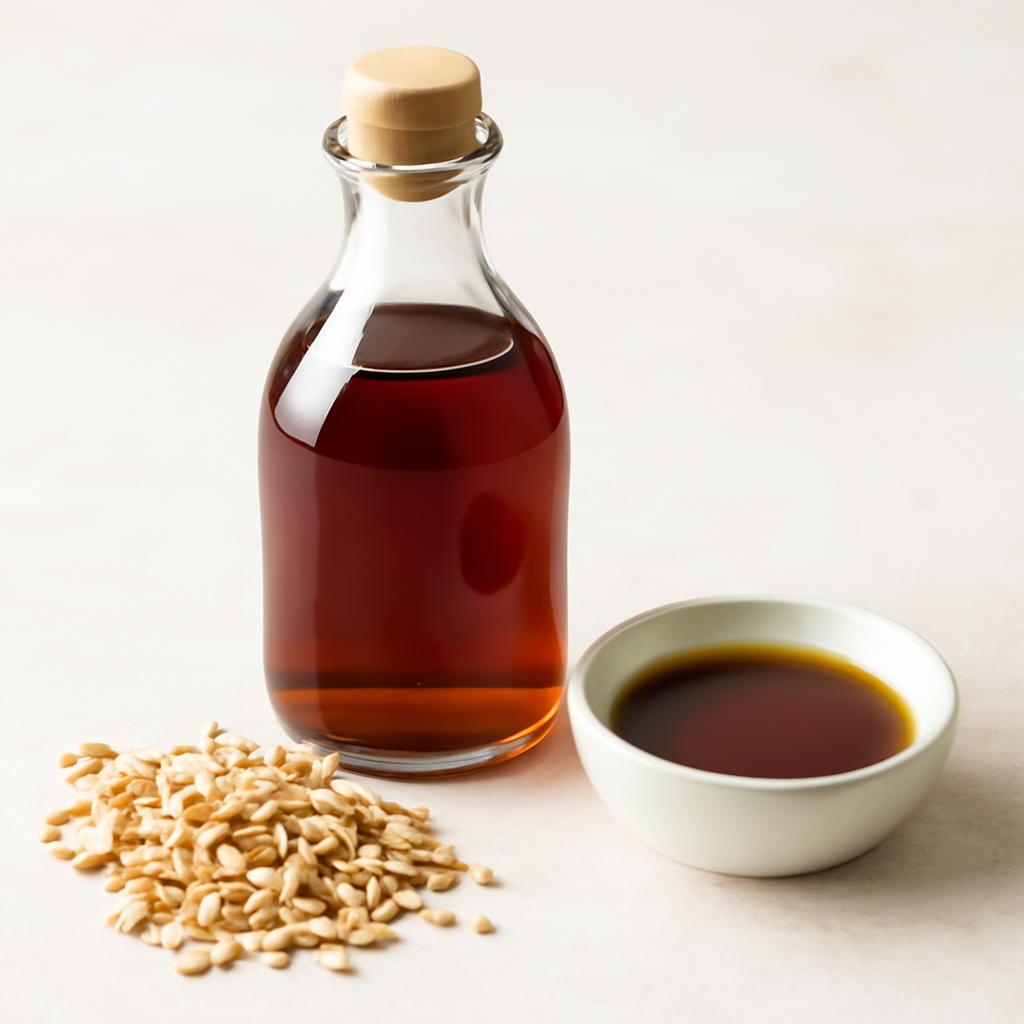
Fermentation is not a reason to treat standard malt vinegar as automatically safe for a gluten-free diet.
If you are wondering what is malt vinegar, the short answer is: a vinegar made from malted barley, usually by fermenting the grain into an ale- or beer-like liquid first and then converting that alcohol into acetic acid. That barley origin explains most of what shoppers want to know at a glance: why malt vinegar tastes different from white vinegar, why bottles often show 0 calories per tablespoon, and why standard malt vinegar is not considered gluten-free despite heavy fermentation. MasterClass
Definition and Origins of Malt Vinegar
At its core, malt vinegar is vinegar made from malted barley. Across consumer explainers, the standard description is a two-stage process: barley is malted and brewed into ale, and that ale is then fermented again until alcohol becomes acetic acid. MasterClass Flower City Flavor The “malt” in the name refers to the malted grain itself, not to an added flavor.
Historically, malt vinegar is closely tied to brewing cultures, especially in Britain. Vinegars of Europe says early malt vinegar was often made by letting beer sour completely, producing what was called “alegar,” a blend of ale and vinegar in both name and origin. Vinegars of Europe American Vinegar Works describes the same broad lineage, placing malt vinegar in brewing regions where beer and vinegar production naturally overlapped.
For everyday grocery bottles, malt vinegar is usually described in the 4% to 5% acetic acid range. Flower City Flavor gives that as a common range, and Heinz lists its product at 5% acidity. Flower City Flavor Heinz Finished vinegar is a condiment, not a beer; one producer says finished vinegar is typically below 0.5% ABV, but that should be read as a producer-specific description rather than a universal number for every brand.
Appearance varies more than many shoppers expect. Food Republic describes malt vinegar as ranging from light beige to deep caramel-brown, while MasterClass notes that some distilled versions are clear. Food Republic MasterClass So one bottle looking amber and another nearly water-clear does not necessarily mean one is mislabeled; it may simply be a different style.
Step-by-Step Production Process
The process starts with malting. Barley is soaked so it begins to germinate, then dried or heated to stop germination. That step matters because the grain’s enzymes help convert starches into fermentable sugars. Get Er Brewed Flower City Flavor Vinegars of Europe makes the same point in more technical terms, saying the starch is converted to sugars by the diastase of malted barley.
Next comes brewing. The malted grain is crushed, mixed with water, and turned into wort. Yeast then ferments the sugars into alcohol, producing an ale- or beer-like liquid. Get Er Brewed Food Republic This is the stage that gives malt vinegar its grain-driven identity: before it becomes vinegar, it begins life much closer to beer than to apple cider or wine.
After that comes acetification, the actual vinegar-making step. Consumer sources usually describe acetic acid bacteria, often named as Acetobacter, converting the alcohol into acetic acid. Yahoo A home-brewing guide gives a finished pH target of about 2.5 to 2.7, and Flower City Flavor gives the same range in a FAQ. That is useful process context, but it is better treated as a production target than a universal retail spec.
What happens next depends on the maker. American Vinegar Works describes slower methods that include racking off lees and mellowing, while also contrasting them with faster industrial acetification and filtration. That is best read as a process distinction, not a universal quality ranking: some producers emphasize speed and consistency, while others emphasize slower flavor development.
Another useful label-reading point is that not every bottle is barley alone. Heinz lists ingredients as malt vinegar (barley, corn malt), diluted with water. Vinegars of Europe likewise notes that malt vinegar may be made from malted barley with or without added cereal grains. So the safest general answer to “what is malt vinegar made from?” is usually malted barley, sometimes with other grain inputs depending on the product.
Flavor Profile and Characteristics
Malt vinegar is usually described as tangy, malty, and less harsh than white vinegar. Depending on the source, its grain notes are called nutty, toasty, caramel-like, slightly sweet, or sometimes citrus-leaning. MasterClass Because this language comes mostly from food writing and producer descriptions, it is best understood as sensory shorthand rather than lab-verified flavor chemistry.
Compared with white vinegar, malt vinegar is generally described as rounder and more flavorful. Food Republic frames white vinegar as more neutral and harsher, while malt vinegar brings noticeable grain character and a slightly sweeter edge. Compared with many wine vinegars, it is often described as less sharp, though still full-bodied enough to hold up against fried foods and hearty dishes. Heinz describes its own malt vinegar as pungent and full-bodied with a subtle malt hint.
Style matters too. Consumer sources commonly divide malt vinegar into three broad types:
- Dark malt vinegar, usually deeper in color and more caramel-like
- Light malt vinegar, milder in both flavor and appearance
- Distilled malt vinegar, clear and generally cleaner or sharper tasting
Texture is simple and practical: it pours like a table vinegar, not like a syrup. PerkChops describes malt vinegar as having a thin viscosity and translucent brown tone, which matches what most shoppers expect from an everyday bottle.
The defining tasting point is that malt vinegar brings acidity plus a faint beer-like malt background. That is why it works so well on fried potatoes, battered fish, pickled onions, and savory sauces. Some craft producers push the beer character further by starting from porter- or IPA-style bases, but those are specialty variations rather than a baseline grocery-store expectation.
Nutrition Facts and Calorie Counts
For calorie tracking, the headline number is straightforward: product pages and food directories commonly show 0 calories per 1 tablespoon (15 mL) serving. Heinz lists 0 calories, 0 g fat, 0 g carbs, 0 g protein, 0 g sugars, and 0 mg sodium per tablespoon, and PerkChops shows the same pattern for a tablespoon serving.
That does not mean malt vinegar came from “nothing.” It means nutrition labels report simplified values for a defined serving, not a complete chemistry breakdown. CaloriePages explains that packaged-food calories are based on the Atwater system and that label numbers are estimates rather than perfect direct measurements. CaloriePages About Flower City Flavor adds a practical explanation specific to malt vinegar: very small calorie amounts may be shown as 0 per serving on labels.
So the useful label-reading conclusion is: for a tablespoon serving, malt vinegar usually contributes negligible calories for tracking purposes, and many labels display that as 0. If you want the fuller label-math background, see why vinegar labels round to 0 calories.
Acidity is usually around 5% in supermarket products, again illustrated by Heinz’s label. Ingredient-wise, that same product is malt vinegar (barley, corn malt), diluted with water, which helps explain why the nutrition panel looks nearly empty despite the grain origin.
Some consumer sources also describe malt vinegar as a fit for certain dietary patterns in small condiment amounts. Because labels such as Heinz show 0 g carbohydrate per tablespoon, some shoppers treat it as compatible with very low-carb tracking, and because the basic process uses grains, water, yeast, and bacteria, food writers often describe it as vegan by process. Flower City Flavor Food Republic Still, those are best treated as brand- and serving-based judgments, not blanket rules that override the bottle in your hand.
One misconception worth avoiding is that “grain-based” automatically means “high-carb” in the finished product. By the time you are looking at the final vinegar, fermentation and dilution have left you with an acidic condiment, not a starchy serving of barley. More broadly, gluten-free does not equal low-carb, and the reverse is often true as well.
Gluten Status and Dietary Considerations
For readers checking labels specifically for gluten, the main answer is clearer than the calorie question: standard malt vinegar is generally not considered gluten-free because it is made from barley, a gluten-containing grain.
There is some nuance around fermentation. Yahoo notes that fermentation may reduce gluten levels, but the consumer-facing sources in this evidence set still arrive at the same practical conclusion: do not assume ordinary malt vinegar is gluten-free. Yahoo Food Republic In other words, fermentation is not a reason to treat standard malt vinegar as automatically safe for a gluten-free diet.
That is also why it is better not to describe normal production as “de-glutenizing” the product. The sources here do not support that. They consistently point back to the same base ingredient—barley—and classify standard malt vinegar as unsuitable for people who need a gluten-free product.
For stricter medical needs, the cautious approach is to rely on the product label and professional advice rather than on general food-media summaries. CaloriePages’ terms note that site content is informational only and advise consulting a registered dietitian or physician before making diet changes, especially when a health condition is involved.
If you already scan cereals or snacks for gluten risks from malt ingredients, the same habit applies here: “malt” is a meaningful label clue. And if you are used to doing a sauce-by-sauce check, the process is similar to verifying gluten-free condiments: start with the base ingredient, then look for any brand-specific gluten-free claim, certification, or allergen guidance.
On religious or preference-based labeling, the evidence is thinner and more brand-specific. Flower City Flavor says Heinz and London Pub malt vinegars have OU Kosher certification and discusses halal status as depending on how the final transformed product is evaluated. That is best treated as a brand-level point, not a universal rule for all malt vinegars.
Common Culinary Uses and Recipe Ideas
Malt vinegar’s most famous use is the classic one: fish and chips. Multiple sources describe it as the traditional condiment for battered fish, fries, and other fried foods because its acidity cuts richness without tasting as blunt as plain white vinegar.
Beyond that pub-food identity, malt vinegar is also useful in pickling, especially onions, and in chutneys, where the malty background suits savory-sweet preserves. Get Er Brewed It has enough acidity for preservation-style recipes while bringing more character than plain white vinegar.
It also works well in:
- salad dressings
- marinades
- glazes
- aioli or mayo-based sauces
- coleslaw
- bean salads
- stews and braises
Geographically, sources consistently frame malt vinegar as a staple of British cooking and often note Canadian use as well. That helps explain its best-known role: it shines in hearty, savory food rather than delicate, highly perfumed dishes.
Can it substitute for white vinegar? Often yes, but not invisibly. In dressings, marinades, or glazes, swapping in malt vinegar will add depth. In pale pickles or delicate recipes, though, its brown tint and malty flavor can change the result noticeably. It is best thought of as a flavoring vinegar, not just a generic souring liquid.
For calorie trackers, that is part of its appeal: a tablespoon can add sharpness and character to potatoes, beans, vegetables, fish, or lean proteins without materially changing the label math. It can also be useful in high-protein meals that benefit from a zero-calorie flavor boost.
Storage, Shelf Life, and Buying Tips
Consumer guidance generally says to store malt vinegar at room temperature in a cool, dark place. Like other acidic vinegars, it is typically treated as shelf-stable enough that refrigeration is not usually necessary in normal home use.
The evidence in this pack is much weaker on exact post-opening timing, so it is better not to overstate a precise deadline. The safest summary is simply that unopened bottles are very stable, opened bottles are usually kept at room temperature as well, and flavor quality may fade over time. If a manufacturer gives product-specific guidance, that should override generic advice.
When checking an older bottle, use common sense: look for a clearly off odor, visible contamination, or damaged packaging. A normal-looking bottle of vinegar does not automatically become unusable because it has sat in the pantry for a while, but the evidence here is not strong enough for a universal month-by-month rule.
As for where to buy it, sources place malt vinegar in the condiment aisle, sometimes the bakery aisle, or in international/British sections depending on the store. Food Republic Heinz is a common grocery example, while specialty producers also sell beer-specific styles.
If you want the classic fish-and-chips experience, an ordinary supermarket bottle is enough. If you want to experiment, craft versions made from darker beers or hoppier ales may deliver stronger roasted or beer-like notes, but those are optional variations, not the baseline definition of malt vinegar.
Malt Vinegar vs. Other Vinegars
The easiest comparison is with white vinegar. Food Republic describes white vinegar as more neutral and harsher, while malt vinegar is grain-based, rounder, and more flavorful. If you want acidity with minimal extra taste, white vinegar often makes more sense. If you want the vinegar itself to contribute flavor, malt vinegar is usually the better fit.
Against apple cider vinegar, the clearest difference is the base ingredient: apples on one side, malted grain on the other. Flower City Flavor notes that vinegar can be made from many different starting materials, including apple cider and wine, while malt vinegar specifically comes from malted barley. That difference in base helps explain the difference in aroma: apple cider vinegar reads fruitier, while malt vinegar reads toastier and more ale-like.
Against wine vinegars, malt vinegar is usually portrayed as less sharp and less winey, making it especially useful for fried foods, roasts, and hearty pickles rather than the lightest vinaigrettes.
One broad similarity across vinegar types is acidity. Yahoo describes vinegar generally as an aqueous solution containing about 4% to 7% acetic acid, and sources on malt vinegar commonly place it near 4% to 5%. Flower City Flavor So the major difference is usually flavor base, not whether one product “counts” as real vinegar.
The practical takeaway is simple: malt vinegar is a barley-based, double-fermented condiment with a distinctive savory tang and a label that often reads 0 calories per tablespoon. It is excellent on fried foods and in pickles, but it is the wrong choice if you need a clearly gluten-free vinegar or a neutral acid. Check the bottle for ingredient details, acidity, and any dietary certifications, and remember that this article is general information rather than medical or dietary advice.
Does malt vinegar have calories?
On labels, usually no meaningful calories per tablespoon. Heinz lists 0 calories per 1 tablespoon (15 mL) along with 0 g carbs, fat, and protein, and PerkChops shows the same pattern. CaloriePages explains that food-label calories are estimate-based rather than a perfect chemistry readout, which is why very small amounts can show up as zero on labels.
Is malt vinegar gluten-free?
No. Standard malt vinegar is not generally considered gluten-free because it is made from barley. Get Er Brewed Flower City Flavor If you need a gluten-free product for medical reasons, rely on the product label and professional guidance rather than assuming fermentation changes that answer.
Can you make malt vinegar at home?
Yes. Get Er Brewed describes a home method using malted barley or malt extract, water, yeast, and a vinegar culture or “mother,” with fermentation first to alcohol and then to acetic acid. The main cautions are sanitation, patience, and monitoring acidity rather than rushing the process.
Is there alcohol in malt vinegar?
Finished malt vinegar is not beer, and the alcohol is meant to be converted during acetification. American Vinegar Works says finished vinegar is typically below 0.5% ABV, while broader explainers simply describe the ale being turned into acetic acid. The practical answer is that any residual alcohol should be very low, but exact levels are brand-specific, not something to assume universally.
What is distilled malt vinegar?
Distilled malt vinegar is a clear version made by distilling already acetified malt vinegar under vacuum. Vinegars of Europe says the result is a water-like liquid containing the volatile constituents of the original vinegar and that it is slightly less acidic—about 0.2% lower—than the starting vinegar.
Sources
- Third Party · What Is Malt Vinegar? Learn How Malt Vinegar Is Used in Cooking With 4 Recipe Ideas - 2026 - MasterClass.
- Third Party · The History of Malt Vinegar | Traditionally Crafted Today.
- Blog · Making Your Own Malt Vinegar - Get Er Brewed Blog.
- Product Page · Malt Vinegar | Heinz.
- Third Party · What is Malt Vinegar? Intense, Powerful Flavor (2026).
- Third Party · What Is Malt Vinegar?.
- Third Party · Malt Vinegar - Vinegars of Europe.
- Lifestyle Article · Everything You Need to Know About Malt Vinegar, According to a Vinegar Expert.
- Third Party · Malt Vinegar Nutrition Facts And Calories | Description | Taste.
- First Party · About · CaloriePages.
- First Party · Terms of Use · CaloriePages.