
Honeyed Wine Explained: What Mead Means for Calorie Counts and Nutrition Tracking
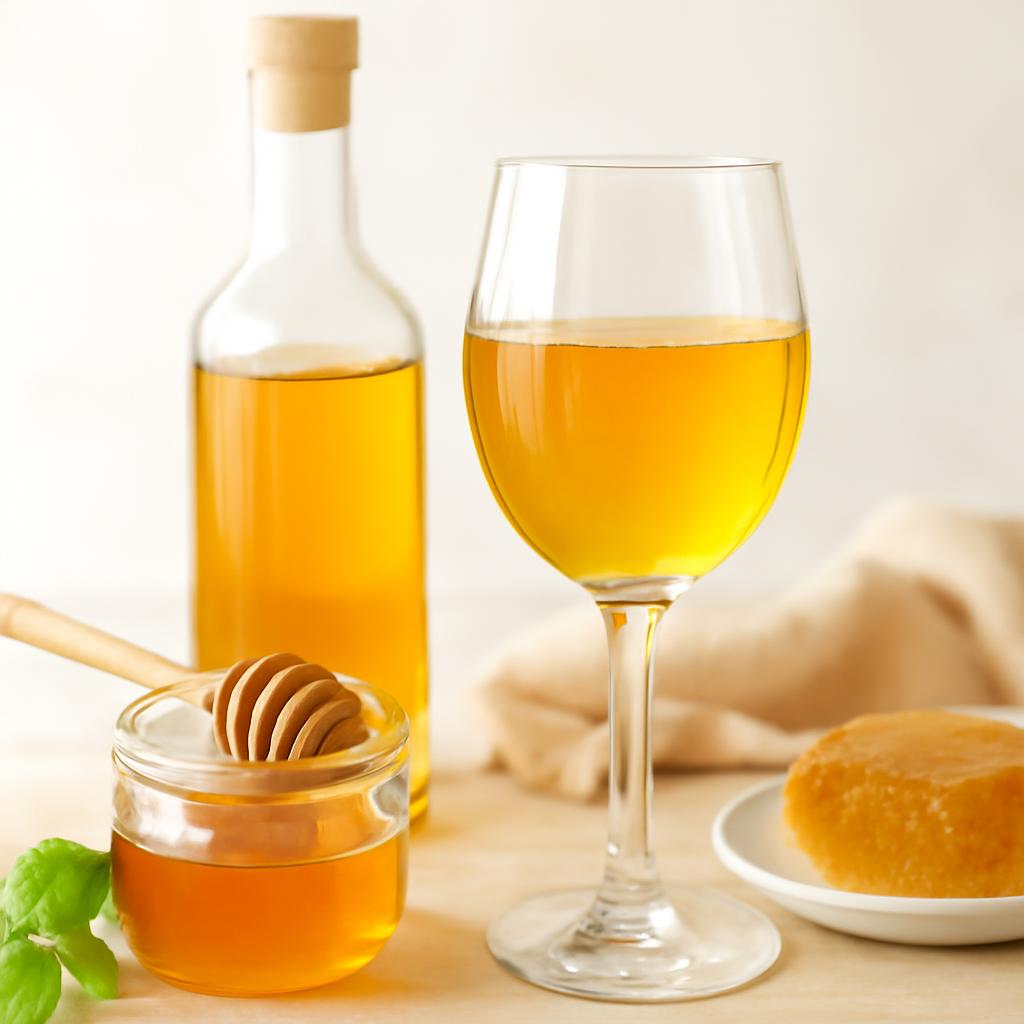
Mead spans about 3.5% to 20%+ ABV, so the label matters more than the category name. One bottle may be light; another may resemble a strong dessert pour.
If you searched “what is honeyed wine,” the shortest accurate answer is that in modern drink usage it usually means mead: an alcoholic beverage made by fermenting honey diluted with water, with honey providing the main fermentable sugar. It is often also called honey wine, even though it is not grape wine in the usual sense. (Mead - Wikipedia, What Is Honeyed Wine? Meaning, Taste, History, and How It’s Made - Wine Compass)
That definition matters for tracking. “Honeyed wine” is not a fixed nutrition category with one standard calorie number. Mead can be dry or sweet, still or sparkling, and relatively light or quite strong, so two bottles with similar names can behave very differently in a food log. (Mead - Wikipedia)
So the useful calorie-tracking question is not just “Is this honeyed wine?” It is:
- How strong is it?
- How much am I actually pouring?
- Is it dry or sweet?
- Does this bottle give any bottle-specific nutrition information?
That bottle-first mindset is the safest way to think about mead.
Defining Honeyed Wine and Its Core Ingredients
Honeyed wine is usually just a plain-English way of saying mead. Across the stronger sources in this evidence set, the shared definition is consistent: mead is made by fermenting honey with water, usually with yeast, and the defining feature is that honey supplies the majority of the fermentable sugar. (Honey Wine vs Mead: What’s the Difference?)
That makes it different from other familiar drinks:
- Grape wine is built primarily from grape sugars.
- Beer is built primarily from grain.
- Cider is built primarily from apples.
- Mead / honeyed wine is built primarily from honey. (What Is Honeyed Wine? A Complete Guide to Mead, Taste, and Types)
Optional additions do not change that core definition on their own. Mead may include fruit, herbs, spices, grains, or hops, but those are variations on the base rather than the base itself.
One nuance does matter when you read labels or menu descriptions: the phrase “honey wine” can be used loosely. One source in this set notes that grape wine containing honey is not automatically mead, because the real question is still what provided the fermentable base.
For a calorie tracker, that leads to a simple rule:
- If honey built the alcohol, you are in mead territory.
- If a drink is basically grape wine with honey added, it is not the same thing nutritionally or categorically.
So when a bottle says “honeyed wine,” do not stop at the front label. Check the back label, style description, and producer notes if they are available.
Alcohol Content and Serving Size Basics
Honeyed wine has a very wide strength range. Across the sources here, mead runs from about 3.5% ABV to 20%+ ABV.
A practical way to picture that range is:
- Session mead / hydromel: roughly the low end, often under about 8% ABV.
- More wine-like mead: often around the middle, commonly about 10% to 14% ABV in broad style descriptions.
- Strong mead: can reach the high teens or over 20% ABV.
That spread is the first reason generic calorie entries are shaky. A 5 oz pour of a low-ABV, dry mead and a 5 oz pour of a high-ABV, dessert-style mead are not remotely the same drink from a logging perspective.
Serving size matters just as much as strength. Mead may be poured:
- like table wine,
- like sparkling wine,
- like dessert wine,
- or in smaller tasting-room servings.
So “one glass” is not a reliable unit unless you know the actual volume. If you already think about drinks the way you do in gin and tonic calorie estimates, the same first step applies here: start with the actual pour and the bottle ABV.
Calories in Honeyed Wine: Label-Based Estimates
There is no universal calorie count for honeyed wine, because mead is not one recipe. The same category includes dry traditional mead, sweet fruit mead, lighter session mead, and strong wine-like versions.
For practical tracking, the biggest sources of variation are:
- Alcohol strength
- Actual pour size
- Sweetness and likely residual sugar
- Whether fruit, apple, grape, or grain additions change the profile
That means the word mead by itself is not enough to log confidently. A database entry that simply says “mead” may be usable as a placeholder, but it is a weak substitute for bottle-specific information.
A better hierarchy looks like this:
- Best case: the bottle or producer gives a serving size and nutrition data.
- Next best: you have the bottle ABV and a clear style description such as dry, semi-sweet, sweet, cyser, pyment, or braggot.
- Weakest case: you only know that it is “honeyed wine.”
When details are sparse, the safest assumption is not that all meads are alike, but that your estimate has a wider margin for error.
This is also why “sounds sweet” is not enough. Mead begins with honey, but the finished drink can still be dry. Conversely, a sweet mead can retain far more sweetness than a dry one.
If you want a useful comparison framework, compare the same label-based math used for Prosecco. The category is different, but the habit is similar: bottle-specific details beat generic alcohol-category guesses.
Carbs, Sugars, and Sweetness Variations
Honeyed wine is not automatically sweet. Multiple sources explicitly note that mead can be dry, semi-sweet, or sweet.
That matters because honey is the starting sugar source, not a guarantee of the final sweetness level. Wine Compass explains the basic process clearly: honey is diluted with water, then yeast ferments those honey sugars into alcohol.
For tracking, the takeaway is straightforward:
- the same base ingredient can finish drier or sweeter,
- sweetness tells you something about what likely remains in the finished drink,
- and dry and sweet meads should not be treated as interchangeable entries.
That is especially true once subtypes enter the picture. A dry traditional mead and a sweet melomel may have the same broad category label, but they do not present the same likely sugar profile.
If a bottle prints carbs or other nutrition data, use that. If it does not, the style statement is still useful. Terms such as dry, semi-sweet, sweet, or dessert-style are not hard numbers, but they are better than pretending every mead is nutritionally identical.
If your goal is to keep alcohol calories more predictable, drier styles are usually easier to estimate than sweeter ones. For more general serving and substitution ideas, see low-calorie mixed drink strategies.
Gluten-Free Status and Label Checks
Traditional mead is generally described as gluten-free because its classic base is honey, water, and yeast rather than wheat, barley, or rye.
But that statement applies most safely to traditional mead, not to every drink that may be sold near it.
The clearest exception in this evidence set is braggot, a mead style that includes grain or malt.
So the practical rule is:
- Traditional mead: usually a good gluten-free candidate by ingredients
- Braggot or grain-inclusive hybrids: do not assume
- Specialty or flavored bottles: read the style description and ingredient information
That is why label checking matters. If the bottle says traditional mead, that is different from a bottle that says braggot, honey-grain hybrid, or something similarly specific. The same basic bottle-reading habit applies in other fermented categories too; see how to verify gluten status in sake.
Common Types and Nutrition Differences
The most useful style names for calorie trackers are the ones that tell you what else may be in the bottle.
Common mead types named in this evidence set include:
- Traditional mead: the basic honey-water-yeast form.
- Melomel: fruit mead.
- Metheglin / methaglyn: mead with spices or herbs.
- Cyser: mead with apple juice or cider.
- Pyment: a honey-and-grape hybrid.
- Braggot: a honey-and-grain or honey-and-malt hybrid.
From a tracking standpoint, these names matter because they signal where variability is likely to come from:
- Traditional mead is usually the simplest starting point.
- Fruit meads add another place where sweetness can vary.
- Apple- or grape-based hybrids move farther from plain honey-water mead.
- Braggots are the styles most likely to change both gluten assumptions and general nutrition expectations.
All of these may still fall under the broad mead family if honey remains the main fermentable base. But the subtype gives you a better clue than the word mead alone.
How Labels Calculate Honeyed Wine Nutrition
For this topic, the most responsible label advice is also the simplest: do not expect the phrase “honeyed wine” to tell you enough for accurate logging.
What the evidence here clearly shows is that mead varies by:
- ABV
- sweetness
- carbonation
- added fruit, spice, apple, grape, or grain ingredients
- serving practice
So when you read a label, use the information in roughly this order:
- Serving size or actual pour
- ABV
- Style or subtype
- Any printed nutrition information
That order matters because a bottle labeled only “honey wine” gives you far less than a bottle labeled, for example, “dry traditional mead, 8% ABV” or “sweet blackberry melomel, 14% ABV.”
In other words, label reading is less about decoding a mysterious ancient beverage and more about resisting bad shortcuts. If your app has only one generic mead entry, that entry is a rough stand-in, not a fact about every bottle in the category.
For a broader explanation of calorie-label mechanics in general, see how food labels calculate calories. For mead specifically, the main lesson is still bottle variation.
Tracking Honeyed Wine in Your TDEE
The cleanest way to fit honeyed wine into daily tracking is the same way CaloriePages recommends calibrating intake more broadly: measure what you consume, log it consistently, and compare your intake estimate with your body-weight trend over time. (TDEE Explained: What the Number Actually Measures and How to Get It Right)
A practical mead workflow looks like this:
- Measure the pour instead of assuming every glass is the same.
- Record the bottle ABV.
- Note the style: dry, semi-sweet, sweet, traditional, melomel, cyser, braggot, and so on.
- Use bottle-specific nutrition data if it exists.
- Watch your trend, not just the single log entry. If your intake record and your body-weight trend disagree for several weeks, adjust the estimate. (TDEE Explained: What the Number Actually Measures and How to Get It Right)
This is especially helpful with mead because the category is so broad. One bottle behaves more like a dry wine. Another behaves more like a sweet specialty pour. Treating both as the same app entry is where most logging error starts.
The practical goal is not perfect precision. It is to be consistently close enough that your longer-term trend can correct the noise.
Honeyed wine, then, fits calorie tracking best when you treat it as a variable alcoholic drink built from honey, not as a single nutrition profile. Check the bottle. Measure the pour. Use style cues carefully. Then let your longer-run log and weight trend tell you whether your estimate is realistic. This article is for general informational purposes only and not medical or dietary advice. (Terms of Use · CaloriePages)
Is honeyed wine the same as mead?
Usually, yes. In common modern usage, honeyed wine usually means mead: an alcoholic drink made by fermenting honey with water, with honey as the main fermentable source.
The main nuance is that honey wine can sometimes be used more loosely, so it helps to check whether honey was the actual fermentable base or just an addition to another wine product.
How many calories in a 5 oz serving of honeyed wine?
There is no universal number. A 5 oz serving depends on the bottle’s ABV, its sweetness, and the specific style of mead you are drinking. Mead can range from about 3.5% ABV to 20%+ ABV and from dry to sweet, so one generic database entry will often be too crude.
The most reliable approach is to use bottle-specific information whenever you can, and to treat dry, lower-strength meads and sweet, stronger meads as different tracking problems rather than the same drink.
Is honeyed wine gluten-free?
Traditional mead usually is, because it is generally described as a honey-water-yeast drink rather than a grain-based one.
But that does not mean every honey-based bottle is a safe assumption. Braggots and other grain-inclusive hybrids are a different case, so checking the label or style description is still the smart move.
Does honeyed wine have carbs even if dry?
Potentially, yes. Mead starts with honey as its sugar source, but the finished drink can range from dry to sweet depending on how fermentation and final style play out.
So dry should be read as drier than sweet styles, not as a guarantee that every bottle has the same remaining sugar profile. If a bottle gives nutrition data, that is more useful than the style word alone.
What ABV should I expect from honeyed wine?
Expect a broad range rather than one standard number. Across the sources here, mead commonly spans about 3.5% to 20%+ ABV. Lighter session versions sit near the low end, more wine-like bottles often land in the middle, and stronger meads can reach the high teens or beyond.
That is why the label matters more than the category name. One mead may drink like a lighter specialty beverage; another may be much closer to a strong dessert-style pour.
Sources
- Third Party · Mead - Wikipedia.
- Third Party · What Is Honeyed Wine? A Complete Guide to Mead, Taste, and Types.
- Third Party · What Is Honeyed Wine? Meaning, Taste, History, and How It’s Made - Wine Compass.
- Third Party · Honey Wine vs Mead: What’s the Difference?.
- First Party · TDEE Explained: What the Number Actually Measures and How to Get It Right.
- First Party · Terms of Use · CaloriePages.