
What Is Foie Gras? Production, Forms, Labeling, and the Welfare Debate
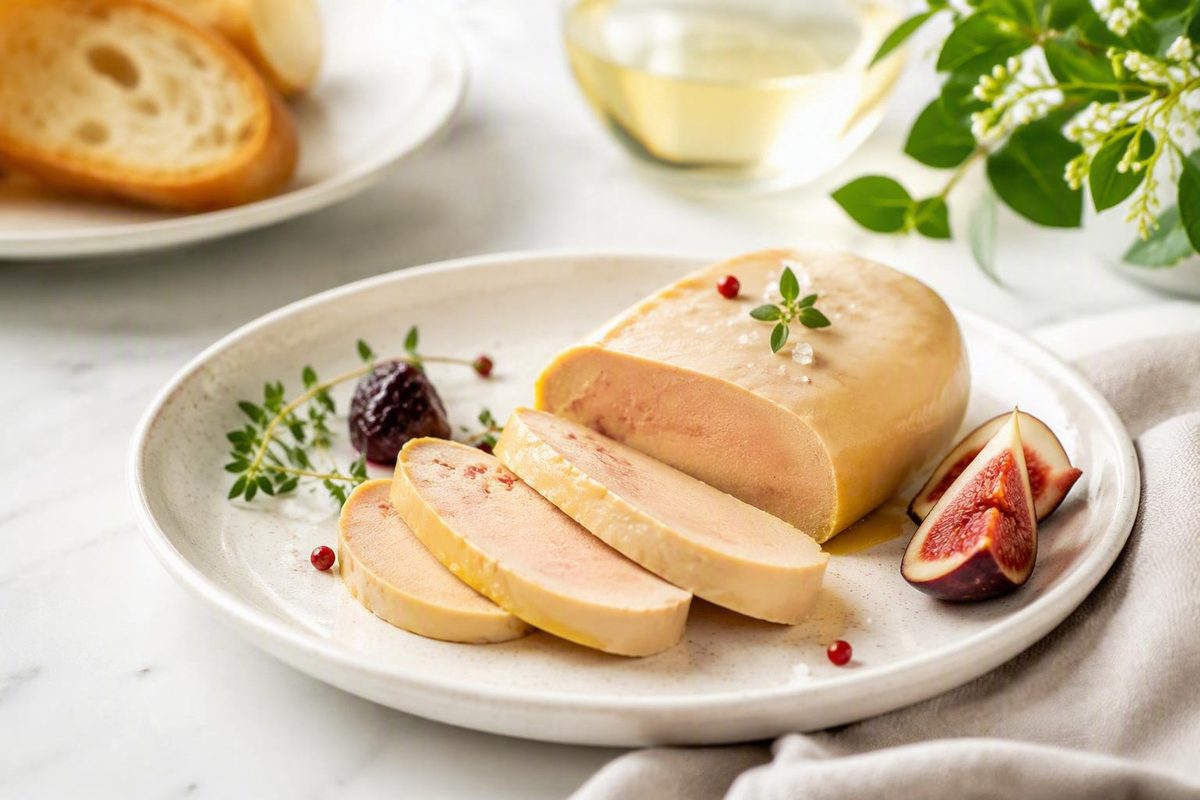
It names the liver itself, not a spread. Pâté is a broad preparation category and may contain no foie gras. Menu terms identify the form being served.
Overview
Foie gras is the specially fattened liver of a duck or goose, and the French name translates literally as “fatty liver” (D’Artagnan; Healthline). Conventional production commonly uses gavage, or force-feeding, to build up fat in the liver. The term names the liver itself, not a spread.
That last point matters because “foie gras” is often confused with pâté. Pâté is a broad preparation category: it can refer to any ground meat slowly cooked in a mold, and it is not specific to foie gras (D’Artagnan). Foie gras is the intact organ, while pâté de foie gras is one prepared product made from it (Healthline). Keeping that distinction in mind prevents you from assuming that every pâté contains foie gras or that foie gras is always sold as a spread. The sections below cover how the liver is produced, what the product tastes like, the terms you will see on menus and labels, and why the practice is disputed.
How conventional foie gras is produced
Conventional foie gras is produced by gavage, which is force-feeding a duck or goose more food than it would eat on its own so that fat accumulates in the liver (Wikipedia). This is the defining step in the conventional method, and it is the practice that later drives most of the controversy.
In plain terms, the bird is fed a calorie-dense diet, typically corn boiled with fat to make it easier to swallow. That feed deposits large amounts of fat in the liver, which produces the soft, buttery consistency that some diners seek (Wikipedia). Typical production involves feeding the birds more than they would eat in the wild and much more than they would eat voluntarily in a domestic setting (Wikipedia).
The practice is old. The technique of gavage dates back as far as 2500 BC, when ancient Egyptians confined anatid birds and force-fed them to fatten them as a food source (Wikipedia). Britannica traces a similar origin story: the ancient Egyptians reportedly noticed that migratory geese and ducks stored fat in their livers, then began force-feeding them, and the practice continued through the ancient Romans and medieval period before taking off in France in the 1500s (Britannica). So the fattening tradition predates French cuisine, even though France is where it became a signature delicacy. One caution when reading about production: describing the method only as “fattening” understates what happens, and not every product marketed with foie-gras-like language necessarily follows the same feeding method, which the next section explains.
Does foie gras always mean force-fed?
Under French and European regulation, yes: the legal definition ties foie gras to gavage. French law defines foie gras as the liver of a duck or goose fattened by gavage, or force-feeding (Wikipedia), and European and French regulations define it as the liver of a fat palmiped, goose or duck, following a period of fattening (Foie Gras: Facts and Truth).
Non-gavage fatty-liver products do exist, and this is where labeling gets jurisdiction-specific. Products that do not conform to the French legal standard for “foie gras” can be labeled “fatty goose liver” inside France; outside France, they may be marketed as “ethical foie gras” or “humane foie gras,” though those same terms are also applied to gavage-based production that has been tempered by welfare adjustments, such as feeding through rubber hoses instead of steel pipes (Wikipedia). The practical takeaway is that what a label is allowed to call “foie gras” depends on where you are, so a welfare-oriented label does not by itself tell you the production method.
Taste, serving, and common forms
Foie gras is conventionally described as rich, buttery, and delicate, unlike an ordinary duck or goose liver (Wikipedia). These are reported impressions rather than objective measurements, so treat flavor language as a guide, not a guarantee.
How it appears on a plate varies. Foie gras is sold whole or prepared as mousse, parfait, or pâté, and it may also be served as an accompaniment to another food item, such as steak (Wikipedia). Britannica adds that it may be baked in a crust as pâté de foie gras, served hot or cold, or served in purée form with bread or toast, with garnishes, or in terrines (Britannica). The key point for a menu reader is that the same ingredient can arrive intact or worked into a prepared product, and the term following “foie gras” usually tells you which.
Duck and goose foie gras taste different to some diners
Some diners report a consistent contrast between duck and goose foie gras, but preference is subjective and not a fixed rule. Duck foie gras is often described as musky with a subtle bitterness, while goose foie gras is noted as less gamey and smoother, with a more delicate flavor (Wikipedia).
Producer-oriented descriptions run in a similar direction. One producer source calls goose foie gras delicate and sweet on the palate, adding that some gourmets find it more subtle than duck foie gras, then explicitly notes that “it’s all a matter of taste” (Foie Gras: Facts and Truth). That caveat is worth keeping: words like stronger, musky, smooth, sweet, or delicate describe reported impressions, not outcomes you can count on. If a menu specifies duck or goose, it signals a conventional flavor lean, but your own experience may differ.
Whole foie gras, terrine, mousse, bloc, and pâté
The terms attached to foie gras tell you whether you are getting the intact liver, a specific preparation style, or a broader product that may only contain some foie gras. Sorting those apart is the single most useful thing a diner or shopper can do with menu and label language.
The table below decodes the common terms using what the supplied sources establish. Note that “bloc” is treated cautiously here: its precise composition is defined by regulation and can vary by jurisdiction, so this guide flags it as jurisdiction-sensitive rather than assigning it one universal recipe.
| Term | What it names | What to expect |
|---|---|---|
| Whole foie gras | The intact liver itself | The organ, sold whole rather than as a spread (Wikipedia; Healthline) |
| Terrine | A preparation style | Foie gras cooked in a porcelain terrine dish, often served chilled (Britannica) |
| Mousse / parfait | A preparation style | Foie gras worked into a smoother prepared form (Wikipedia) |
| Pâté | A broad preparation category | Any ground meat slowly cooked in a mold; not specific to foie gras and does not necessarily contain it (D’Artagnan) |
| Bloc | A regulated product term | Composition is defined by regulation and can vary by jurisdiction; verify locally rather than assuming a fixed recipe |
Serving styles map onto these terms in practice. Foie gras can be served whole, incorporated into a mousse or parfait, cooked and chilled as a terrine, or baked in a crust as pâté de foie gras that is served hot or cold (Wikipedia; Britannica). Reading the term after “foie gras” therefore tells you both the composition and, often, how the dish will be presented. The most important correction to carry away is that “pâté” alone does not guarantee foie gras is inside.
Why foie gras is controversial
Foie gras is controversial mainly because of animal welfare concerns tied to force-feeding, intensive housing and husbandry, and enlarging the liver well beyond its usual size (Wikipedia). The disagreement is real and long-running, and it centers on the gavage method rather than on eating liver as such.
Animal-welfare groups describe the process in stark terms. PETA states that workers force pipes down the throats of ducks and geese in the process known as gavage and that force-feeding causes the birds’ livers to swell up to 10 times their normal size (PETA). Four Paws describes a mixture of maize and pure fat administered through a pipe, intended to cause rapid weight gain and abnormal growth of the liver, and lists reported symptoms including thermal stress, shortness of breath, and the formation of what it calls a pathogenic fatty liver, adding that by the end of the birds’ lives the fat content of the liver is more than 50% (Four Paws).
Producers frame the same biology differently. One producer source states that fat accumulation in the livers of geese and ducks is a natural and totally reversible biological process, that the liver gradually returns to normal size when the animal is given moderate amounts of food, and that foie gras “isn’t a diseased liver, it’s a healthy product” (Foie Gras: Facts and Truth). These opposing claims come from interested parties on both sides, so they should be read as positions, not settled findings. Restrictions also vary: several countries and jurisdictions have laws against force-feeding and against the production, import, or sale of foie gras (Wikipedia), and in 2006 Chicago became the first US city to ban restaurants from serving it, though the ban was repealed two years later (Britannica). Whether a jurisdiction permits foie gras does not by itself settle whether the practice is ethical.
What is established—and what remains disputed
What both sides agree on is narrow: gavage enlarges and fattens the liver. Where they diverge is on what that enlargement means. Producers describe the fattening as a natural and reversible process that leaves a healthy liver (Foie Gras: Facts and Truth), while welfare organizations describe abnormal liver growth and a pathogenic fatty liver (Four Paws). These are directly conflicting interpretations of the same organ.
The supplied producer and advocacy sources cannot resolve that medical dispute, because each is an interested party. Independent bodies have weighed in, however: one EU committee report noted that up to 1998 there were only a small number of scientific studies on the welfare of birds used for foie gras, yet found sufficient evidence to conclude that “force-feeding, as currently practised, is detrimental to the welfare of the birds” (Wikipedia). One more caution about a common defense: the observation that some wild migratory birds naturally store fat in their livers (Britannica) is a historical origin story, not proof that commercial gavage is harmless. A natural analogy does not by itself establish the physiological effect of force-feeding at production scale, and the supplied evidence does not settle that health question either way.
How is foie gras pronounced in English and French?
Foie gras is pronounced roughly “fwah grah.” In French it is [fwa ɡʁɑ], and the common English pronunciation is /ˌfwɑːˈɡrɑː/, from the literal sense “fat liver” (Wikipedia).