
Are Espresso Beans the Same as Coffee Beans?
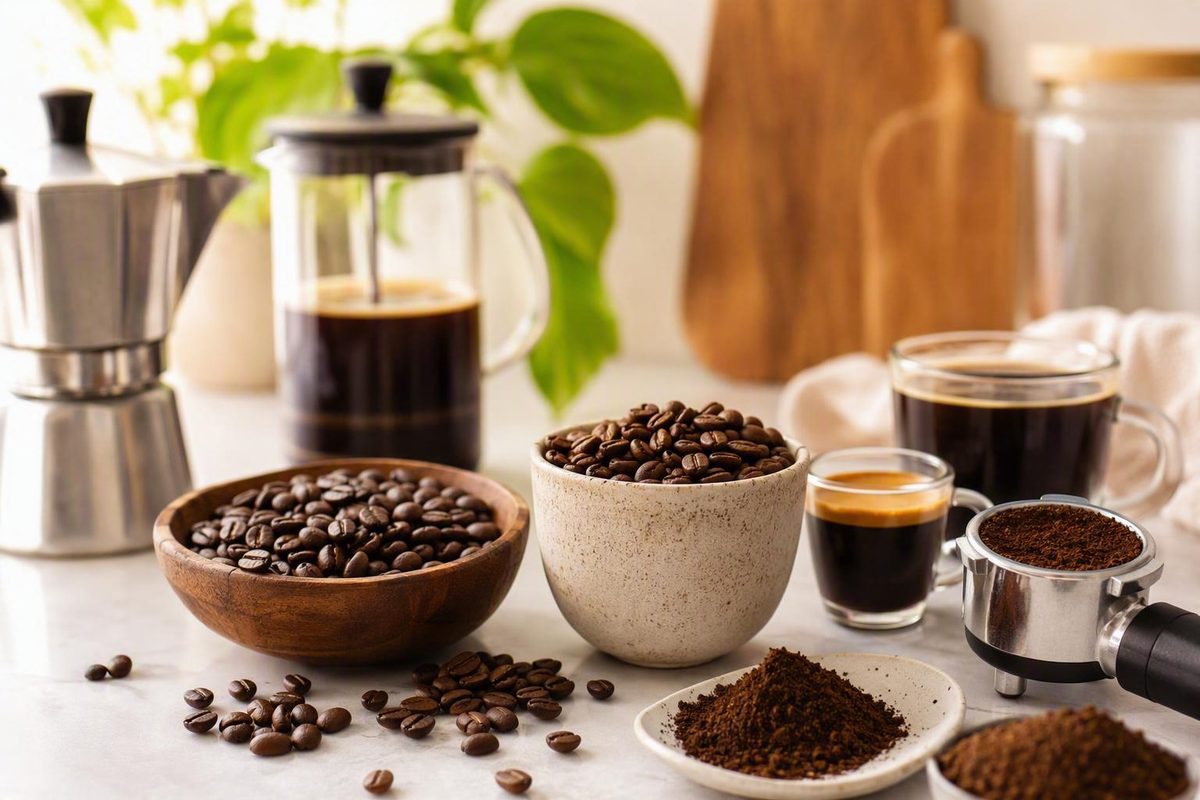
You can use regular coffee beans for espresso; the outcome depends on roast and grind, not on having a "real" espresso bean.
Are Espresso Beans the Same as Coffee Beans?
Overview
Yes — espresso beans are coffee beans. There is no separate espresso plant or bean species; the label usually signals how the beans were roasted, blended, ground, or intended to be brewed. Whether an espresso-labeled bag is the right choice depends on your equipment and flavor preference, not on a botanical difference.
All three of the most commonly cited explainers on this question agree. Lowkey Coffee Snobs puts it bluntly: “there is not a meaningful difference between ‘espresso beans’ versus ‘coffee beans,’” though the terms are not fully interchangeable. King Bean states there is “no such thing as an espresso bean” — the beans come from the same coffee plant, and the difference comes down to roasting and blending. East View Coffee agrees: same plant, same bean; the difference lies in how the coffee is roasted, blended, and brewed.
The rest of this article unpacks what those labels actually mean and how to decide which bag to buy or brew.
Espresso is a brewing method, not a bean species
Espresso refers to a way of making coffee, not a kind of bean. As Lowkey Coffee Snobs explains, “espresso is a way of brewing coffee beans, rather than a particular type of bean.” Espresso is commonly associated with brewing under pressure over a short extraction, producing a small, concentrated cup rather than a full mug of filter coffee.
This distinction matters because it reframes the whole question. If espresso is a preparation method, then in principle any coffee bean can be brewed as espresso — the same way any coffee bean can be brewed as drip, pour-over, or French press. The bean does not become “an espresso bean” until someone brews it that way, or a roaster decides to prepare and label it with espresso brewing in mind.
That is why King Bean frames the real difference as being “in the roast, not the bean.” Roasters often roast or blend certain coffees specifically because they expect them to perform well under espresso-style brewing, and they label the bag accordingly. The label is a recommendation about intended use, not a statement about the plant the beans came from.
The practical takeaway: when you see “espresso” on a bag, read it as brewing guidance from the roaster. It tells you how they think the coffee will shine, not that the beans belong to a separate category you are locked into.
What espresso labels actually mean
An espresso label compresses several different variables into one word, and separating them is the fastest way to stop being confused by packaging. When you pick up a bag, five distinct things could be going on: the bean itself, the roast level, the blend, the grind, and the intended brew method.
Here is how those terms break apart:
- Coffee bean — the seed of the coffee plant. Every bag, espresso-labeled or not, contains coffee beans; there is no separate espresso species (East View Coffee).
- Espresso bean — a marketing and labeling term for coffee beans a roaster has prepared or recommended for espresso brewing.
- Espresso roast — a roast level the roaster considers suited to espresso; these are often on the darker side, though roast practices vary by roaster.
- Espresso blend — a combination of coffees selected or roasted to perform well together as espresso (King Bean).
- Espresso grind — pre-ground coffee ground fine for espresso brewing; this describes the grind, not the bean.
Roast level does most of the explanatory work here. Coffee is broadly sold as light, medium, or dark roast, and roast level changes flavor across every brewing method — a darker roast tastes different in a drip machine too, not just in an espresso machine. Espresso-labeled coffee is frequently associated with darker roasting, but that is a common practice rather than a rule, so an “espresso roast” from one roaster may look and taste different from another’s.
The useful habit is to read the label as a bundle of choices: which coffees were selected, how dark they were roasted, whether they were blended, and how the roaster expects you to brew them. None of those choices changes what the beans fundamentally are.
Espresso roast, espresso blend, and espresso grind are different labels
These three phrases are often used interchangeably by shoppers, but they describe different decisions in the chain from green coffee to your cup. Confusing them is one of the most common reasons people buy the wrong bag.
An espresso roast is a roasting decision. The roaster develops the beans to a level — often darker — that they believe suits pressurized, short extraction. An espresso blend is a sourcing decision: multiple coffees combined so their characteristics balance each other when pulled as a shot (King Bean describes the difference as coming down to how beans are roasted and blended). A bag can be one, the other, or both. An espresso grind is neither — it is a grinding decision applied after roasting, and it only appears on pre-ground coffee.
The grind distinction matters most in practice. Whole “espresso beans” are not ground at all; you can grind them coarse for French press or fine for espresso. But a bag of pre-ground “espresso grind” coffee is committed to a fine grind, which is a poor match for methods like French press that expect a coarser particle size. If you do not own an espresso machine or Moka pot, whole beans give you flexibility that a fine pre-ground bag does not.
So before buying, check whether the word “espresso” on the bag refers to the roast, the blend, or the grind. Roast and blend labels leave your brewing options open; a grind label narrows them.
Single-origin espresso and espresso blends still use coffee beans
A single-origin espresso is not a different kind of bean either — it is coffee from one origin that a roaster has roasted and recommended for espresso, while an espresso blend combines coffees from multiple sources. Both are ordinary coffee beans; the difference is a selection and blending choice, not a botanical one.
Blends are common in espresso because roasters combine coffees to balance characteristics such as body, acidity, and sweetness in a concentrated shot — the flavor vocabulary East View Coffee uses when discussing espresso suitability. A single-origin espresso, by contrast, showcases the character of one coffee, which can mean a more distinctive but sometimes less “rounded” cup.
The supplied sources do not support detailed guidance on bean varieties or origin-specific performance, so treat those details as roaster-by-roaster differences. The bounded takeaway: “single-origin” and “blend” describe where the beans came from and how they were combined — neither phrase means the beans are a special espresso type.
Can you use espresso beans for regular coffee, or regular beans for espresso?
Yes, in both directions — because espresso beans are coffee beans, the swap is possible either way; the results just vary with roast, grind, and your taste preference. Since espresso is a brewing method rather than a bean type (Lowkey Coffee Snobs), no bag is physically restricted to one machine.
What changes across methods is the outcome, not the possibility. An espresso machine, a drip brewer, a pour-over cone, a French press, an AeroPress, and a Moka pot all extract the same beans differently, and roast level shapes how each result tastes. A dark espresso roast brewed as pour-over will taste different from a light roast brewed the same way — different is not wrong, it is a preference question.
One bounded practical note: if a swap tastes off, the bean label is rarely the whole story. Grind size and your brew setup can change results substantially, so before concluding that a bag “doesn’t work” for a method, consider whether the grind matches that method. Detailed extraction troubleshooting is beyond what this article’s sources support, but the general principle holds: match the grind to the brewer, then judge the beans.
The two subsections below cover each direction of the swap.
Using regular coffee beans for espresso
Yes, you can use regular coffee beans for espresso. Because there is no separate espresso bean species (King Bean), any coffee bean can be ground fine and brewed as espresso — the question is whether you will like the result.
Expect variability. Espresso-labeled coffees are typically roasted or blended with concentrated, short extraction in mind, so a regular bag — especially a lighter roast intended for filter brewing — may taste noticeably different as a shot than the rich, balanced profile many espresso blends aim for (East View Coffee frames espresso suitability around body, acidity, and sweetness). Some people enjoy brighter, lighter-roast espresso; others find it too sharp.
The main practical requirement is grind: espresso brewing needs a fine, consistent grind, so whole regular beans plus a capable grinder will get you much further than pre-ground drip coffee. If your first shots from a regular bag are not to your taste, adjusting the grind and setup is a reasonable first step before switching beans.
Bottom line: a regular bag is not a barrier to espresso — it is simply an unlabeled starting point, and the outcome depends on roast and grind rather than on missing a “real” espresso bean.
Using espresso beans in drip, pour-over, French press, or cold brew
Yes, espresso-labeled beans can be brewed in a regular coffee maker or any manual method — drip, pour-over, French press, AeroPress, Moka pot, or cold brew. They are coffee beans, so nothing about the label prevents other brew methods (Lowkey Coffee Snobs treats espresso as the brewing method, not the bean).
What you should expect is the flavor of the roast, expressed through a different method. Espresso-labeled coffees are often roasted darker, so brewed as drip or French press they will typically produce a bolder, roastier cup than a light filter roast would. If you enjoy dark-roast drip coffee, an espresso-labeled bag can be a perfectly good everyday choice. If you prefer brighter, lighter cups, the same bag may taste heavier than you like.
The one caveat is grind, again: buy whole beans if you can, and grind to match your method — coarser for French press and cold brew, medium for drip. A bag pre-ground to an espresso-fine grind is a poor fit for those methods. With whole beans, the espresso label is a flavor hint, not a restriction.
How to choose the right bag
The right bag depends on two things you already know: what equipment you brew with, and what flavors you enjoy. Because espresso labels describe roast, blend, and intended use rather than a separate bean type, choosing well means matching the label to your situation rather than hunting for the “correct” bean.
The matrix below summarizes the bounded guidance from this article. It reflects general label meanings supported by the sources cited above — espresso labels usually signal roast, blend, or brewing intent; regular beans can work for espresso with variable results; and flavor descriptors like body, acidity, and sweetness help match a bag to your taste. It is not a set of universal rules, since roasting practices differ between roasters.
| Your situation | Reasonable bag choices | What to check on the label | What to expect |
|---|---|---|---|
| Espresso machine, mostly milk drinks | Espresso blend or espresso roast | Blend intended for espresso; darker roast is common | Roasters often build these for a rich, balanced base that carries through milk |
| Espresso machine, straight shots | Espresso blend, espresso roast, or single-origin espresso | Tasting notes for body, acidity, sweetness | Blends aim for balance; single-origin can be more distinctive but varies more |
| Drip, pour-over, or French press only | Any coffee beans, including espresso-labeled ones | Whole beans rather than “espresso grind”; roast level matching your taste | Espresso-labeled bags usually brew as a bolder, darker-tasting cup |
| Mixed use across several brewers | Whole-bean espresso blend or any whole-bean coffee you like | Whole bean, so you can adjust grind per method | Flexible; grind coarser or finer to match each brewer |
| No grinder at home | Pre-ground coffee matched to your one method | The grind label — “espresso grind” only if you brew espresso or Moka pot | Fine espresso grind fits pressurized brewing poorly matches French press or drip |
Two simple rules cut through most of this. First, if you do not own an espresso machine, you do not need an espresso-labeled bag — any fresh coffee you enjoy is acceptable, and an espresso-labeled bag is just one more dark-leaning option. Second, if you do brew espresso, an espresso blend or roast is a convenient starting point because the roaster has already made choices with that method in mind — but a regular bag you love is worth trying too.
Common myths about espresso beans
Once you know that espresso beans are simply coffee beans, a few common assumptions are worth correcting directly, because the label invites overinterpretation.
- Myth: espresso beans are a special bean species. They are not. All three sources cited in this article — Lowkey Coffee Snobs, King Bean, and East View Coffee — state the beans come from the same coffee plant, with the difference in roasting, blending, and brewing.
- Myth: espresso beans only work in espresso machines. Espresso is the brewing method, not the bean, so espresso-labeled beans can be brewed as drip, pour-over, French press, AeroPress, Moka pot, or cold brew.
- Myth: the label proves more caffeine or more “strength.” The label alone tells you nothing verified about caffeine content. Caffeine in your cup depends on variables beyond the word on the bag, and the sources here do not support exact caffeine comparisons — so do not treat “espresso” as a strength guarantee.
- Myth: espresso beans are always dark. Espresso-labeled coffees are often roasted darker, but that is a common roaster practice, not a definition. Roast level is a separate variable from the espresso label itself.
Two smaller confusions deserve a note. Dark-roasted beans can look shinier or oilier, but appearance and freshness are separate questions from whether the beans are a special espresso type — an oily surface does not make a bean “more espresso.” And chocolate-covered espresso beans are simply roasted coffee beans coated in chocolate; the name does not indicate a distinct botanical bean either.
The through-line for every myth is the same: the word “espresso” on a bag describes preparation and intent. Judge the coffee by its roast, freshness, and how it tastes with your brewing method — not by assumptions the label never actually made.