
Coffee Beans Don't Expire Like Food—They Go Stale: Here's What That Means
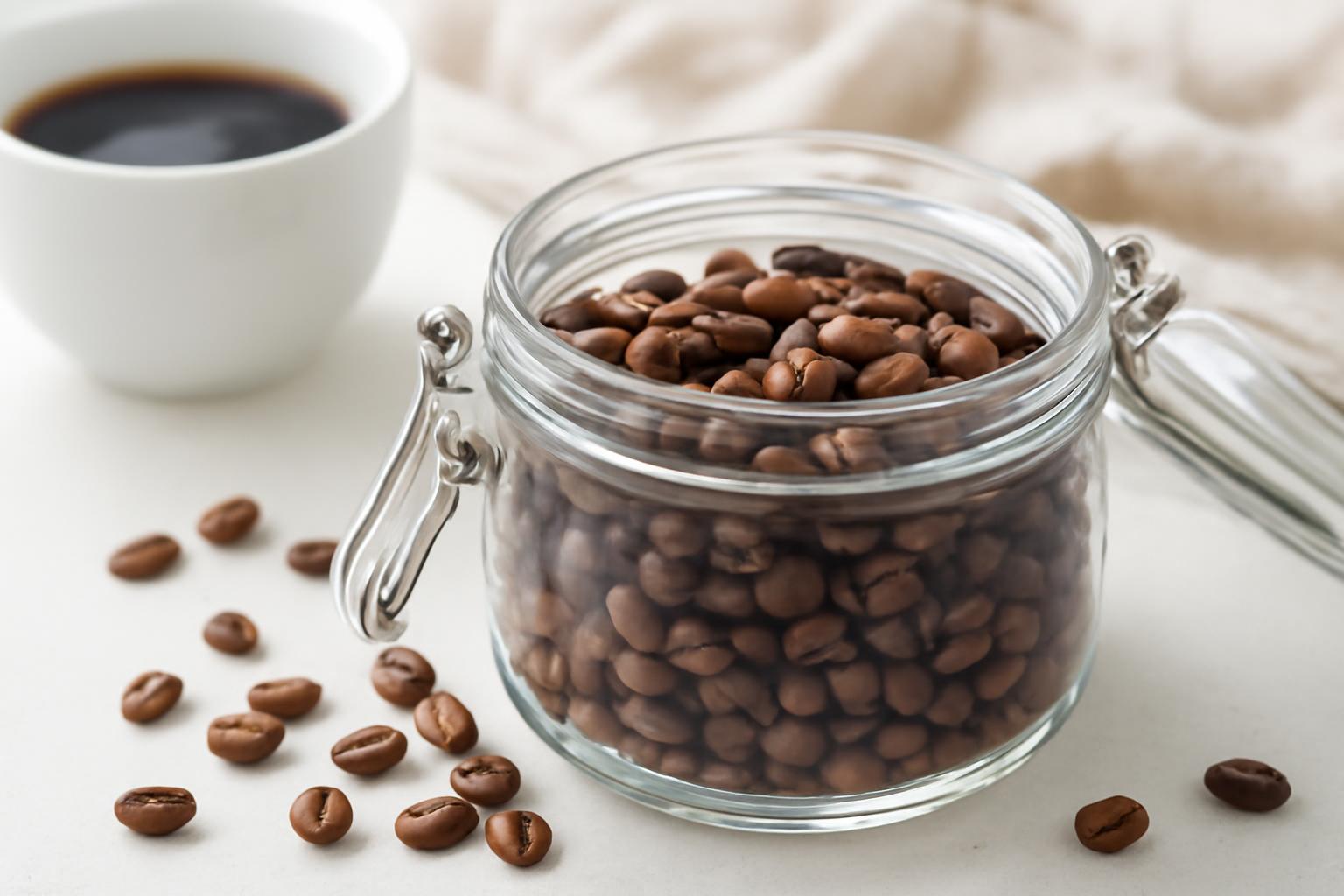
Coffee usually loses flavor before it spoils. Moisture changes the decision: if you see mold, do not try to rescue the bag by picking around it.
Coffee Beans Don’t Expire Like Food—They Go Stale: Here’s What That Means.
If you’re asking do coffee beans expire, the most useful answer is a distinction, not a date. Coffee usually behaves less like milk, meat, or leftovers and more like a dry pantry product: time takes flavor first.
That difference matters if you read packages closely. A bag can still be within its printed date and brew a dull cup. It can also be past its best-by and still be usable if it stayed dry, clean, and free of mold. For most households, the practical question is less “Will this hurt me?” and more “Will this still taste like the coffee I bought?”
For label-focused readers, that is the real decoding task.
One caution up front: the available evidence here is much stronger for freshness and storage conventions than for laboratory-grade food-safety cutoffs. Much of the published guidance comes from coffee organizations, roasters, and retailers rather than independent food-safety agencies. Even so, those sources are highly consistent on the central point: coffee usually goes stale long before it truly spoils.
Coffee Beans and ‘Expiration’: Safety vs. Staleness
Coffee beans usually go stale before they spoil. After roasting, their oils and aromatic compounds begin to change with exposure to oxygen, light, heat, and moisture. Across consumer coffee guidance, that process is described as flavor degradation—less aroma, less sweetness, fewer distinct notes—not the kind of rapid microbial spoilage people associate with refrigerated foods. Philly Fair Trade Roasters explicitly separates coffee’s two real concerns into flavor degradation from oxidation and the rarer problem of spoilage when moisture gets in and mold develops in storage (Philly Fair Trade Roasters).
That safety-versus-quality split is the key to interpreting a coffee bag. It is not, by itself, proof that coffee becomes dangerous the next day. If beans stayed dry and show no signs of mold or contamination, older coffee is generally treated in coffee guidance as a quality disappointment, not an automatic hazard.
This is why the word “expired” can mislead when people talk about coffee. In normal kitchen storage, beans do not typically cross a sharp line from good to bad. They fade gradually. One week the bag smells vivid and lively. A few weeks later the same beans may still brew, but the cup can start tasting flatter, duller, and more generic.
The distinction also helps with bag-reading priorities. If your goal is flavor, the roast date is often more useful than the best-by date, because roast date tells you when the freshness clock began. Best-by tells you how long the producer expects the coffee to remain acceptable in that package. That does not make best-by useless; it just answers a different question.
For anyone who tracks what they consume and pays close attention to labels, the safest takeaway is narrow and practical: coffee dates are mainly freshness signals. The available sources here discuss flavor loss, oxidation, degassing, and storage. What changes most clearly with age is the sensory experience of the cup.
Shelf Life Timelines: Whole Beans vs. Ground Coffee
There is no single universal shelf-life clock for coffee. Packaging, roast level, climate, humidity, container quality, and how often you open the coffee all change the result. A sealed bag in a cool cupboard behaves differently from a half-open bag living above a kettle.
Still, one pattern is remarkably consistent across the evidence: whole beans keep their quality longer than ground coffee, and opened coffee declines much faster than sealed coffee. A practical consumer range from Verena Street puts unopened whole beans at roughly 6–9 months, opened whole beans at about 2–4 weeks for best quality, and opened ground coffee at about 1–2 weeks (Verena Street).
Those are best understood as flavor windows, not hard expiration laws. An opened bag at week five may still be perfectly brewable. A pre-ground coffee at day ten may still produce a decent cup, especially in forgiving brew methods or milk drinks. But “drinkable,” “fresh,” and “at peak” are not the same category.
That is also why whole-bean coffee usually rewards people who care about taste. The intact bean protects more of the interior from air until the moment you grind. Pre-ground coffee is convenient, but convenience comes with a shorter freshness runway because so much more surface area is exposed.
Another source of confusion is the difference between post-roast peak flavor and package shelf stability. Many coffee professionals treat freshly roasted coffee as something that often tastes best after a short rest rather than immediately, and then gradually becomes less expressive. In practice, that means a coffee can be well within its best-by window and still no longer be near its most interesting flavor point.
So how should an ordinary buyer interpret the ranges?
Whole beans in a sealed package are often still usable for months, especially if the bag is well designed and opened late. Once opened, though, the decline becomes much more obvious. The everyday rule of thumb supported across the source pack is simple: if flavor matters, expect whole beans to give you a noticeably better window than ground coffee, and expect that window to be counted in weeks, not in the many months some packages imply.
That is why coffee shoppers sometimes feel misled by distant dates on supermarket bags. It does not tell you that the coffee is especially fresh today.
For home use, the most realistic framework is this:
- Sealed whole beans: often usable for months if kept dry and protected
- Opened whole beans: usually at their best in the short span after opening
- Opened ground coffee: usually loses freshness fastest
- Best flavor: usually arrives and fades long before the printed best-by date
That framework is intentionally less precise than a “coffee expires after X days” claim, because the evidence does not support a universal deadline. What it supports is a pattern: the more air exposure, the more grinding, and the more time since roasting, the lower your odds of getting a vivid cup.
What Causes Coffee Beans to Lose Freshness?
The short answer is exposure.
Roasted coffee contains volatile compounds and oils that create the flavors people actually notice in the cup: chocolate, nuts, fruit, florals, caramel, spice. Once roasting ends, those compounds start changing. ReAnimator Coffee describes the two main post-roast processes as oxidation and degassing: oxygen gradually breaks down flavor compounds and oils, while beans release carbon dioxide most actively in roughly the first 7–14 days after roasting (ReAnimator Coffee).
That gives coffee four classic enemies:
- Oxygen, which drives oxidation and strips away aroma
- Light, especially direct light, which accelerates degradation
- Heat, which speeds chemical change
- Moisture, which is the big risk factor for real spoilage
Ground coffee stales faster for an obvious physical reason: grinding increases surface area dramatically. More surface area means more oxygen contact, faster aroma loss, and less protection for the oils that carry flavor. Whole beans do not stop aging, but they age more slowly because more of the bean remains shielded until you grind.
Degassing adds a useful nuance that helps explain why coffee can be “fresh” and still not be at its best the day after roasting. Very fresh beans are still releasing gas. That affects brewing behavior and is one reason many coffee bags include one-way valves. The bean is not stale at that stage; it is simply still settling after roast.
For everyday drinkers, you do not need to micromanage the science. But it helps to understand the direction of travel. Coffee does not improve through repeated exposure to kitchen air. Each opening, each scoop, each warm countertop afternoon, and each burst of steam from nearby cooking pushes the coffee a little farther from what it tasted like when it left the roaster.
That is also why stale coffee tends to feel less specific. Fresh coffee often gives clear signals—cocoa, berry, toasted nuts, florals, citrus. Older coffee often collapses toward flatter bitterness or a vaguely papery taste. The underlying compounds did not all vanish at once; they simply degraded or escaped over time.
Moisture is the separate issue. Oxidation makes coffee taste old. Moisture is what raises the possibility of actual spoilage. If beans stay dry, the main loss is usually quality. If they get damp, clump, or sit in humid conditions long enough, you move out of the “stale but safe” category and into “don’t risk it.”
Best Storage Practices for Maximum Freshness
If you want coffee to taste better for longer, the most defensible storage rule is also the simplest: keep it airtight, opaque, cool, dark, and dry. The National Coffee Association recommends buying smaller amounts, transferring opened coffee out of less-protective retail packaging, storing it in an airtight opaque container, keeping it away from heat and sunlight, and grinding only what you need just before brewing (National Coffee Association).
That guidance matters because the usual kitchen “convenient spots” are often the wrong ones. A clear jar on the counter looks nice, but light is not helping your coffee. A cabinet above the dishwasher or oven is easy to reach, but repeated warmth and steam are exactly what speed staling. An open bag clipped shut may feel secure, but it still lets in more air than a truly good canister.
In practical terms, the best setup in most homes looks like this:
- a cupboard or pantry rather than direct sunlight
- an opaque container with a reliable seal
- whole beans instead of a large tub of pre-ground coffee
- batch sizes you can finish relatively quickly
A few habits do most of the work.
Buy less at a time. Coffee starts losing freshness after roasting, not after you notice it. A huge discount bag can be economical on paper while costing you flavor every day you work through it.
Open the main supply less often. Even a good airtight canister is not a time machine. If you buy a larger amount, splitting it into smaller portions reduces how often the full supply meets fresh air.
Keep it away from steam and strong smells. Coffee is hygroscopic and odor-absorbent. That means it readily takes on moisture and surrounding aromas, which is exactly why fridges, humid cabinets, and smell-heavy spaces tend to work against freshness.
Grind only what you need. For many people, this is the single best upgrade available. If your current habit is buying pre-ground coffee for convenience, switching to whole beans and grinding per brew will usually give you a more noticeable improvement than most gear upgrades.
Retail bags are a special case. Some are better than others. One-way valves and sturdier materials can help while the bag is sealed, but the National Coffee Association still advises that opened coffee often benefits from being moved into a better long-term container rather than left in the original packaging indefinitely.
What about the fridge? That is where advice gets mixed, but the logic behind the caution is clear. Coffee’s ability to absorb moisture and odors means refrigeration can create new problems unless conditions are unusually humid and the container is truly airtight. For routine short-term storage in most homes, a cool, dry pantry is usually the cleaner answer.
Freezing and Refrigeration: When It Helps and Risks
For short-term storage, pantry storage is usually the easiest and least fussy option. For longer-term storage, freezing can help—but it is a method with more room for user error.
Cafe Du Monde’s consumer guidance describes whole beans as lasting up to about 6 months in the freezer when stored properly, while also emphasizing that roasted beans lose quality much sooner at room temperature unless handled well (Cafe Du Monde).
The important part is not simply “cold is good.” The important part is how the coffee is frozen and handled. Freezing works best when you portion whole beans into small, airtight packages that you plan to open once. That reduces two of the biggest problems: odor pickup and condensation.
Repeatedly opening the same big bag from the freezer is where people create trouble for themselves. Taking it out, letting it warm in humid air, opening it, and returning it half-full increases the chance of moisture exposure. The freezer is not automatically harmful; sloppy freezer use is.
That is why freezing advice usually comes with caveats rather than slogans. Freeze small portions, use airtight packaging, and avoid treating one daily-use coffee bag like it belongs in permanent freezer rotation. If you are going to use the coffee steadily over the next week or two, storing it in the pantry is usually simpler and less risky.
Refrigeration is even more disputed. In very humid environments, some guidance allows that cold storage may help if the container is genuinely airtight. But for many households, the fridge adds more problems than benefits: kitchen odors, frequent temperature shifts, and moisture risk. In ordinary use, refrigeration is better understood as a climate-specific workaround than as a default best practice.
A simple practical rule works well:
- Using the coffee soon? Keep it in the pantry.
- Saving part of a fresh bag for later? Freeze it in airtight portions.
- Opening the same container every day? Keep that container out of the freezer and fridge.
That approach respects the basic fact behind almost all coffee storage guidance: low temperature can help, but moisture control matters more than temperature alone.
Signs Your Coffee Beans Are Stale or Spoiled
When coffee is old, your senses are usually enough to tell whether you are dealing with staleness or something worse. Happily Coffee describes common freshness loss as a weaker or cardboard-like smell, flat or bitter flavor, clumping from moisture, and in worse cases a rancid smell from degraded oils; visible moisture issues or mold are signs to stop using it (Happily Coffee).
For staleness, the usual signs are subtle but familiar:
- the dry grounds or beans smell much weaker than expected
- the brewed cup tastes flat, hollow, papery, or generically bitter
- distinct notes you once noticed—fruit, cocoa, florals, sweetness—are harder to detect
- the coffee feels lifeless rather than obviously rotten
For spoilage, the warning signs are stronger:
- a musty, moldy, or distinctly rancid smell
- dampness or unusual clumping that suggests moisture exposure
- visible mold or growth
- a bag that was clearly stored wet, contaminated, or left in a bad environment
The simplest home test is also the best one. First, smell the beans, and even better, smell them right after grinding. Freshly ground coffee should release an obvious aroma. Second, look at the beans and the container for moisture, clumping, or visible growth. Third, if the coffee merely seems old rather than contaminated, brew a small cup before committing the whole batch.
That three-step check helps separate “stale” from “bad.” Stale coffee is usually a disappointment problem. Spoiled coffee is a discard problem.
Appearance alone is not enough. Darker roasts can look shinier because more oils reach the surface, so sheen is not a perfect freshness test by itself. Likewise, some old coffee may look mostly normal while smelling flat. Aroma and brewed flavor tell you more than surface gloss alone.
If you ever see mold, the decision is easy: do not try to rescue the bag by picking around it or brewing it anyway. Once moisture and visible growth enter the picture, the safe assumption is that the coffee is no longer worth the risk.
Roast Date vs. Best-By: What Labels Really Mean
If a bag shows both, roast date is usually the more informative freshness clue—with an important qualification. That is mostly a specialty-coffee quality rule, not a universal food-safety rule.
Timbertrain Coffee Roasters describes the roast date as the fastest way to judge likely staleness and says many coffee drinkers consider the freshness “sweet spot” to fall roughly 3–30 days after roasting, with noticeable flavor loss after about 4 weeks even though the coffee may still be perfectly usable (Timbertrain Coffee Roasters).
That is why specialty roasters emphasize roast-date transparency. Roast date tells you when the bean’s sensory life actually started. It gives you a way to estimate whether the coffee is likely early, middle, or late in its flavor window. Best-by, by contrast, tells you how long the producer expects the coffee to remain acceptable in the package they sold you.
Those are not competing dates so much as different kinds of information.
- Roast date answers: When did this coffee begin aging?
- Best-by answers: How long does the maker expect this package to remain acceptable?
For a grocery shopper, this matters because coffee can be shelf-stable but no longer vibrant. A bag with a distant best-by may still be perfectly safe and serviceable. It may also already be far from peak flavor. If you care about cup quality, a clear roast date is more actionable than a generic shelf-life promise.
This is also the cleanest way to connect coffee dates back to label-reading more broadly. If you track what you eat and drink, a coffee date is not a precision nutrition measurement. The sources here support using dates to estimate freshness and likely taste, not to infer exact nutrition or caffeine changes from the package alone.
So what should you do at the shelf? If flavor matters, look for a bag with a clear roast date and packaging that appears designed to protect freshness. If all you have is a best-by date, treat it as a shelf-stability clue, not as proof that the coffee is either excellent or unsafe.
FAQ
Is it safe to drink stale coffee beans?
Usually, yes—if the beans stayed dry and show no signs of mold, dampness, or contamination. The main problem with stale coffee is flavor loss, not automatic danger. Coffee becomes more of a safety concern when moisture gets involved and spoilage signs appear (Philly Fair Trade Roasters).
In practical terms, “stale” usually means muted aroma, less sweetness, and a flatter cup. “Spoiled” means musty, damp, moldy, or rancid enough that you should throw it out.
How long do unopened coffee beans last past the best-by date?
There is no guaranteed universal answer, but unopened whole beans can often remain usable for months if the seal stayed intact and the coffee remained dry. Verena Street’s consumer guidance puts unopened whole beans around 6–9 months and treats that as a quality range rather than a hard safety line (Verena Street).
The important distinction is that “still usable” and “still fresh” are different questions. A sealed old bag may still brew, but the farther it is from roasting, the lower the odds that it will taste lively.
Does grinding coffee beans early make them expire faster?
It usually makes them go stale faster. Grinding increases surface area, which exposes much more of the coffee to air and speeds oxidation and flavor loss. Coffee Gallery Hawaii explains this as one of the main reasons ground coffee loses its vibrancy sooner than whole-bean coffee (Coffee Gallery Hawaii).
That does not make pre-ground coffee unusable. It just means the convenience comes with a shorter best-flavor window.
Can I freeze coffee beans without ruining them?
Yes—if you freeze them carefully. The most reliable approach is to freeze whole beans in small, airtight portions that you plan to open once. Consumer guidance from Cafe Du Monde describes properly frozen beans as holding quality for up to about 6 months (Cafe Du Monde).
The biggest risks are not the freezer itself but moisture, condensation, and repeated opening and refreezing. For coffee you are using every day, pantry storage is usually simpler.
Why check the roast date instead of best-by?
Because roast date tells you when the coffee’s freshness clock started. Timbertrain Coffee Roasters says many drinkers treat roughly 3–30 days after roasting as the most useful freshness window for flavor, which makes roast date much more actionable than a distant best-by if you care about cup quality (Timbertrain Coffee Roasters).
Best-by still matters, but it answers a broader shelf-life question. Roast date is the better clue when you want to estimate how much aroma and character the beans are likely to have left.
The simplest way to think about coffee dates is this: best-by helps you judge shelf stability, roast date helps you judge likely freshness, and your senses decide the final answer once the bag is open.
So, do coffee beans expire? Not in the same clean-cut way as highly perishable food. In ordinary home storage, they usually go stale first. If you keep them dry, sealed, and away from heat, light, and moisture, the main thing time steals is flavor.