
The Calorie Math Behind Butter Olive Oil: Nutrition, Substitutions, and Label Realities
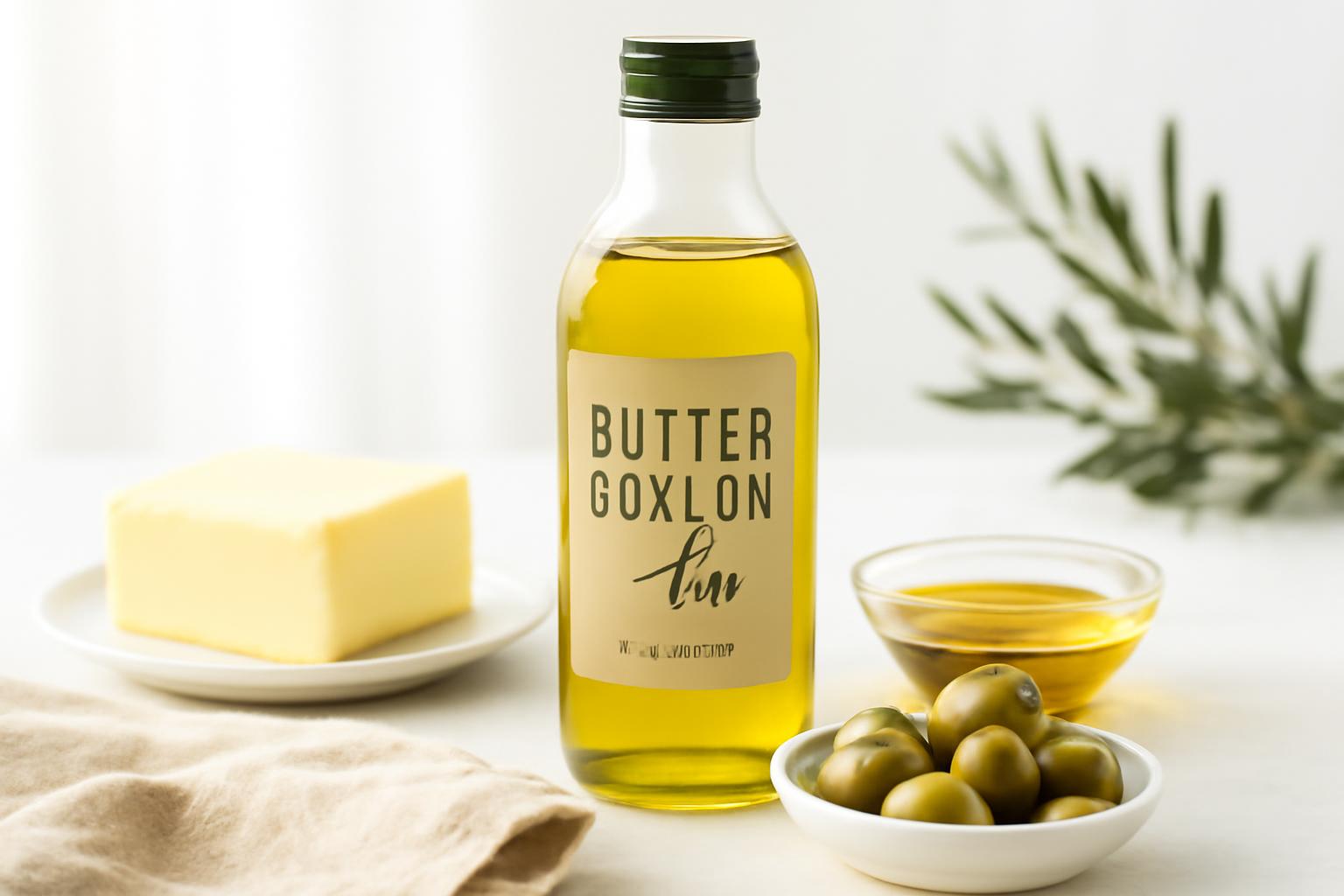
For calorie trackers, it is usually flavored extra virgin olive oil and should be logged like oil unless the bottle clearly says otherwise.
If you track calories and macros, butter olive oil is the kind of product that can scramble your logging instincts before you even open the bottle. The name points toward dairy. The flavor description points toward butter. And the label language tends to sell an experience—creamy, rich, buttery—faster than it explains what you are actually buying.
For a calorie tracker, that creates a simple but important problem: should you log it like butter, like olive oil, or like some hybrid of both? In most cases, the evidence points to the least dramatic answer. Butter olive oil is usually an extra virgin olive oil with added butter flavor, so it tends to track much more like olive oil than like dairy butter.
That does not make the product trivial. Once you start using it in real life, several separate questions matter: what the ingredient line actually says, whether the bottle is explicitly labeled vegan or dairy-free, how the nutrition panel compares with standard olive oil, how a butter swap affects recipe behavior, and how precise you should pretend any tablespoon measurement really is. Those are label questions first, not ideology questions.
That is also why this guide treats butter olive oil as a label-reading problem more than a product-recommendation problem. Readers who come to CaloriePages are usually trying to make food logs more accurate, not collect another pantry opinion. The practical goal here is to show what butter olive oil appears to be across sampled products, how to log it conservatively, and where the substitution works—or stops working—once you move from the bottle to the recipe.
The short version is straightforward. Across the sampled seller pages in the evidence pack, butter olive oil is usually sold as flavored or infused extra virgin olive oil, not as a butter-and-oil blend. Where full nutrition panels are shown, the numbers look essentially like standard olive oil: around 120 calories and 14 grams of fat per tablespoon. That means the most useful questions are not “Is this secretly butter?” but “What is the serving size, what is on the ingredient line, and what job is the fat doing in the recipe?”
How Food Labels Calculate Calories (And Where the Number Can Be Wrong): Food labels use the Atwater system, not direct measurement. Here’s how the 4-4-9 factors work, why they allow a 20% margin of error, and what that means for tracking.
What Is Butter Olive Oil?
In the sampled products, butter olive oil is typically a flavored or infused extra virgin olive oil designed to taste buttery without being actual butter. One clear example is Olivelle’s Sweet Cream Butter Infused Olive Oil, which lists only “100% Premium Quality Extra Virgin Olive Oil” and “Natural Butter Flavor” as ingredients and labels the product vegan and naturally gluten-free on its product page (Olivelle Sweet Cream Butter Infused Olive Oil).
That basic pattern appears across the category. Sellers use names like Butter Olive Oil, Butter Infused Extra Virgin Olive Oil, or Sweet Cream Butter Infused Olive Oil, but the framing is similar: a buttery-tasting olive oil intended for bread, vegetables, popcorn, sautéing, and some baking. In the evidence pack, sampled sellers include Olivelle, Saratoga Olive Oil Co., Sutter Buttes, Olive Basket, Spirits & Spice, and The Olive Bin. The wording varies, but the category positioning is consistent: this is usually sold as a butter-like flavor option for people who still want an oil.
For label readers, the key distinction is that sampled butter olive oil products are usually not presented as literal mixtures of olive oil and dairy butter. They are presented as olive oil with added flavor. That is the most important point to settle before you ever compare calories, because it tells you where the nutrition panel is likely to land. If the bottle is fundamentally EVOO plus flavoring, you should expect the fat and calorie profile to resemble olive oil first.
Product names sound more transparent than ingredient lists actually are. “Natural flavors” or “natural butter flavor” tell you less than many shoppers assume.
This is where cautious wording matters. Based on the evidence pack, it is fair to say that butter olive oil is commonly represented as olive oil flavored to suggest butter. It is not fair to assume every bottle on the market is identical, or that the name alone proves vegan, dairy-free, or allergen-safe status. If that distinction matters to you for ethical, digestive, or medical reasons, the ingredient line and the product-specific claim matter more than the category nickname.
It also helps to separate bottled commercial butter olive oil from homemade olive-oil “butter” ideas you might see elsewhere. Those are a different thing. A bottled infused oil is mainly about flavor. A whipped olive oil spread is mainly about changing texture. That sounds obvious, but it matters for tracking and substitution. A drizzle oil and a spreadable fat may both be butter-adjacent in a recipe conversation, yet they solve very different kitchen problems.
For calorie trackers, then, the cleanest working definition is this: butter olive oil is usually a flavored EVOO product whose label behavior should be read like oil unless the bottle clearly says otherwise.
Nutrition Facts and Calories per Serving
Where full nutrition panels are available, butter olive oil looks almost identical to standard olive oil. Spirits & Spice lists its Butter Extra Virgin Olive Oil at 120 calories per 1 tablespoon, 14 grams of total fat, 0 milligrams cholesterol, 0 milligrams sodium, 0 grams sugars, and 0 grams protein (Spirits & Spice Butter Extra Virgin Olive Oil). Olivelle’s panel shows the same broad pattern, with 120 calories per tablespoon, 14 grams total fat, 2 grams saturated fat, 0 cholesterol, 0 sodium, and 0 carbohydrate. Across the sampled panels, that is the tracking signal that matters most: this still behaves like a fat-dominant oil product, not like a mixed macronutrient food.
For most food logs, that means the default entry is simple. If your bottle resembles the sampled products and does not disclose anything unusual, logging it like olive oil is usually the most defensible move. The buttery flavor does not appear to contribute meaningful carbohydrate, sugar, or protein on the available labels. From a macro standpoint, you are still mostly logging fat.
The more useful caution is not that the flavor changes the numbers. It is that serving size discipline matters a lot with any oil, flavored or not. A measured tablespoon is one thing. A pan coat, a free-poured sauté, or a generous popcorn drizzle can easily become more than you think without looking like much volume.
That is why label realism matters more than label perfection. The CaloriePages About page frames nutrition-label math as an estimate-based system and emphasizes that label measurement has limits. For a product like butter olive oil, the practical takeaway is not to distrust the label completely. It is to treat the label as a solid starting point, then control the part you actually can control: how much you pour.
A useful label-audit checklist for butter olive oil is short:
- Serving size: Is the panel built around 1 teaspoon or 1 tablespoon?
- Calories per serving: Around 120 per tablespoon is common in the sampled products.
- Total fat and saturated fat: Most of the calorie load is here.
- Ingredient line: Look for extra virgin olive oil plus natural flavors or natural butter flavor.
- Dietary claims: If vegan, dairy-free, or gluten-free status matters, verify the bottle or seller listing.
- Fallback logging rule: If nothing unusual appears, log it like EVOO.
That checklist is more useful than chasing microscopic precision. For most trackers, the category answer is already good enough: butter olive oil usually counts like olive oil, and the tablespoon you actually used matters more than the flavor wording on the front label.
Butter Olive Oil vs. Real Butter: Fat and Calorie Breakdown
For tracking purposes, butter olive oil and real butter are close enough in calories to confuse people, but different enough in fat profile to matter. In one published comparison table, olive oil is listed at 120 calories per tablespoon, 1.86 grams saturated fat, and 9.85 grams monounsaturated fat, while butter is listed at 100 calories per tablespoon, 7.29 grams saturated fat, and 3.3 grams monounsaturated fat (Big Horn Olive Oil comparison table). That source is still a brand-published comparison, so it is best read as an illustrative table rather than a final authority on butter chemistry. Even so, the directional point is clear and consistent with the sampled butter-olive-oil labels: butter olive oil tends to look like an oil product, not like a butter-fat product.
For calorie trackers, the practical tradeoff is surprisingly plain. If you compare tablespoon to tablespoon, butter may show slightly fewer calories on paper. But butter olive oil usually shows much less saturated fat and zero cholesterol on the sampled product panels. So the logging distinction is not “same thing, different bottle.” It is “similar calorie class, different fat profile, different recipe behavior.”
That recipe behavior is what prevents nutrition comparisons from telling the whole story. Oil does not do those jobs the same way. Even when calorie math is simple, kitchen performance is not.
That is especially important when people assume a buttery flavor automatically makes a butter substitute universal. It does not. A drizzle over vegetables is one use case. A pound cake that depends on creamed butter and sugar is another. Two fats can look easy to compare on a label and still behave very differently in batter, dough, or frosting.
So the cleanest comparison is this: butter olive oil is usually easier to classify in a food log than in a recipe. In the log, treat it like flavored olive oil unless the label gives you a reason not to. In the kitchen, assume it can replace melted butter more easily than structural butter.
Substitution Ratios: Using Butter Olive Oil for Butter
The most common substitution rule for replacing butter with olive oil in baking is the 3:4 rule. California Olive Ranch gives the standard example: if a recipe calls for 8 tablespoons of butter, use 6 tablespoons of olive oil (California Olive Ranch guide to substituting olive oil for butter in baking). That converts neatly into 3/4 teaspoon oil for 1 teaspoon butter or 3/4 cup oil for 1 cup butter. For most readers, that is the only ratio worth memorizing.
But a ratio is only the beginning, not the full answer. The better question is: what job is the butter doing in the recipe? If the butter is being melted, stirred in, or used mainly as a source of fat and richness, the swap is often manageable.
Food52’s dessert guidance is useful here because it explains why some substitutions fail. When a recipe gets structure from whipping air into solid butter, a simple oil swap becomes unreliable. Food52 specifically advises against casually converting butter cakes or pound cakes that depend on whipped solid fat, and recommends using 10% to 15% less olive oil than the butter amount in recipes where the butter is already melted, because oil is 100% fat while butter also contains water and milk solids (Food52 on substituting olive oil for butter in dessert).
That distinction matters for tracking as much as for texture. If a recipe originally used butter, the final calorie total can change in either direction depending on how you substitute it. A blind tablespoon-for-tablespoon swap is not the same thing as following the usual 3:4 baking rule. So if you log recipes manually, do not just rename the ingredient in your app. Rebuild the fat entry using the actual amount of butter olive oil you used.
When butter is being melted into hot rice, brushed over seafood, used to coat vegetables, or drizzled over popcorn, butter olive oil is often functionally close enough for everyday purposes.
For cautious bakers, the safest progression looks like this:
- Start with recipes that already tolerate liquid fat.
- Use the 3:4 rule as a first pass.
- Reduce a little further if the batter looks greasy.
- Test one batch before scaling up.
- Log the actual measured oil, not the original butter amount.
That is less glamorous than promising a universal swap, but it is much more useful. Butter olive oil can stand in for butter surprisingly well in the right context. It just does not erase the physics of butter.
Common Uses and Recipe Ideas
Butter olive oil tends to shine in uses where butter flavor matters more than butter structure. Olive Basket, for example, describes its butter-infused olive oil as a creamy extra virgin olive oil naturally infused with butter flavor and suggests it for baking, popcorn, seafood, bread dipping, pasta, mashed potatoes, and rice (Olive Basket Butter Infused Olive Oil).
For savory cooking, that makes the product easy to use. Toss roasted vegetables with it. Finish a bowl of rice or pasta with it. Brush it over fish or seafood. Use it to grease a baking dish, sauté eggs, or drizzle over popcorn. In those situations, the oil is carrying flavor and helping with mouthfeel. It is not being asked to do the specific mechanical jobs that butter does in pastry or creamed cakes.
The result may not taste exactly like dairy butter, and the crumb may not match a butter-based version perfectly, but the format is compatible enough that the substitution can make sense. This is especially true when the recipe already expects a melted fat or a pourable fat.
If you want something spreadable rather than pourable, that is a separate project. A DIY “whipped olive oil butter” recipe from Kalofagas freezes a thin layer of EVOO and whips it with a few tablespoons of water until opaque and creamy, producing a spread that can be smeared on bread (Kalofagas whipped olive oil butter). That may be useful in its own right, but it is not the same product category as bottled butter olive oil. One is a flavored oil. The other is a texture hack.
That distinction matters because calorie trackers often blur them together. If you are logging bottled butter olive oil, use the label. If you are making a whipped olive oil spread at home, you are logging the oil you used in the recipe, not a standard retail nutrition panel. Same flavor family, different tracking problem.
The broader rule is simple: butter olive oil works best when the recipe wants butter’s flavor cue more than butter’s structure.
Product Sizes, Availability, and Label Checks
Commerce details around butter olive oil change quickly, so they are best treated as snapshots, not durable facts. In the evidence pack, sampled sellers offered bottles ranging from 100 mL up to 750 mL, with even larger formats appearing in some stores, and posted prices ranging from about $14 for a 100 mL bottle to $60 for a 750 mL bottle on the captured product pages (Saratoga Olive Oil Co. Butter Olive Oil). Those numbers are useful only in a narrow sense: they show the product is commonly sold in specialty-oil bottle sizes rather than in stick-of-butter equivalents, and that price per ounce can vary substantially by seller and format.
For an informational guide, though, the label matters more than the shelf listing. Product names are marketing. Ingredient lines are evidence. If you are deciding whether a bottle belongs in your food log as flavored olive oil, the ingredient panel should answer most of the question. If you are deciding whether it fits a vegan or dairy-free diet, the front label alone is not enough. Look for an explicit claim on the seller listing or on the bottle itself.
A practical label-check framework looks like this:
- Name: Ignore the romance of the product name.
- Ingredients: Confirm it is olive oil plus flavoring, not something more complicated.
- Serving size: Verify whether the panel is built per tablespoon.
- Calories and fat: Check whether the panel matches the common 120-calorie oil pattern.
- Dietary flags: Confirm vegan, dairy-free, gluten-free, or kosher claims if they matter.
- Use case: Decide whether you are buying it for drizzling, sautéing, or baking before choosing bottle size.
That last point is more important than it sounds. A 750 mL bottle is not a bargain if you only use a teaspoon now and then on popcorn. A smaller bottle may be the more practical buy if the product is mostly a finishing oil in your kitchen. Conversely, if you use it in eggs every morning or as your go-to butter substitute in quick breads, bottle size matters more.
Store-hosted ratings and availability snapshots exist, but they do not answer the core questions a calorie tracker actually has. A favorable review count does not tell you whether the bottle is vegan, how many calories are in a tablespoon, or whether it will work in a pound cake. Use merchant pages to verify the label, not to outsource judgment.
Storage, Shelf Life, and Tracking Tips
Storage guidance for butter olive oil is less standardized in the evidence pack than nutrition guidance, so this is one place to stay conservative. The Olive Bin says its olive oils should be used within 12 to 14 months after the bottle seal is broken and describes its butter olive oil as gluten-free, dairy-free, and kosher (The Olive Bin Butter Olive Oil). That is useful as retailer guidance, but it should not be treated as a universal category rule.
That last point matters because butter olive oil is often purchased for a specific sensory reason. Even if the oil remains usable, a faded buttery note defeats much of the reason people bought it.
For logging, the easiest rule is still the best one: if your bottle matches the common ingredient pattern and the label does not say otherwise, log it like olive oil. That usually means working from a tablespoon entry around 120 calories and 14 grams of fat and then focusing on portion control rather than fantasy precision. The biggest tracking win is not finding the world’s most perfect database entry. It is replacing “a splash” with an actual spoon measure often enough that your log stops drifting.
A good real-world method is to measure your usual pour once. If you use butter olive oil often—on eggs, vegetables, or popcorn—pour your normal amount into a tablespoon or onto a scale and see what it really looks like.
This is also where longer-term energy math beats single-label obsession. The CaloriePages TDEE explainer notes that fat has a thermic effect of food of about 0% to 3% of calories consumed, so there is no meaningful digestion discount to apply to a spoonful of oil. More broadly, the article recommends calibrating intake against body-weight trends over two to four weeks rather than assuming any one calculator or label is exact. That mindset fits butter olive oil perfectly. Log it conservatively, measure it honestly, and let repeated data matter more than one supposedly perfect tablespoon.
The result is not glamorous, but it is workable: treat butter olive oil as flavored EVOO unless the label proves otherwise, store it like an oil you actually care about, and adjust your intake based on measured use and longer-term trends rather than label mythology.
Is butter olive oil vegan and dairy-free?
Often, yes—but do not assume from the name alone. In the evidence pack, some sellers explicitly market butter olive oil as vegan or dairy-free, and Olive Basket describes its version as a vegetarian, dairy-free butter substitute (Olive Basket Butter Infused Olive Oil). If you need certainty for allergens or strict dietary rules, verify the exact bottle.
Calories in 1 tablespoon butter olive oil?
A common label value is 120 calories per tablespoon with 14 grams of fat. Spirits & Spice lists those exact numbers for its Butter Extra Virgin Olive Oil (Spirits & Spice nutrition facts).
Can I use butter olive oil in baking instead of butter?
Often yes, especially when the recipe uses melted butter or otherwise works well with liquid fat. A common starting point is the usual olive-oil baking conversion of about three-quarters as much oil as butter, which fits muffins, brownies, and quick breads better than cakes that depend on creaming solid butter with sugar (California Olive Ranch baking guide).
Does butter olive oil taste like real butter?
It is meant to suggest butter, but “tastes like real butter” is still mostly a seller description, not an independently verified finding. Olivelle describes its version as a sweet-cream butter infused olive oil with natural butter flavor, which is a better expectation to carry into the kitchen: buttery-leaning oil, not a perfect duplication of melted dairy butter (Olivelle Sweet Cream Butter Infused Olive Oil).
Substitution ratio for butter olive oil in recipes?
For baking, a solid starting point is 3/4 as much oil as butter—for example, 3/4 teaspoon oil for 1 teaspoon butter or 3/4 cup oil for 1 cup butter. Saratoga Olive Oil Co. gives the smaller-scale version directly on its product page (Saratoga Olive Oil Co. substitution suggestion). In simple stovetop uses where butter is just being melted, the swap is often more flexible.