
What Is Matcha? How It’s Made, Tastes, and Prepared
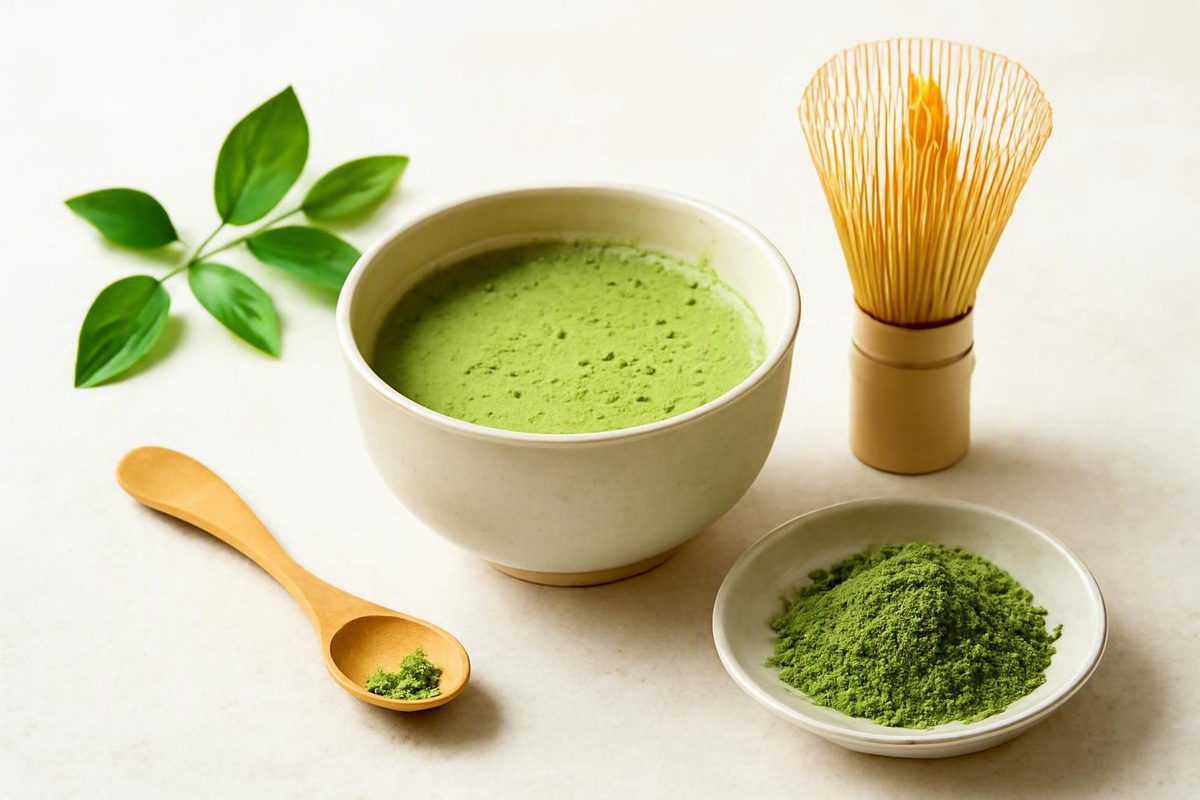
A green tea powder made without shade cultivation and tencha processing before grinding is powdered green tea, not matcha, whatever its label says.
Overview
Matcha is a finely ground powder of green tea made from specially cultivated, shade-grown leaves, and it is typically consumed by whisking the powder into hot water so the tea itself is drunk rather than steeped and strained away, according to Wikipedia’s entry on matcha. That last point is the practical heart of the definition: with matcha, the whole leaf material stays in your cup.
Not every powdered green tea qualifies. The leaves destined for matcha are grown, processed, and prepared differently from ordinary green tea. After harvest they are steamed and dried without rolling to become tencha — the prepared leaf material from which matcha is made — then stripped of stems and veins and ground into a fine powder, as described by Teatulia. Grinding an arbitrary green tea leaf produces powdered green tea, but not matcha in the technical sense.
The rest of this guide walks through how matcha is made, how it compares with familiar green tea, what it tastes like, how to think about its caffeine, and a simple way to prepare it for the first time.
How matcha is made
Matcha’s identity comes from a specific production chain, not from grinding alone. Each stage — shading, steaming, tencha preparation, and fine milling — shapes the color, flavor, and texture that distinguish the finished powder from ordinary green tea.
The sequence, from field to cup, looks like this:
- Shade cultivation. Tea plants are covered for a period before harvest. Clemson University’s Home & Garden Information Center describes leaves traditionally grown under bamboo mats for much of their growth period, while Wikipedia notes the Japanese food labeling standard requires shading for 2–3 weeks before harvest. Reported durations vary across sources, so treat the shade period as variable rather than a fixed rule.
- Steaming and drying. After harvest, the leaves are briefly steamed to stop oxidation, which helps them retain their bright green color, per Clemson HGIC. They are then dried without being rolled or shaped the way traditional green tea leaves are.
- Tencha preparation. The steamed, flat-dried leaves become tencha — a distinct intermediate product, not finished matcha. Stems and veins are removed, leaving only the tender leaf material.
- Fine grinding. The remaining leaf material is milled into an ultra-fine powder, often in slow-turning stone mills, according to Teatulia.
Shading matters because it changes the leaf itself. According to Wikipedia, shade growing gives matcha its characteristic bright green color and strong umami flavor. This is why powder made from non-shaded leaves — even when finely ground — tends to differ in both appearance and taste. Clemson HGIC notes that using green tea leaves other than tencha can produce a lower-quality, coarse, and gritty powder.
Two caveats keep this picture honest. First, exact shading practices, harvest methods, and milling equipment vary between producers; not all matcha is hand-picked or ground exclusively on traditional hand-operated stone mills. Second, the distinction between tencha and matcha is worth remembering: tencha is the prepared leaf, and matcha only exists once that leaf has been ground to a fine powder.
Matcha vs green tea and powdered green tea
Matcha and ordinary green tea come from the same plant but part ways at almost every step afterward. Both are made from the leaves of Camellia sinensis, as Art of Tea explains, but matcha is shade-grown and ground into a fine powder you whisk and drink whole, while ordinary green tea is loose leaf that you steep and strain.
That consumption difference is the single most useful thing to remember. With steeped green tea, you drink an infusion — water that has extracted flavor from leaves that are then discarded. With matcha, the suspended powder stays in the drink, which is why matcha has a fuller body, more intense color, and more direct flavor than a strained infusion. It also explains why matcha is prepared with a whisk rather than a teapot and strainer.
Generic powdered green tea sits in a confusing middle category. It looks like matcha but typically skips the shade cultivation and tencha preparation that define matcha technically. The table below compares the three side by side to help you recognize what you are looking at:
| Criterion | Matcha | Steeped green tea | Generic powdered green tea |
|---|---|---|---|
| Source plant | Camellia sinensis | Camellia sinensis | Camellia sinensis |
| Cultivation | Shade-grown before harvest | Usually grown in full sun | Typically not shade-grown |
| Processing | Steamed, dried flat as tencha, stems and veins removed, finely ground | Rolled, shaped, and dried as whole leaves | Ground green tea leaves without the tencha process |
| Preparation | Powder whisked into water | Leaves steeped, then strained out | Powder mixed into liquid |
| What you consume | The whole suspended leaf powder | A water infusion only | The whole powder, but from different leaf material |
One clarification keeps this comparison fair: the differences in the table are technical production characteristics, not a verdict that steeped green tea is inferior. Many people prefer the lighter body of a steeped infusion. The point is recognition — if a product was not shade-grown and processed as tencha before grinding, it is powdered green tea rather than matcha, whatever the label suggests.
What matcha tastes like
Expect a flavor that is greener, fuller, and more savory than steeped green tea, with some variation from cup to cup. Common descriptions collected by Teatulia include vegetal, sweet, rich, creamy, wheatgrass-like, slightly astringent, full-bodied, and frothy. Clemson HGIC describes grassy, earthy undertones with a slight bitterness, and Wikipedia highlights a strong umami character linked to shade growing.
Those descriptions overlap but do not fully agree, and the disagreement is informative: matcha’s taste is not fixed. Bitterness in particular depends on several things you can influence. The quality of the leaf material matters — powder made from carefully cultivated tencha tends toward smoother umami, while coarser products lean harsher. Concentration matters, since more powder in less water intensifies every note, bitter ones included. Water temperature matters too, which is why beginner methods use hot but non-boiling water rather than water straight off the boil.
Texture is part of the experience as well. Because you are drinking suspended powder rather than an infusion, matcha feels noticeably thicker and creamier than steeped tea, especially when whisked to a light froth. A first-time drinker should expect an intense, savory-green drink rather than something sweet — and should know that if a first cup tastes harshly bitter, a different product, less powder, or cooler water can change the result considerably.
Caffeine in matcha
Matcha contains caffeine, but there is no single universal amount per cup. As Teatulia puts it, the specific level of caffeine per cup of matcha depends on how the matcha was processed and prepared. Because you consume the whole powdered leaf rather than an infusion, the amount of powder you use directly sets the caffeine in your serving — and that amount varies widely between a light thin tea, a concentrated thick tea, and a milky latte.
This is why published comparisons with green tea or coffee often conflict. One page may base its figure on a small teaspoon of powder in a large cup, another on a concentrated ceremonial serving, and neither may state its assumptions. Without knowing the grams of powder behind a number, per-cup comparisons are hard to interpret, so treat any confident “matcha has X mg of caffeine” claim with caution rather than as settled fact.
It is also worth separating caffeine facts from marketing promises. Commercial pages frequently pair caffeine with L-theanine and promise calm, sustained, crash-free energy. The supplied evidence does not support those guarantees; even a matcha-focused retail guide from Pacific Crest Coffee notes that while research is promising, more human studies are needed to confirm claimed benefits. The reliable takeaway is simpler: matcha is a caffeinated drink, and how much you use determines how much caffeine you get.
How to prepare and drink matcha
There are two practical routes for a beginner: plain whisked matcha and a matcha latte. Within traditional preparation, Clemson HGIC identifies three established styles — usucha (thin tea, a small quantity of matcha in hot water), koicha (thick tea, more matcha in less water), and the latte, which combines matcha, water, and milk. Thin tea is the natural starting point; thick tea is a concentrated preparation better saved for later.
One housekeeping note before you start: matcha is a fine powder, so follow the storage directions on your package and reseal the container promptly after each use to keep the powder in good condition.
A simple whisked matcha
You do not need ceremonial training to make a good first bowl. The method below follows the beginner steps described by Chamberlain Coffee, with quantities kept flexible so you can adjust to taste:
- Sift 1–2 teaspoons of matcha into a bowl or wide mug. Sifting breaks up clumps so the powder disperses evenly.
- Add a splash of hot — not boiling — water. Very hot water tends to emphasize bitterness, so let boiled water cool briefly first.
- Whisk in a zigzag motion until the mixture is smooth and frothy, with no dry lumps remaining. A bamboo whisk is traditional, but a small kitchen whisk or frother works for a first attempt.
- Top up with more hot water to your preferred strength, tasting as you go.
If the result tastes too intense, that is normal on a first try. Use slightly less powder, more water, or cooler water next time — small changes make a large difference. Because the powder stays suspended in the drink, give it a quick re-whisk or swirl if it settles before you finish. Once the basic whisking motion feels comfortable, you can experiment with stronger or weaker ratios and decide whether plain matcha or a milk-based version suits you better.
Matcha lattes and other common uses
A latte is the most accessible entry point if straight matcha tastes too intense. The approach is the same as above — sift, add a splash of hot water, and whisk until you have a smooth, frothy base — then add steamed milk instead of topping up with water, as described by Chamberlain Coffee. Clemson HGIC notes that drinking matcha as a latte is a popular way to soften its bitterness, and its method adds optional sweetener at the whisking stage and a cold-milk-and-ice variation for iced lattes.
Beyond drinks, the same smooth matcha base logic applies whenever the powder is combined with other ingredients: the key is dissolving it into a lump-free slurry first. The two traditional preparations — thin usucha and concentrated koicha — remain the reference points for drinking matcha on its own, and both use nothing more than powder and hot water.
How to read matcha labels and grade language
Retail grade terms describe intended use and flavor more reliably than they certify quality. Matcha is typically sold in two grades, according to Teatulia: ceremonial grade, described as the highest-quality matcha from the most carefully cultivated buds and leaves and meant for drinking on its own, and culinary grade, which has a more robust, astringent flavor that stands up to other ingredients in lattes, baking, and cooking.
Treat these as common retail categories rather than guaranteed standards. The supplied evidence does not establish that “ceremonial” and “culinary” carry uniform, officially regulated definitions across all markets, so two “ceremonial” tins from different sellers can differ meaningfully in quality. This is different from the definition of matcha itself, where formal technical criteria do exist: Wikipedia notes that ISO 20715:2023 and the Japanese food labeling standard both define matcha as tea grown in the shade, steamed and dried without rolling, and ground to a fine powder.
That distinction gives you a practical reading strategy. Technical characteristics — shade cultivation, tencha processing, fine grinding — tell you whether a product is matcha at all. Grade language, color adjectives, and price tell you what the seller claims about quality, which is a preference judgment rather than a definition. A vivid green, finely textured powder made through the tencha process is matcha whatever grade word appears on the tin; a dull, gritty powder from non-shaded leaves is not made ceremonial by its label. When in doubt, look for production details on the packaging rather than relying on grade terminology alone.
Why matcha is associated with Japan
Matcha’s association with Japan is historical and cultural rather than a strict geographic definition. According to Wikipedia, matcha originated through cultural exchanges between China and Japan in the premodern period, developing from earlier powdered-tea practices in China that were transmitted to Japan by Zen Buddhist monks. Powdered tea, in other words, began in China; the modern product we call matcha took shape in Japan.
Japan is also where matcha acquired its ceremonial significance. The Japanese tea ceremony — still called The Way of Tea — remains a revered practice centered on preparing and presenting matcha in an almost meditative fashion, as Teatulia describes. The thin-tea and thick-tea preparations mentioned earlier come directly from this tradition, and much of matcha’s vocabulary, from tencha to usucha, is Japanese.
For a beginner, the useful takeaway is balance: Japan is the reference point for matcha’s production methods, standards, and culture, but the Japanese connection describes where the tradition developed and is anchored — not an absolute rule about where every tin of matcha must come from.