
String Cheese Has Protein—Check the Stick Size
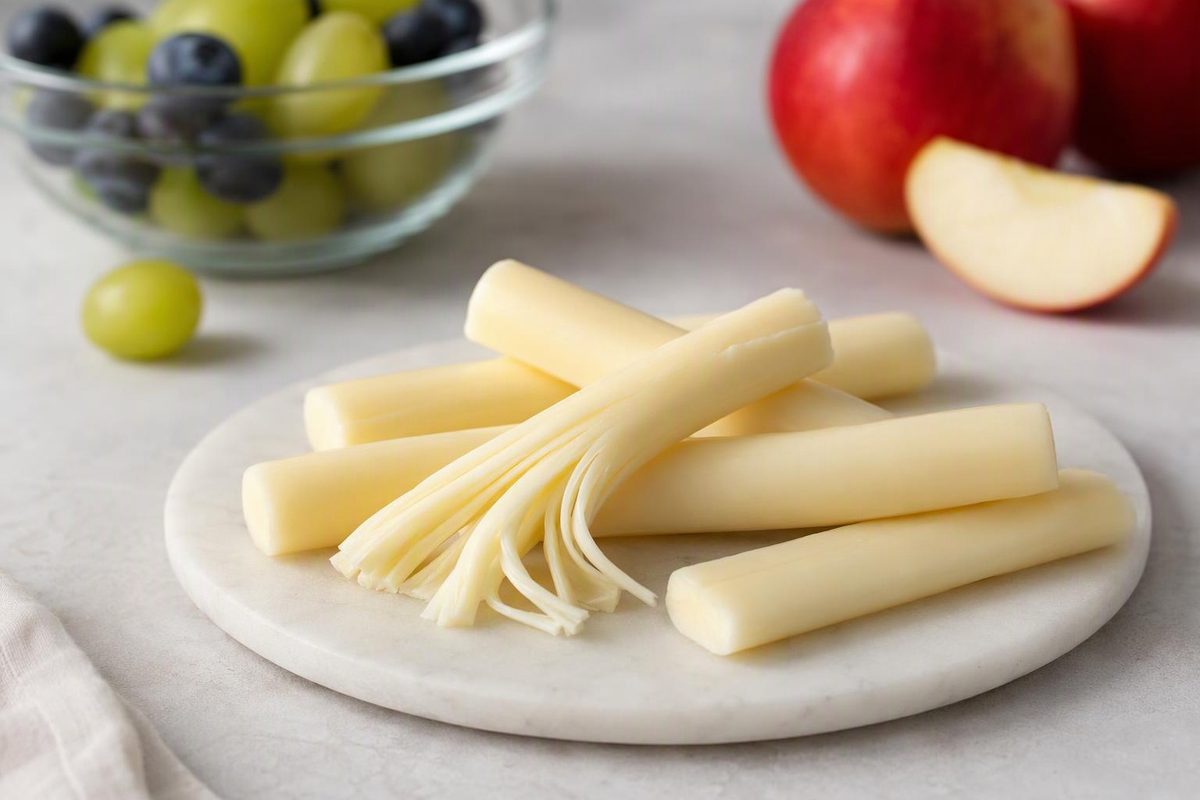
String cheese label examples provide 6–7 g protein per stick. Compare regular and light portions, calories, and the numbers to log.
Yes. In the mozzarella string cheese labels below, one stick provides 6–7 grams of protein. The portion matters: the regular stick weighs 28 g, while the light stick weighs 21 g. They are not equal-sized servings.
Protein and calories per stick
These are U.S. manufacturer Nutrition Facts values checked on October 27, 2026—not a universal average for all string cheese.
| Product | Serving size | Protein | Calories | Total fat | Carbs |
|---|---|---|---|---|---|
| Sargento Mozzarella String Cheese | 1 stick, 28 g | 7 g | 90 | 6 g | 1 g |
| Sargento Light String Cheese | 1 stick, 21 g | 6 g | 50 | 2.5 g | 1 g |
The light product’s page contains conflicting promotional copy: one section says 45 calories, and another says 5 g protein. The table uses its Nutrition Facts panel, which lists 50 calories and 6 g protein. For your food log, match the package you actually have.
Is it useful as a protein snack?
A stick contributes a measurable amount of protein, but it also contributes fat and calories. Using the labels above, two regular sticks provide 14 g protein and 180 calories; two light sticks provide 12 g protein and 100 calories. Those are calculated totals, not separate label servings.
The light version delivers more protein relative to its calories:
- Regular: about 7.8 g protein per 100 calories.
- Light: 12 g protein per 100 calories.
That comparison is calculated from the listed protein and calories. It describes these two products, not every regular or reduced-fat cheese. The light stick’s lower calorie count reflects both a smaller portion and less fat; “one stick” alone does not control for serving size. For the broader comparison method, see protein calorie density.
What to enter in a tracker
Choose the exact brand and variety, then check that the entry’s serving weight matches your package. A generic “string cheese” entry may represent a different-sized stick.
For whole sticks, multiply the label’s protein and calories by the number eaten. For a weighed partial portion, use:
Protein eaten = label protein × grams eaten ÷ label serving grams
For example, 14 g of the regular product above is half its 28 g serving: approximately 3.5 g protein and 45 calories. Use the same portion multiplier for both numbers.