
Don Julio Tequila Strength: 40% ABV Standard Across Most Bottles
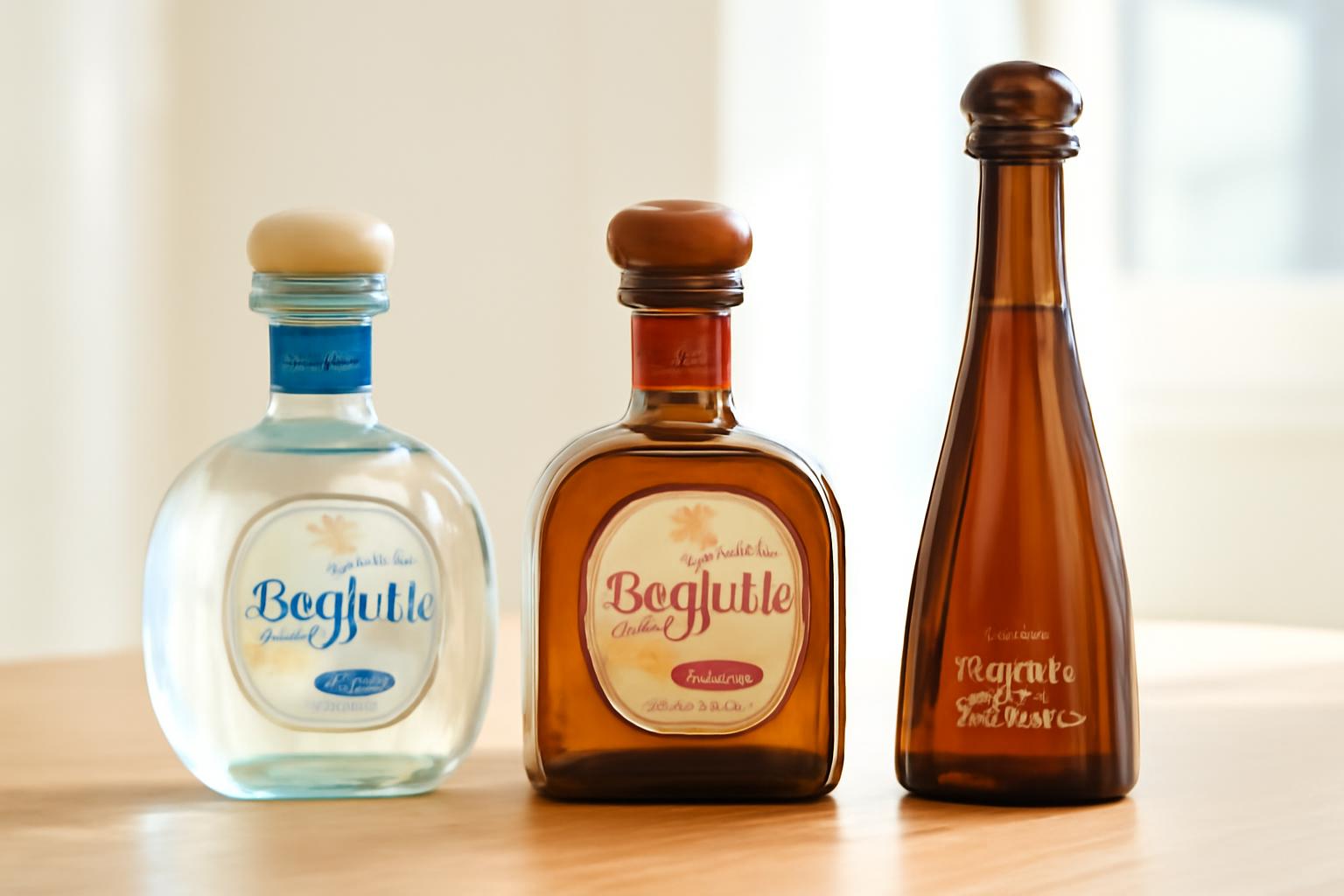
Don Julio is usually 40% ABV, but Don Julio 70 appears at both 35% and 40% in conflicting listings. The exact bottle label should decide your log.
If you are trying to log Don Julio accurately in a calorie or macro tracker, the practical answer is straightforward: most Don Julio bottles you are likely to encounter are sold at 40% ABV. That conclusion is strongest for the flagship bottles with official product pages and weaker for some edge-case expressions, so “usually 40%” is more accurate than “always 40%.”
That distinction matters because ABV is the part of the label that drives the alcohol math. It tells you the finished bottling strength of the spirit, and that is the number you need for a usable calorie estimate. If your tracker uses the wrong ABV, the entry can look precise while still being off.
For readers who log alcohol as part of a broader intake record, this guide stays focused on the bottle number that matters most: the labeled ABV on the exact expression you poured, not the aging category, marketing copy, or whatever generic entry an app happens to suggest.
Don Julio Tequila Overview and Standard ABV
For everyday logging, 40% ABV is the dominant Don Julio pattern. In this evidence set, Don Julio’s official product pages confirm 40% ALC./VOL. for Blanco and 1942, while retailer listings and lineup guides commonly report the same number for much of the rest of the range.
The easiest way to keep the topic clear is to separate three ideas that often get blended together online:
- the spirit’s strength during production
- the expression’s aging or filtration style
- the labeled ABV at bottling
For tracking purposes, the third item is the one that counts.
That is why a Blanco and an older Don Julio can taste very different while still carrying the same alcohol percentage on the label. Aging can change color, aroma, and texture; it does not automatically mean a higher bottle strength. If your goal is a cleaner log entry, the expression name helps you identify the bottle, but the labeled ABV is what drives the math.
The practical takeaway is simple: if you are logging a standard Don Julio bottle and have not checked the label yet, 40% ABV is the best working assumption. When accuracy matters, though, the bottle in front of you should win over memory, app defaults, and retailer databases.
ABV Breakdown by Don Julio Variant
The cleanest way to read the Don Julio lineup is to rank the evidence by strength. Official Don Julio product pages are the strongest sources. Retailer listings can be useful for a specific SKU, but they can also repeat copied or outdated product data. Commercial lineup guides are useful for spotting brand patterns, but they are not the same thing as bottle-label confirmation.
Don Julio Blanco is the most straightforward case. The official Don Julio Blanco page lists it at 40% ALC./VOL.
Don Julio 1942 is equally clear on the official side. The official Don Julio 1942 page lists it at 40% ALC./VOL.
For Don Julio Reposado, the evidence here is retailer-based rather than brand-direct, but it is still specific. A retailer listing for Don Julio Reposado gives the 750 mL bottle at 40% ABV and describes it as aged in American white oak barrels.
For Don Julio Añejo, Don Julio Real Extra Añejo, Don Julio Rosado, and Don Julio Primavera, the evidence pack does not include official Don Julio product pages. What it does include is a commercial lineup guide that lists each of those expressions at 40% ABV and also reports Don Julio 70 Añejo Claro at 35% ABV. That makes 40% a reasonable working figure for several bottles in the lineup, but not a bottle-label-level confirmation for every expression (Sip Tequila lineup guide).
A separate retailer listing for Don Julio Tequila Añejo Claro 70th Anniversary 750 mL reports 40.0% alcohol and describes the bottle as aged 18 months in American white-oak barrels before filtration. That is why Don Julio 70 is the clearest outlier in the evidence set: it is not just lightly uncertain, but directly conflicting.
That leaves the lineup looking like this:
| Expression | Reported ABV in this evidence set | Evidence strength | Best logging approach |
|---|---|---|---|
| Blanco | 40% | Official brand page | Use 40% unless your label says otherwise |
| Reposado | 40% | Specific retailer listing | Reasonable working figure; verify bottle |
| Añejo | 40% | Commercial lineup guide | Treat as likely, not fully verified |
| 1942 | 40% | Official brand page | Use 40% unless your label says otherwise |
| Real Extra Añejo | 40% | Commercial lineup guide | Verify exact bottle before custom entry |
| Rosado | 40% | Commercial lineup guide | Verify exact bottle before custom entry |
| Primavera | 40% | Commercial lineup guide | Verify exact bottle before custom entry |
| 70 Añejo Claro | 35% to 40% | Conflicting secondary sources | Check the actual label and exact SKU |
So if someone asks, “What is the Don Julio alcohol percentage?” the best honest answer is this: most Don Julio expressions in this evidence set are reported at 40% ABV, but not every bottle is equally well verified, and Don Julio 70 is the clearest reason to check the exact label in your hand.
Mexican Tequila Regulations: Why 40% ABV is Common
In this evidence set, the only legal-range citation available is a secondary commercial summary that places tequila between 35% and 55% ABV under Mexican NOM standards, so that claim should be read as a sourced summary rather than a direct quotation from the regulation itself (Sip Tequila guide).
Within that range, 40% ABV sits in familiar territory rather than at an extreme. A commercial comparison article also lists both Don Julio and Patrón at 40% ABV, which reinforces how normal that bottling strength is on the premium tequila shelf (Country Wine & Spirits comparison).
What 40% ABV does not tell you is whether one bottle is better than another. In this lineup, the meaningful differences usually come from production choices and aging style: whether the tequila is unaged or barrel-aged, how long it spent in oak, and whether it was filtered after maturation.
That is why a bottle such as 1942 can be priced and positioned well above Blanco while still sitting at the same headline strength.
For tracking, that is helpful. It lets you separate two different jobs cleanly:
- use ABV and pour size to estimate alcohol intake
- use the expression name to understand style and context
Calories and Alcohol Content per Don Julio Shot
For calorie logging, the most useful baseline in this evidence set is a standard 1.5 oz / 45 mL shot. A DrinkMeter Don Julio calculator entry uses 38% ABV as its generic Don Julio record and gives that serving as 97 calories, 13.5 grams of alcohol, and about 0.96 standard drinks by NIAAA guidelines.
That source is useful less because it perfectly matches the whole Don Julio lineup and more because it gives you a transparent baseline you can adjust. If a 45 mL pour at 38% ABV contains 13.5 g of alcohol and 97 calories, then a same-size pour at 40% ABV can be estimated by simple proportional scaling:
- alcohol grams: 13.5 × (40/38) ≈ 14.2 g
- calories: 97 × (40/38) ≈ 102 calories
That is still an estimate, not a label-specific nutrition panel, but it is a clear way to see how a small ABV difference changes the log.
A few examples make the effect easier to picture:
- 1.5 oz at 38% ABV: about 97 calories and 13.5 g alcohol
- 1.5 oz scaled to 40% ABV: about 102 calories and 14.2 g alcohol
- Two 1.5 oz pours at 40% ABV: about 204 calories and 28.4 g alcohol
You can extend the same logic to a full bottle. A 750 mL bottle contains about 16.7 pours of 45 mL each. Using the calculator’s generic 97-calorie shot as the baseline, a full 750 mL bottle at 38% ABV works out to about 1,617 calories. Scaled to 40% ABV, that becomes roughly 1,700 calories for the whole bottle.
That bottle-total figure is not there to suggest anyone is drinking a full bottle in one sitting. It is useful because it keeps your log internally consistent if you are splitting the bottle across several nights or comparing neat pours with cocktails made from the same base spirit.
A practical workflow looks like this:
- Measure the amount you actually poured.
- Read the bottle’s stated ABV.
- Match both of those numbers in your tracker as closely as possible.
- Log mixers separately instead of trusting a generic cocktail entry.
That last step is where many logs drift. People fixate on whether the tequila entry should be 38% or 40%, then ignore the sweetener, liqueur, canned mixer, or second pour that changed the drink far more than the spirit entry did.
Production and Aging: How Don Julio Sets Final ABV
ABV tells you how to log the drink. Production tells you why one Don Julio expression tastes different from another even when both bottles are labeled at the same strength.
The official Don Julio Blanco page describes Blanco as 40% ALC./VOL., made from 100% Blue Weber agave, and double distilled in pot stills. It also presents Blanco as pure unaged agave, which makes it the clearest baseline for the house style.
As the lineup moves into aged expressions, oak becomes more important than the headline ABV. In the Reposado listing already discussed, the bottle is described as aged in American white oak barrels and bottled at 40% ABV. That is a good example of how maturation can reshape flavor without necessarily changing the finished label strength.
A retailer listing for Don Julio 1942 Tequila Añejo 750 mL reports 40% ABV, says the tequila is double distilled, and describes it as aged for a minimum of two and a half years. Whether you read that through the official page’s 24+ months language or the retailer’s “minimum two and a half years” wording, the broad picture is the same: 1942 sits in the long-aged end of the lineup while staying at the same finished strength readers see on Blanco.
This is why ABV is a weak shortcut for predicting taste. A 40% Blanco and a 40% long-aged tequila can be identical on paper in strength and still deliver very different drinking experiences. One emphasizes fresh agave and citrus; the other leans harder into oak, vanilla, caramel, and a rounder texture.
For tracking, though, the rule does not change: log the bottling strength, not your impression of how strong it tasted. A softer-tasting aged tequila is not automatically lower in calories, and a brighter Blanco is not automatically higher.
Exceptions and Discrepancies in Don Julio ABV Reports
The main exception story here is still Don Julio 70 Añejo Claro.
In one commercial lineup guide, it appears at 35% ABV. In a separate retailer listing for a 70th Anniversary version, it appears at 40.0% alcohol and is described as aged 18 months before filtration.
That leads to the clearest resolution the evidence set allows: do not log Don Julio 70 from memory or from a generic app entry. Log it from the exact bottle label. More specifically:
- match the full expression name on the bottle
- note whether the wording includes 70 Añejo Claro or 70th Anniversary
- check the stated % ALC./VOL. or ABV
- if you are buying online, compare the retailer title with the bottle image before trusting the listing
That same caution applies, in a softer way, to Rosado, Primavera, Real Extra Añejo, and standard Añejo. In this evidence set, they are commonly reported at 40% ABV, but they are not all backed by official Don Julio pages here. So the most accurate wording is not “confirmed 40%,” but “commonly listed at 40%; verify on bottle.”
A different kind of discrepancy shows up in the generic DrinkMeter Don Julio entry, which uses 38% ABV as its baseline. That does not mean Don Julio as a brand is typically 38%. It means one calculator is using a generic record that does not line up neatly with the stronger 40% support for Blanco and 1942 and the common reporting for much of the lineup.
The larger lesson is useful beyond this brand: brand averages are a convenience, not a substitute for the bottle in your hand.
Verifying ABV on Don Julio Bottle Labels
If you want the most reliable answer, start with the bottle itself.
The official Don Julio pages use the format “% ALC./VOL.” for the alcohol statement, and retailer listings often use ABV. In practice, those are the kinds of label cues you want to look for on the front, back, or side label when you build a custom tracker entry.
It also helps to be clear about what labels are good at. The CaloriePages About page notes that calorie counts on labels can be off by about 20%.
A few practical checks help:
- look for ABV or % ALC./VOL.
- make sure the expression name matches what you are logging
- if a retailer title and the bottle image do not match, trust the bottle label over the product page
- if the expression is one with conflicting reports, save your custom entry only after you confirm the label
This matters especially for closely related names. A shopper can easily assume that “Don Julio 70,” “Don Julio 70 Añejo Claro,” and “Don Julio 70th Anniversary Añejo Claro” all share identical specs. The evidence here does not support that assumption.
If you log alcohol regularly, the easiest system is simple: verify the label once, save a custom entry, and reuse it. That is less work than repeatedly guessing.
Tracking Don Julio in Your Calorie Logs: Mixing Tips
The best way to log Don Julio is to split the drink into two parts: the tequila itself and everything else in the glass.
If you are drinking it neat or on the rocks, the main variables are just pour size and ABV. If you are drinking it in a cocktail, the tequila may still supply most of the alcohol, but it may no longer supply most of the calories.
A reliable workflow looks like this:
- log the tequila by measured ounces or milliliters
- match the bottle ABV as closely as possible
- log each mixer separately
- avoid catch-all entries like “tequila cocktail” unless the recipe truly matches your drink
Two glasses can each contain 1.5 oz of Don Julio and still land far apart in calories depending on what else went into them.
It also helps to place drink logging inside the bigger intake picture. The CaloriePages guide on what TDEE measures and how to calibrate it recommends using a 2- to 4-week food log and body-weight trend, notes that common TDEE equations have about ±10% mean error, and explains that NEAT can differ by up to 2,000 kcal/day between people.
That wider context is one reason not to chase false precision. Correcting a tequila entry from a generic 38% assumption to a verified 40% label is worth doing.
The same site also has a useful article on why protein fills you up on fewer calories. Equal calories do not necessarily feel equally filling.
A practical middle ground is:
- be precise about bottle ABV and pour size
- be honest about mixers, second pours, and heavy free-pours
- judge intake by multi-week trends, not one night
- recalibrate if your body-weight trend disagrees with your log
For general site use, the article is informational only, consistent with the CaloriePages Terms of Use. If you subscribe to updates, the Privacy Policy explains the site’s minimal-data approach.
What is the ABV of Don Julio Blanco Tequila?
Don Julio Blanco is 40% ALC./VOL. on the official brand page, so 40% ABV is the supported answer for the flagship Blanco bottle.
Is Don Julio 1942 40% alcohol?
Yes. Don Julio 1942 is listed at 40% ALC./VOL. on the official Don Julio page, so 40% alcohol by volume is the supported figure in this evidence set.
What ABV is Don Julio Reposado?
In this evidence set, Don Julio Reposado is listed at 40% ABV on a specific retailer product page. That makes 40% the best working figure here, with the usual caveat that the bottle label outranks the retailer database.
Calories in a 1.5oz Don Julio shot?
Using the generic calculator entry in this evidence set, a 1.5 oz / 45 mL Don Julio shot at 38% ABV is about 97 calories with 13.5 g of alcohol. If your actual bottle is 40% ABV, a same-size pour scales to roughly 102 calories and 14.2 g of alcohol.
Does all Don Julio tequila have the same alcohol percentage?
No. Most Don Julio expressions in this evidence set are reported at 40% ABV, but the evidence is not equally strong for every bottle, and Don Julio 70 Añejo Claro is the clearest example of conflicting reports. Some sources list it at 35%, while a 70th Anniversary retailer listing shows 40.0%, so the label on the exact bottle should decide your log.
Bottom line: for most bottles, Don Julio is best treated as a 40% ABV tequila for logging purposes. The important caveat is that not every expression is equally well verified, and Don Julio 70 remains the clearest gray area. Check the label on your specific bottle, log the measured pour instead of guessing, and remember that mixers and overall intake estimation often create more tracking error than the tequila itself.