
Breaking Down Pink Whitney's Alcohol Content, Calories, and Serving Math
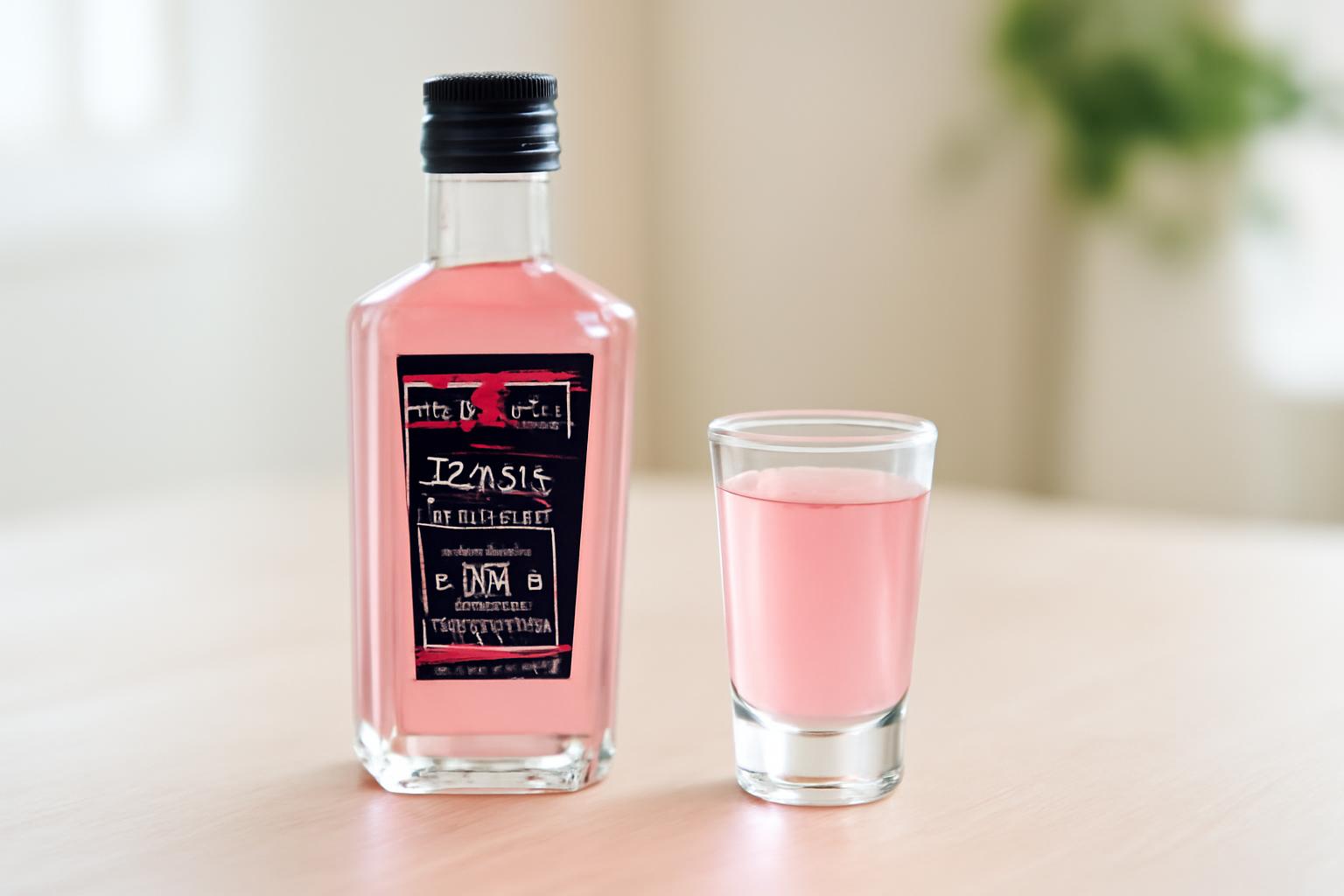
Pink Whitney Shots are listed at 15.0% ABV in a malt-based 10-pack, not as smaller servings of the standard flavored vodka bottle.
If you want the shortest careful answer, it is this: third-party retailer listings and blog-style sources in this evidence pack consistently report the standard Pink Whitney pink lemonade flavored vodka at 30% ABV, or 60 proof, rather than the 40% ABV many people mentally file under generic vodka. A representative example is W&J Wine’s Pink Whitney explainer, which states 30% alcohol by volume and says a 1.5 oz serving contains 0.45 oz of pure alcohol.
That is still not the same thing as first-party confirmation. The evidence available here does not include a manufacturer product page, bottle-label image, or regulator-style filing, so the publication-ready version of the answer is: 30% ABV is the best-supported third-party-reported figure for the standard bottled vodka in this evidence set, not an official specification.
That distinction matters because “Pink Whitney” is also used on a different product format. A retailer listing for Pink Whitney Shots describes a 10-pack of 50 mL shots at 15.0% ABV and identifies it as malt-based, not the same thing as the standard flavored vodka bottle.
For calorie and alcohol tracking, the difference is not cosmetic. Using the commonly reported 30% ABV figure for the bottled vodka, a 1.5 oz / 45 mL pour works out to about 10.7 grams of pure alcohol, about 0.76 U.S. standard drinks, and about 100 calories by one calculator-style source, DrinkMeter. Those are useful logging numbers, but they should still be treated as estimates built from third-party sources rather than verified label data.
The practical takeaway is simple: do not log Pink Whitney as generic 80-proof vodka by default, and do not assume every Pink Whitney-branded product has the same strength. The bottle type, the package type, and the actual poured volume all matter.
How Food Labels Calculate Calories (And Where the Number Can Be Wrong): Food labels use the Atwater system, not direct measurement. Here’s how the 4-4-9 factors work, why they allow a 20% margin of error, and what that means for tracking.
What Is Pink Whitney?
In the evidence reviewed here, third-party sources generally describe Pink Whitney as a pink lemonade flavored vodka made with New Amsterdam Vodka. Some also connect it with Ryan Whitney and the Spittin’ Chiclets podcast, but that connection should be presented cautiously because it comes from third-party reporting rather than brand documentation in this pack. One example is Bliss Recovery LA’s overview, which describes Pink Whitney as a New Amsterdam flavored vodka associated with Spittin’ Chiclets and reports it at 30% ABV / 60 proof.
Retailer descriptions in this evidence add a recognizable product picture, but they are still retailer copy, not a manufacturer spec sheet. Elma Wine & Liquor describes a 1 L bottle as pink lemonade flavored vodka and gives 30% ABV; Valley Wine & Liquor describes the line in 750 mL and 1 L formats and presents Pink Whitney as part of a broader New Amsterdam flavored-vodka range. Those same retailer pages also use sensory language such as bright or neon pink appearance and tart pink lemonade flavor. Useful for identifying the bottle, yes; strong enough to treat as official product facts, no.
That modest framing matters because readers usually come to this topic with one of two questions: “What exactly is this product?” and “How should I log it?” For both questions, the safest answer is not “vodka, end of story.” Based on the available evidence, Pink Whitney is better understood as a specific flavored-vodka product with a commonly reported ABV that differs from standard 40% vodka, plus at least one separate branded shots product with a different base and a different ABV.
So when a tracker app gives you several vague entries—“Pink Whitney,” “vodka shot,” “pink lemonade vodka,” “Pink Whitney shot”—the product label in your hand matters more than the brand name alone. That is the theme of the rest of this article.
Reported ABV for Pink Whitney Vodka
Across the third-party sources reviewed here, the standard bottled Pink Whitney vodka is consistently reported at 30% ABV, and several of those same sources also translate that to 60 proof. The recurring sources are retailer listings, retailer blog posts, treatment-center blog posts, and a calculator-style drink page. That level of agreement is meaningful, but it is still agreement among third parties.
The comparison most readers care about is straightforward: a lot of people treat vodka as if it automatically means 40% ABV / 80 proof. In this evidence set, Pink Whitney is repeatedly described as lower than that. Bliss Recovery LA, for example, explicitly contrasts Pink Whitney’s reported 30% ABV with more traditional vodka at around 40% ABV. W&J Wine also places many vodkas more broadly in the 35% to 50% ABV range. So if you log every vodka drink as an 80-proof pour unless told otherwise, Pink Whitney is one of the cases where that shortcut can overstate the alcohol in a measured serving.
The evidence-quality caveat remains important. Because this article does not have a manufacturer label, official product page, or regulator filing, it should not present 30% ABV as an official final answer. The careful hierarchy is:
- Check the bottle or package you actually have
- If you cannot read the package, use a product page that clearly matches it
- Only then use the broader third-party consensus as a fallback
That is not hedging for its own sake. It is the cleanest way to handle a branded factual lookup when the best-supported number is still indirectly sourced.
Pink Whitney Product Variants and ABV Differences
Not every Pink Whitney-branded product in this evidence set has the same alcohol percentage, and that is where a lot of logging mistakes start.
The clearest example is the separate Pink Whitney Shots product. In the evidence here, it is listed as a 10-pack of 50 mL shots at 15.0% ABV and identified as malt-based. That means it is not just a smaller bottle of the standard vodka. It is a different product type with a different alcohol concentration.
Put plainly:
- the standard Pink Whitney bottle is widely reported here as 30% ABV flavored vodka
- the Pink Whitney Shots pack is listed here at 15% ABV and described as malt-based
Those two products should not be treated as interchangeable in alcohol logs, calorie logs, or standard-drink math.
This is why entries like “Pink Whitney shot” can be misleading. A “shot” might mean a 1.5 oz / 45 mL pour from the 30% bottle. It might also mean a 50 mL packaged Pink Whitney Shots item at 15% ABV. If your app entry does not distinguish between those products, it creates false precision.
A better rule is to log the full description whenever you can: bottled flavored vodka, malt-based shots, 45 mL, 50 mL, 1.5 oz, or whatever actually matches the item in front of you. Product name alone is not enough.
Calories and Nutrition per Pink Whitney Serving
For the standard bottled vodka, the cleanest calorie estimate in this evidence pack is that a 1.5 oz serving lands somewhere around 93 to 100 calories. One third-party article, Anaheim Lighthouse’s Pink Whitney piece, reports about 93 to 100 calories per 1.5 oz serving and also reports 6.6 g of sugar per 1.5 oz shot. Because those figures come from a treatment-center blog post rather than a manufacturer nutrition panel, they are best treated as reported estimates, not hard label facts.
That is still useful for tracking. Even without official label data in this evidence set, the estimates cluster in the same neighborhood: roughly 100 calories for a measured 1.5 oz pour of the standard bottled product. For most macro trackers, that is close enough to build a sensible entry, especially if the alternative is logging it as plain vodka with no flavor calories at all.
That does not create an official Pink Whitney number by itself, but it does give you a way to cross-check a nutrition panel if one is available for your exact product.
Even then, precision has limits. On CaloriePages’ About page, the site notes that calorie counts on labels can be off by about 20%. That does not make labels useless. It just means you should avoid pretending a crowd-sourced alcohol entry is exact to the single calorie. With Pink Whitney, the honest move is to combine the best available estimate with a measured serving size.
The sugar figure deserves the same caution. In this evidence set, 6.6 g of sugar per 1.5 oz appears as a single-source third-party report from Anaheim Lighthouse. That makes it informative, but not definitive. The safer bottom line is qualitative: Pink Whitney is a flavored pink lemonade vodka, so its calories are not likely to come from ethanol alone, and the third-party estimates are consistent with that.
Pure Alcohol Grams and Standard Drinks in Pink Whitney
Using the commonly reported 30% ABV figure for the standard bottled vodka, a 1.5 oz / 45 mL shot contains about 10.7 grams of pure alcohol and counts as about 0.76 U.S. standard drinks under the 14-gram convention referenced by DrinkMeter. The same source estimates about 100 calories per 45 mL shot, with about 75 calories from alcohol.
That single-shot math is more useful than it looks. Many people hear “shot of vodka” and mentally round it to one full standard drink. With Pink Whitney, the reported 30% ABV changes that. If the bottle in front of you really is the standard 30% version, then a measured 1.5 oz pour is less than one U.S. standard drink.
It also scales cleanly:
- 1 shot (1.5 oz / 45 mL) ≈ 10.7 g alcohol ≈ 0.76 standard drinks
- 2 shots ≈ 21.4 g alcohol ≈ 1.5 standard drinks
- 4 shots ≈ 42.8 g alcohol ≈ 3.1 standard drinks
You can extend the same approach to bottles by multiplying the per-shot estimate by the number of 45 mL servings:
-
750 mL bottle 750 ÷ 45 ≈ 16.7 shots 16.7 × 10.7 g ≈ 178 g pure alcohol 178 ÷ 14 ≈ 12.7 standard drinks
-
1 L bottle 1000 ÷ 45 ≈ 22.2 shots 22.2 × 10.7 g ≈ 238 g pure alcohol 238 ÷ 14 ≈ 17.0 standard drinks
Those are bottle totals, not drinking recommendations. They are simply the per-shot alcohol math extended over the full container.
One other number from the same source is worth using carefully: average alcohol metabolism of roughly 5 to 7.5 grams per hour. That is a rough educational range, not a personal promise, and DrinkMeter also warns that no BAC estimate is fully accurate because metabolism, body size, food intake, and other variables differ between people. For logging, the practical lesson is modest: measured pours matter more than assumptions.
Pink Whitney ABV Compared to Other Vodkas
Within this evidence pack, Pink Whitney is generally presented as weaker ounce for ounce than typical 40% vodka. That is the core comparison, and it is the one most people need.
The most useful way to think about the difference is not “light” versus “strong,” but alcohol per measured pour. A 1.5 oz pour at 30% ABV contains less alcohol than a 1.5 oz pour at 40% ABV. That part is just math. But in real life, drinkers do not always pour the same volume every time, and a larger pour can erase the gap quickly. So lower ABV helps only if the serving size is also real.
There is also some evidence that Pink Whitney’s reported strength is not unusual within flavored-vodka retail listings. Valley Wine & Liquor’s guide describes Pink Whitney at 30% ABV / 60 proof and also describes New Amsterdam Grapefruit at 30% ABV. That does not prove all flavored vodkas behave the same way, but it does suggest Pink Whitney is not a bizarre outlier within that style of product.
The practical conclusion is simple: Pink Whitney is generally reported here as lower in ABV than standard 80-proof vodka, but it is still a spirit. The useful question is not whether it “counts” as real vodka strength. The useful question is how much alcohol is in the actual amount you poured.
Tracking Pink Whitney in Your Calorie Logs
The most effective logging mindset is to treat Pink Whitney as a measured-serving problem rather than a brand-name problem. If you know the product type and the volume, you can get close enough for everyday tracking. If you only know the name, your entry can drift.
That fits the logic of calorie tracking more broadly. As CaloriePages’ TDEE explainer notes, common calculators can show a mean error around ±10%, and NEAT can vary by up to 2,000 kcal/day between people with similar size and formal exercise habits. If your maintenance estimate already contains that much fuzziness, there is no payoff in pretending a sloppy alcohol entry is precise.
The same section of calorie math also argues against “discounting” Pink Whitney too aggressively. In CaloriePages’ protein TEF explainer, protein is described as having a 20% to 30% thermic effect of food. Nothing in this Pink Whitney evidence pack provides a comparable reason to write off a large share of the drink’s calories during digestion. So for practical tracking, the conservative move is the right one: log the drink close to the stated estimate for the exact serving you had.
A simple workflow looks like this:
- Identify the exact product: standard Pink Whitney bottle or Pink Whitney Shots
- Measure the serving: 45 mL, 50 mL, 3 oz, or whatever applies
- Log mixers separately
- Use one consistent estimate for that exact product and serving
- Reassess against your body-weight trend over time rather than fighting over tiny single-day differences
For most readers, that is the real payoff behind the ABV question. Knowing the percentage is not the end goal. It is the input that lets you log alcohol, calories, and standard drinks more honestly.
How to Verify ABV and Nutrition on Labels
If you want to confirm Pink Whitney’s alcohol percentage for yourself, start with the packaging, not the internet. Look for the ABV and proof on the bottle or package, and make sure the product type matches what you are logging. A standard flavored-vodka bottle and a malt-based shot pack can share branding while using different alcohol percentages.
Next, check serving size before calories. A 1.5 oz shot, a 50 mL packaged item, and a free-poured home drink are not interchangeable.
If you do find nutrition data for your exact product, use it. If you do not, a cautious third-party estimate plus a measured pour is still better than a generic app entry. The key is matching the exact item in your hand rather than the broadest possible brand name.
As a final boundary, CaloriePages’ Terms of Use notes that site material is for general informational purposes only, makes no warranty as to completeness, and does not constitute medical or dietary advice. The same common-sense limit applies here. This article can help you estimate Pink Whitney servings, but it is not a medical opinion. If you have a health condition or need individualized guidance, consult a physician or registered dietitian.
What is the alcohol percentage in Pink Whitney vodka?
In this evidence set, third-party sources consistently report the standard Pink Whitney bottled vodka at 30% ABV, often also described as 60 proof. W&J Wine, Elma Wine & Liquor, Bliss Recovery LA, Anaheim Lighthouse, DrinkMeter, and Valley Wine & Liquor all align on that reported figure. Because this article does not include a manufacturer label or official product page, the safest wording is best-supported third-party-reported ABV, not brand-confirmed spec.
How many calories are in a 1.5 oz shot of Pink Whitney?
A reasonable working estimate is about 93 to 100 calories per 1.5 oz serving. Anaheim Lighthouse reports that range, and DrinkMeter gives a 100-calorie estimate for a 45 mL / 1.5 oz shot. Those figures are useful for logging, but they are still third-party estimates rather than verified label facts in this evidence pack.
Is Pink Whitney the same strength as regular vodka?
No. In the sources reviewed here, Pink Whitney is generally reported at 30% ABV, while standard unflavored vodka is commonly described as closer to 40% ABV. So ounce for ounce, a measured serving of the standard Pink Whitney bottle contains less alcohol than a measured serving of typical 80-proof vodka.
What is the ABV of Pink Whitney Shots?
A separate Pink Whitney Shots product is listed in this evidence pack at 15.0% ABV as a malt-based 10-pack of 50 mL shots. That makes it a different product from the standard bottled flavored vodka.
How much pure alcohol in a Pink Whitney shot?
Using the commonly reported 30% ABV figure for the standard bottled vodka, a 1.5 oz / 45 mL shot contains about 10.7 grams of pure alcohol, which works out to roughly 0.76 U.S. standard drinks under the 14-gram convention cited by DrinkMeter.