
How Much Protein Is in Ahi Tuna? Raw and Cooked Portions
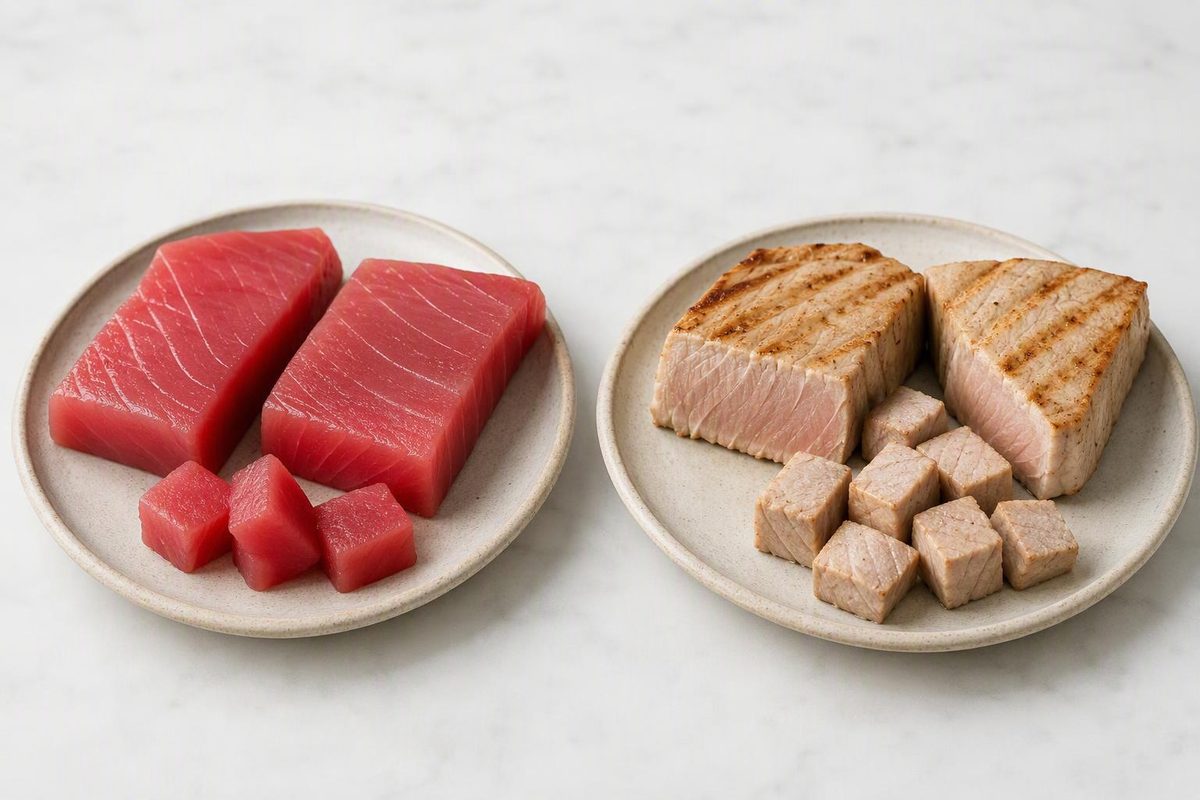
Yellowfin ahi tuna has about 28 g protein per 4 oz raw or 33 g per 4 oz cooked. Compare portions and avoid raw-versus-cooked logging errors.
A 4-ounce portion of plain yellowfin ahi tuna provides about 28 grams of protein if weighed raw, or 33 grams if weighed after cooking. Per 100 grams, the reference values are 24.4 grams raw and approximately 29.2 grams cooked with dry heat.
The distinction matters: “4 ounces raw” and “4 ounces cooked” are different portion measurements, not two protein totals for the same steak.
Protein by portion
These estimates apply to plain yellowfin tuna flesh, excluding sauces, coatings, rice and other ingredients. Ounces are weight, not fluid ounces.
| Tuna portion | Protein if weighed raw | Protein if weighed cooked |
|---|---|---|
| 3 oz (about 85 g) | 21 g | 25 g |
| 4 oz (about 113 g) | 28 g | 33 g |
| 6 oz (about 170 g) | 42 g | 50 g |
| 8 oz (about 227 g) | 55 g | 66 g |
| 100 g | 24.4 g | 29.2 g |
Calculated from the USDA raw yellowfin record and the cooked yellowfin record displayed by MyFoodData. Ounce portions were converted to grams before rounding; displayed weights are approximate and ounce-serving protein totals are rounded to whole grams.
For calorie tracking, those same records list 109 calories per 100 g raw and 130 calories per 100 g cooked, with roughly 0.5–0.6 g fat and no carbohydrate. The raw reference is USDA SR Legacy data, published in FoodData Central in April 2019—not a measurement of your individual steak.
Check which ahi you have
In Hawaii, “ahi” refers to both yellowfin and bigeye tuna, according to the Hawaii Seafood Council’s species guide. The table above uses yellowfin specifically.
If your package identifies bigeye, choose a bigeye entry or use its nutrition label rather than treating yellowfin values as exact for every product sold as ahi.
How to log raw, seared or cooked tuna
Cooking reduces moisture, making protein more concentrated per gram. The reference records contain about 74 g water per 100 g raw versus 69 g per 100 g cooked. Cooking does not create the extra protein implied by comparing equal raw and cooked weights.
- Weighed before cooking: use the raw entry and log oil, sauce and coatings separately.
- Weighed after cooking: use a cooked entry matching the preparation as closely as possible.
- Lightly seared with a raw center: use the pre-cooking weight when available. The dry-heat cooked value is not an exact measurement for every degree of searing.
- Poke or sashimi: count the tuna’s weight, not the weight of the whole bowl or plate. For example, 150 g of raw yellowfin contributes about 37 g protein before other ingredients.
For any raw yellowfin portion, calculate weight in grams × 0.244. If a product label is available, scale that label to your portion instead. The same portion-matching approach applies when tracking macros in mixed meals.