
Is Flounder Good for You? Nutrition, Benefits, Mercury, and Preparation
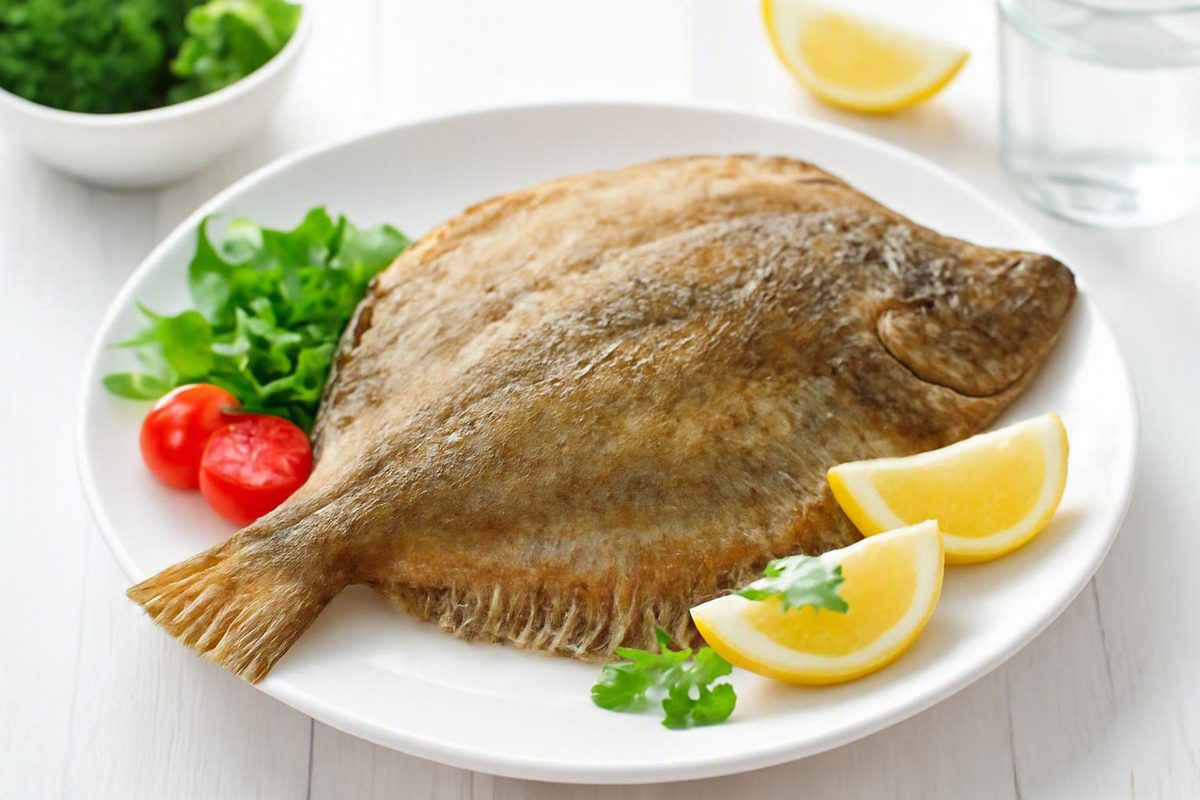
A 3-ounce cooked serving falls in the 200-500 mg EPA and DHA range, versus 500-1,000 mg for wild salmon, making flounder the lower-omega-3 option.
Overview
Yes — flounder is generally a healthy choice. It is a lean, low-calorie source of protein that supplies vitamin B12, vitamin D, and selenium, and the U.S. FDA lists flounder as a “Best Choice” for low mercury. The main caveat: it delivers less omega-3 than oily fish like salmon, and how you cook it matters.
That qualified verdict is the honest one. Flounder earns its healthy reputation from what it lacks — much fat, many calories, or meaningful mercury — as well as from what it provides. But it is not the strongest fish for every goal, and a breaded, deep-fried fillet in a cream sauce is a different meal than a baked one. The sections below walk through the nutrition profile, the benefits you can reasonably expect, how flounder stacks up against salmon, U.S. safety and serving guidance, and the preparation choices that keep a lean fish lean.
Flounder’s nutrition profile
Flounder’s profile centers on lean protein with very little fat. According to WebMD’s medically reviewed summary, a 100-gram portion of raw flounder provides about 12 grams of complete protein, roughly 2 grams of total fat, and only 0.4 grams of saturated fat, with no carbohydrates or sugar. It also lists flounder as a source of iodine, at about 14.3 micrograms per 100 grams raw.
Beyond protein, flounder contributes several micronutrients that matter in everyday diets. WebMD identifies vitamin B12, vitamin D, and selenium among its key nutrients, and the Monterey Bay Aquarium’s profile of Alaska flounder and sole notes that a serving can meet nearly half of your daily vitamin B12 needs while also supplying phosphorus and vitamin D — nutrients that support strong bones and teeth.
Flounder does contain omega-3 fats, including EPA and DHA, but in modest amounts. As a UK pharmacy nutrition guide puts it, flounder’s total fat runs approximately 1–2 grams per 100 grams, and the omega-3s it carries come “in more modest amounts compared to oily fish such as salmon or mackerel.”
One honest limitation: a single, complete nutrition table covering every nutrient on a consistent basis is not something the available secondary sources support, because their figures do not all describe the same fish, state, or serving size. The figures above are labeled by basis — per 100 grams, raw — and should be read that way rather than as universal values for every flounder fillet.
Why flounder nutrition numbers vary
Different sources report different numbers for flounder mainly because they are not measuring the same thing. “Flounder” is an umbrella term covering multiple flatfish species, and as the Bolt Pharmacy guide notes, nutrient values vary depending on the specific species and preparation method. A figure measured on Alaska flounder and sole will not necessarily match one measured on an Atlantic species.
Preparation state matters just as much. Cooking drives off water, so 100 grams of cooked flounder is denser in protein than 100 grams of raw flounder — not because cooking creates protein, but because there is less water in the portion. That is why a raw-basis value of 12 grams of protein per 100 grams and a higher cooked-basis figure can both be correct. When you compare nutrition numbers, check whether they describe raw or cooked fish, what serving size they use, and — where possible — which species was measured. Blending figures from different bases into one profile produces numbers that describe no real fillet.
What health benefits are reasonable to expect?
The benefits you can reasonably expect from flounder come from its nutrients doing their established jobs — not from flounder-specific disease prevention, which has not been demonstrated. Its roughly 12 grams of protein per 100 grams raw supports muscle repair and maintenance; the Monterey Bay Aquarium describes Alaska flounder and sole, with over 12 grams of protein per serving, as “essential for muscle repair and body strength.” Vitamin B12 supports nerve function, DNA production, and red blood cell formation, while vitamin D and phosphorus support bone health.
The heart-health story deserves careful wording. The FDA states that strong evidence shows eating fish, as part of a healthy eating pattern, may have heart health benefits — and flounder is one of the fish that fits comfortably into such a pattern because it is low in saturated fat. Similarly, the National Lipid Association’s patient handout notes that eating fish may lower the risk of heart attack, stroke, and death from heart disease, and that all fish are a healthy choice in place of fatty red meats. Those are claims about fish-inclusive eating patterns, not about flounder alone curing or preventing anything.
The practical takeaway: swapping flounder in for fattier red meat once or twice a week is a defensible, evidence-aligned move. Expecting flounder by itself to deliver the full cardiovascular benefit associated with oily, omega-3-rich fish would overstate what it can do.
Flounder vs. salmon: the lean-protein and omega-3 tradeoff
Neither fish is universally “better” — the right pick depends on what you are optimizing for. A dietitian writing for UnityPoint Health frames the tradeoff plainly: flounder is a leaner fish, which means fewer calories but also less omega-3 than salmon.
The omega-3 gap is quantifiable. The National Lipid Association’s handout places flounder in the 200–500 mg EPA and DHA range per 3 ounces cooked, while wild salmon (sockeye, coho, chum, and pink) sits in the higher 500–1,000 mg category. In other words, flounder has real but modest omega-3 content — more than very lean options like farmed tilapia or wild cod (both under 200 mg per 3 ounces in the same handout), but clearly less than oily fish.
The matrix below summarizes the decision:
| If your priority is… | Better fit | Why |
|---|---|---|
| Fewer calories and minimal fat | Flounder | Leaner fish with fewer calories than salmon (UnityPoint Health); ~1–2 g total fat per 100 g |
| Maximizing EPA and DHA omega-3s | Salmon | Wild salmon falls in the 500–1,000 mg EPA+DHA per 3 oz cooked range vs. flounder’s 200–500 mg (National Lipid Association) |
| Lean protein for muscle maintenance | Either works | Flounder delivers solid protein without the extra fat; salmon adds omega-3-rich fat alongside its protein |
| Low mercury for pregnancy or children | Either works | Both flounder and salmon appear on the FDA’s “Best Choices” list |
| Mild flavor for picky eaters | Flounder | Sweet, mild taste that suits simple cooking (WebMD) |
A reasonable pattern is not choosing one over the other permanently but rotating both: flounder when you want a light, lean protein, and salmon or another oily fish when omega-3 intake is the goal. Descriptions of flounder’s omega-3 content as “high” overstate the evidence; “modest but present” is the accurate characterization.
Mercury safety and how much flounder to eat
Flounder is a low-mercury fish. The FDA’s Advice about Eating Fish classifies flounder as a “Best Choice” — its lowest-mercury category — alongside fish like salmon, sole, tilapia, shrimp, and haddock. That makes flounder one of the safer options for the groups most sensitive to mercury: pregnant and breastfeeding people and young children.
Current U.S. guidance differs by audience, and the distinctions matter:
- General adults: at least 8 ounces of seafood per week, based on a 2,000-calorie diet (FDA).
- Pregnant or breastfeeding people: 8 to 12 ounces per week of a variety of lower-mercury seafood — the FDA translates this as 2 to 3 servings a week from the “Best Choices” list, or 2 servings a week from the “Good Choices” list.
- Children: smaller amounts than adults, scaled to age and calorie needs, drawn from lower-mercury choices.
Note what “Best Choice” does and does not mean. It is a favorable mercury classification that supports regular consumption within these serving frameworks — it is not an exemption from portion and frequency guidance. The FDA’s advice still centers on defined weekly amounts and on eating a variety of seafood rather than unlimited quantities of any single fish. These figures are U.S. recommendations; other countries, including the UK, use different portion frameworks, so avoid mixing guidance across jurisdictions.
Two further safety points apply regardless of mercury. Anyone with a known fish allergy should avoid flounder entirely, as the Bolt Pharmacy guide advises. And like any seafood, flounder carries foodborne-illness risk if it is stored improperly, kept too long after preparation, or undercooked, as the UnityPoint Health dietitian notes — so buy fresh, refrigerate promptly, and cook it through.
The exception for locally caught fish
The FDA’s national “Best Choice” classification does not automatically cover fish you or someone you know catches locally. Local waters can carry contaminants that national market guidance does not account for, which is why the FDA directs consumers to check fish and shellfish advisories for the waters where fish are caught — those advisories tell you how often you can safely eat local fish. In short, treat the low-mercury verdict as applying to commercially sold flounder, and apply local advisories — or the one-serving rule — to anything locally caught.
How preparation changes the health picture
How you cook flounder can preserve its lean profile or erase it. Flounder arrives in your kitchen with roughly 1–2 grams of fat per 100 grams; what happens next is up to you. Johns Hopkins Medicine confirms that fish remains a well-rounded, heart-healthy choice when prepared baked, grilled, steamed, air-fried, or pan-seared, and the Bolt Pharmacy guide similarly recommends grilling, baking, steaming, or poaching because these techniques require minimal added fat.
The methods and additions to watch are the ones that pile calories, fat, or sodium onto a naturally light fish:
- Deep-frying and breading: the frying process adds significant calories and fat from absorbed oil, which is why the UnityPoint Health dietitian suggests saving fried fish for special occasions.
- Butter and creamy sauces: the same dietitian advice is to limit creamy sauces if you eat fish routinely; the National Lipid Association handout likewise suggests ordering grilled fish without butter instead of fried fish when eating out.
- Heavy salting: added salt during cooking or in sauces raises the sodium of the finished meal well beyond the fish itself.
Flounder’s sweet, mild flavor works in its favor here: WebMD notes it should be simply cooked to retain its flavor, so the healthiest preparations are also the ones that suit the fish best. A baked or pan-seared fillet with lemon, herbs, and a light touch of oil keeps flounder what it is on paper — a lean, low-mercury protein worth a regular spot in your weekly rotation.