
Lean or Skinny? Why Muscle-Preserving Body Composition Trumps Scale Weight Alone
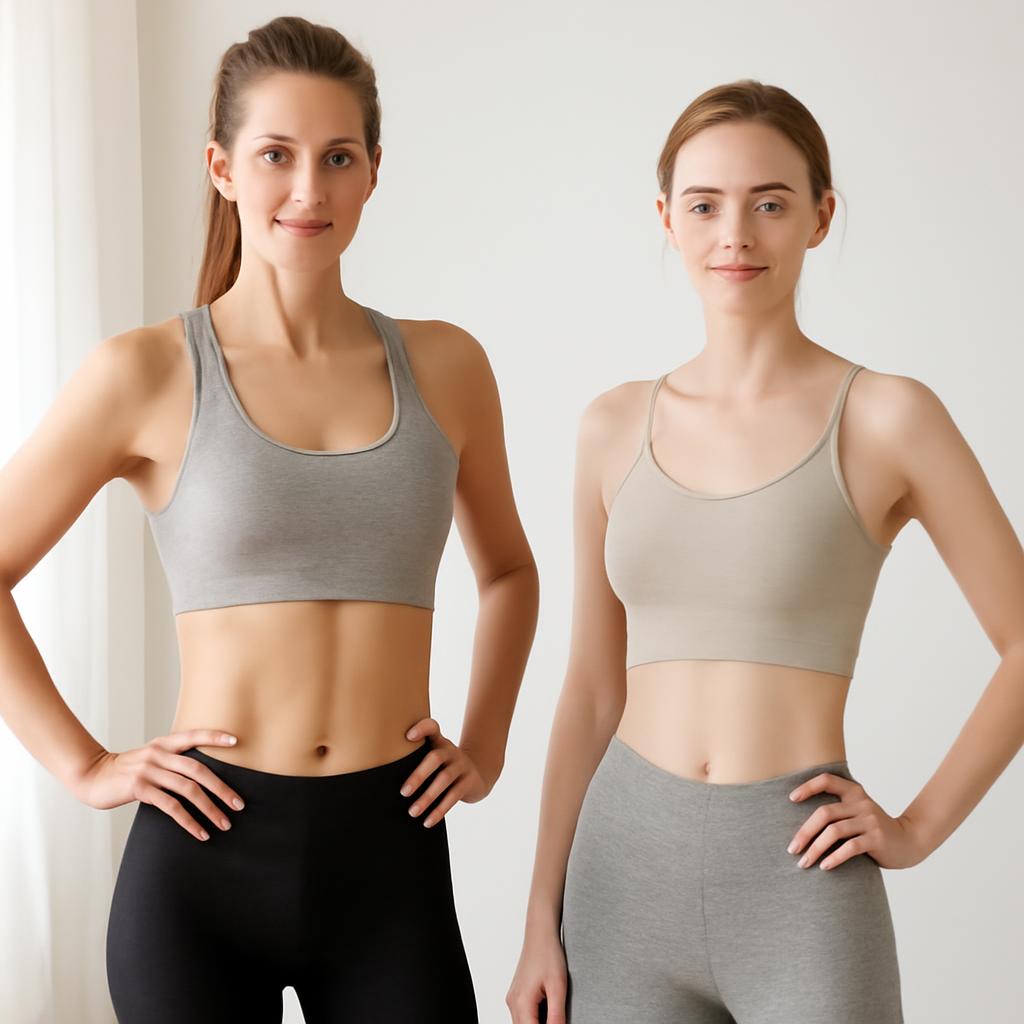
A narrow or light body without much visible structure is closer to skinny. Waist, photos and gym performance catch changes the scale misses.
When people search lean vs skinny, they often mean, “Which one looks better?” For anyone tracking calories, estimating maintenance, and trying to avoid a soft or under-muscled end result, the more useful question is different: what is my body actually made of? Across the stronger sources in this evidence pack, the consistent message is that body composition matters more than scale weight alone for both appearance and health. A smaller body is not automatically a leaner one, and a slightly heavier body can look smaller, sharper, and function better if more of that weight is muscle rather than fat University of Utah Health.
That distinction matters for calorie and macro trackers because the path to “lighter” is not always the path to “leaner.” The broad strategy supported here is simple: preserve or build lean mass while reducing fat mass. In practice, that usually means resistance training, adequate protein, and a modest deficit calibrated to your actual energy expenditure rather than crash dieting PMC review.
Defining Lean vs Skinny: Weight Isn’t the Full Picture
The cleanest way to think about the comparison is this: skinny mostly describes size, while lean describes composition. These are informal labels, not medical diagnoses, but they are still useful shorthand. A skinny body is generally a light or small body. A lean body is one with relatively low body fat plus enough muscle for that lower body fat to show shape and definition WebMD.
That difference exists because body composition is not the same thing as body weight. Body composition refers to the proportions of fat mass and fat-free mass in the body. Fat-free mass includes muscle, bone, organs, and body water.
So a skinny body can mean several things: - low fat and low muscle - a naturally slight frame - weight loss that reduced both fat and muscle - normal or low body weight without much visible muscular structure
What it does not tell you is how much of that body is muscle versus fat. That is why a person can look thin in clothes but still feel soft, weak, or “not toned” Healthline.
Lean usually implies something more specific: lower fat mass relative to fat-free mass, especially skeletal muscle. In everyday terms, that tends to show up as visible structure in places like the shoulders, arms, chest, legs, or midsection. Not bodybuilding-level definition—just enough muscular outline that the body reads as shaped rather than merely small Eat Fit Fuel.
This is why two people can share the same scale weight and look completely different. WebMD’s explanation of body composition makes the underlying reason clear: muscle is denser than fat, so a more muscular person can weigh the same as a softer person while appearing smaller and more defined.
A rough visual check can help, as long as you do not treat it like a diagnosis. If you can see some muscular separation or shape—delts, triceps, quads, or a clearer waist-to-torso outline—you are probably looking at lower body fat with at least decent muscle retention. If the body is simply narrow or light without much visible structure, that is closer to skinny than lean.
For a calorie tracker, the practical takeaway is straightforward: “weigh less” is too vague to be a good physique goal. If what you actually want is a lean look, better function, and a body that does not flatten out as you diet, then the real target is less fat mass with preserved or improved lean mass.
Why the Scale Misleads: Skinny-Fat and Composition Risks
Yes, you can absolutely be skinny but not lean. The common term is skinny-fat: someone who appears thin or sits in a normal BMI range but carries relatively high body fat and low muscle mass Healthline. Healthline notes that a more clinical framing is often metabolic obesity, normal weight, which captures the same idea: normal scale weight does not guarantee healthy body composition.
This is where the scale and BMI start to fail. BMI only relates body weight to height; it does not tell you how much of that weight is fat and how much is muscle, and it is influenced by factors such as age and sex. A normal BMI can coexist with low muscle mass, high waist fat, poor strength, and a worse metabolic profile Dr. Scott Lear.
The scale can also mislead during dieting itself. If you cut calories hard and do not give your body a reason to keep muscle, some of the weight you lose will be lean tissue, not just fat. In one example summarized in a peer-reviewed review of weight-loss interventions, a very-low-calorie diet produced 12.7 kg of weight loss, and about 25% of that loss came from lean body mass rather than fat PMC review. That is one of the clearest reasons people end up saying, “I lost weight, but I still don’t look lean.”
That kind of diet-only weight loss can create the classic skinny-fat outcome: - lower body weight - less muscle - a softer appearance than expected - lower strength and lower performance - potentially lower maintenance calories than before
A related concept is TOFI—“thin outside, fat inside”—or the closely related MONW pattern. The point is not that every thin person has high visceral fat; it is that normal-looking weight can hide an unhealthy fat distribution and low muscle mass MeasureUp. That matters because excess body fat—especially abdominal or visceral fat—is tied to higher risks of cardiometabolic disease.
Low lean mass also changes your calorie math. In the body’s daily energy budget, basal metabolic rate is the largest component of TDEE for most sedentary adults, and it scales primarily with lean mass rather than total body weight CaloriePages’ TDEE explainer. That does not mean muscle turns dieting into a cheat code. It does mean that losing muscle while losing weight can make maintenance calories drift downward, while preserving lean mass helps protect resting energy needs.
For macro trackers, that is the core risk of chasing “skinny” instead of “lean”: you can finish with a lower body weight but also lower lean mass, lower performance, and a physique that still does not match the goal.
Health Edge of Lean Over Skinny: Longevity and Function
If the question is health rather than aesthetics, the answer still usually favors better composition over simple thinness. That does not mean extreme leanness is automatically healthy. It means that, in the evidence here, a body with controlled fat mass and adequate lean mass generally has an advantage over one that is merely light.
The functional case is strong. University of Utah Health emphasizes that body composition matters because skeletal muscle and bone density support daily activity and disease prevention, including bone-related decline. In plain language, muscle is not just decoration. It helps you move, stabilize, climb stairs, carry things, and stay independent.
The aging piece matters too. As people get older, they tend to lose muscle mass in a process often called sarcopenia, and that loss is associated with frailty, falls, and worse long-term outcomes. A lighter body is not automatically protective if a large share of that “lightness” comes from low muscle mass.
The mortality data in this pack point the same way, though it is worth being careful about the source chain. MeasureUp, summarizing published research, highlights a 2022 study of more than 16,000 adults in which people with higher lean mass and lower fat mass had the lowest all-cause mortality risk, regardless of BMI class. Even with that secondary-summary caveat, the broader message matches the more established point from Utah Health and Dr. Scott Lear: fitness and body composition explain health risk better than scale weight alone.
Metabolic health also tracks in that direction. Healthline’s review of the skinny-fat pattern links low muscle mass with insulin resistance and a worse cardiometabolic profile despite normal body weight. MeasureUp similarly describes skeletal muscle as supportive of metabolism and insulin sensitivity. So the problem with “skinny” is not the small frame itself; it is the possibility of low muscle plus hidden fat-related risk.
This is where the “fit beats skinny” idea needs nuance. University of Utah Health explicitly says it is more important to be fit than skinny for lowering cardiovascular disease and mortality risk. Dr. Scott Lear’s review reaches a similar conclusion: fitter people often do better than thin but inactive people. But his review also makes clear that this is not the same as saying excess body fat never matters. Fitness helps substantially; it does not erase every risk associated with higher fat mass.
So, is being lean healthier than being merely skinny? In most cases represented here, yes—if “lean” means lower body fat with enough muscle, not chronic under-eating or extreme low body fat. The advantage comes from better function, better resilience with aging, and a lower chance that “normal weight” is masking poor composition.
Measure Your Progress: Beyond the Scale for Lean Gains
If your goal is to get leaner rather than just lighter, your progress tools have to match that goal. The scale still has value, but it should be context, not verdict. Sources in this pack consistently recommend looking at measurements, photos, clothes fit, and gym performance alongside body weight because those markers pick up composition changes that the scale often misses.
The strongest measurement methods discussed here are formal body-composition tools. DEXA is among the most informative options because it can separate fat mass, lean mass, and bone, and sources in this pack note that it can also help distinguish visceral from subcutaneous fat. If you want a periodic high-quality snapshot rather than a daily habit, it is one of the better choices in the article set.
Other methods can still be useful: - BOD POD is described by University of Utah Health as a very accurate air-displacement option - Skinfold calipers can work, but results depend heavily on the skill and consistency of the measurer - Bioelectrical impedance devices, including smart scales, are convenient but weaker for exact percentages
Home smart scales deserve special caution because they are so common. WebMD describes BIA as only fairly accurate and better suited to tracking change over time than providing a precise body-fat percentage. That means a home scale can still be useful—but mostly when you measure under similar conditions and focus on the trend, not the exact percentage.
For most people, a simple home tracking stack is enough:
- Daily weigh-ins, averaged weekly, to smooth out water fluctuations and give a more stable trend CaloriePages’ TDEE explainer
- Waist measurement, interpreted alongside photos and clothing fit
- Front, side, and back progress photos under similar lighting and posture
- A repeatable performance marker, such as push-ups, working weights, or rep quality on core lifts
That last one matters more than people expect. If your waist is drifting down, your weekly average weight is stable or slowly falling, and your performance is holding or improving, you may be improving body composition even when the scale is unimpressive.
The real skill is not collecting every possible number. It is knowing which numbers answer the question you actually care about. If the question is “Am I getting leaner?”, then waist, photos, and training performance usually tell you more than body weight by itself.
Build Lean Mass: Resistance Training Essentials
If there is one habit that most clearly separates a lean outcome from a merely skinny one, it is resistance training. When calories are low, your body has less reason to hold onto muscle unless you keep giving it a muscular workload to adapt to. Lifting or other progressive resistance training provides that signal.
For most people, the useful starting point is simple: train your major muscle groups consistently, using movements that can be progressed over time. In the practical fitness guidance here, that often means 2 to 4 resistance sessions per week, built around compound patterns such as squats, hinges, presses, rows, lunges, and push-ups. WebMD separately recommends strength training on 2 or more days per week as part of improving body composition.
The exact split matters less than the principle of progressive overload. Over time, that can mean: - more weight - more reps - better control - more total work - better range of motion with the same load
This is also where a common fear needs correcting. Many people worry that lifting will make them “bulky,” but in the context of a modest calorie deficit, resistance training is usually what helps prevent the flatter, softer look that comes from losing both fat and muscle.
Range of motion matters too. Courage Health & Fitness argues that lifting through a full range of motion can improve flexibility rather than reduce it, and connects muscular development with better bone support. That source is more practical than clinical, but the general direction fits Utah Health’s emphasis on muscle and bone supporting function.
Can you lose fat and gain muscle at the same time? Often yes, especially if you are new to lifting, returning after time off, or starting with more body fat. This is the basic recomposition scenario. It becomes harder as you get leaner and more trained, which is why advanced lifters usually need tighter programming and more patience.
Cardio still belongs in the plan. WebMD recommends at least 150 minutes of moderate cardio or 75 minutes of vigorous cardio per week, alongside strength training on 2 or more days. Anytime Fitness also recommends cardio in moderation as part of recomposition. The key for a lean goal is not “avoid cardio.” It is do not let cardio replace lifting.
Recovery decides whether training improves your physique or just makes you tired. Anytime Fitness recommends 7 to 9 hours of sleep, rest days, and hydration as part of a successful body-recomposition setup.
Nutrition for Leanness: Protein, TDEE, and Deficits
Nutrition for a lean outcome is not about eating as little as possible. It is about creating enough energy pressure to reduce fat without making muscle loss the price of admission. That is why protein and deficit size matter so much.
Across the sources here, a practical protein target during fat loss is about 1.6 to 2.2 grams per kilogram of body weight per day, or roughly 0.7 to 1.0 grams per pound CaloriePages’ protein and calorie-density guide. At 75 kg, that works out to roughly 120 to 165 grams per day.
That target helps for at least two reasons. For a deeper breakdown of satiety and protein-efficient food choices, see protein and calorie density. First, adequate protein supports lean-mass retention in a calorie deficit. Second, protein tends to make dieting easier to sustain because it is more satiating and has a higher thermic effect than carbs or fat. In the evidence pack, protein digestion is estimated to use about 20–30% of its own calories, compared with roughly 5–10% for carbohydrate and 0–3% for fat. That does not override total calorie balance, but it does slightly improve the math of a high-protein diet.
Calories still matter, though. A reasonable place to start is: - estimate maintenance calories - set protein first - create a modest deficit, often around 300 to 500 calories below maintenance or roughly 10–20% below maintenance Tiger Fitness
Maintenance itself is not fixed. As explained in the CaloriePages piece on TDEE, daily energy expenditure changes with body composition, activity, food intake, and adaptive responses. Basal metabolic rate is only one part of the picture; exercise, the thermic effect of food, and especially NEAT can shift more than people think. This is one reason fat loss often slows even when people swear they are “eating the same.” If body weight drops, activity changes, or you unconsciously move less, your actual maintenance may have changed too.
Food choice can make protein goals easier to hit without spending too many calories. In CaloriePages’ comparison of high-protein foods, chicken breast, canned tuna, and egg whites are among the more protein-efficient options by calories per gram of protein. They are not mandatory foods. They are just numerically favorable when your goal is high protein with controlled calories.
A practical process looks like this:
- Estimate your current maintenance calories.
- Set protein in the 1.6–2.2 g/kg range.
- Use a modest deficit rather than an aggressive one.
- Log intake as accurately as you reasonably can.
- Watch weekly weight averages, waist, and gym performance for 2 to 3 weeks before making major changes Tiger Fitness
That last step is where many cuts fall apart. People often react to a few noisy weigh-ins, assume their numbers are wrong, and either slash calories or give up. A leaner outcome usually comes from calibration, not panic.
Recomp Timelines and Common Pitfalls
Changing from skinny or skinny-fat to visibly lean is usually a months-long process, not a weekend fix. The exact timeline depends on starting body fat, training age, sex, recovery, and adherence, so broad promises are not very useful. What matters more is understanding what speeds progress up and what reliably derails it.
The biggest mistake is trying to get there too fast. Aggressive dieting makes it harder to train well, harder to recover, and more likely that the weight you lose will include meaningful lean mass. Anytime Fitness specifically cautions against very large calorie cuts and frames severe deficits as a setup for fatigue and muscle loss. If your goal is lean, not merely lighter, that tradeoff matters.
Recomposition is easiest under fairly predictable conditions: - you are new to lifting - you are coming back after time off - you are carrying more body fat at the start
Those groups often have the most room to improve muscle and lose fat at the same time. As you become more advanced or already fairly lean, progress tends to slow and require tighter execution.
Age can complicate the picture without changing the fundamentals. Healthline notes that age-related sarcopenia and menopause-related hormone shifts can contribute to the skinny-fat pattern by reducing muscle and altering fat distribution. That does not mean progress stops. It means resistance training, adequate protein, and recovery usually become even more important.
The common failure points are predictable:
- crash dieting instead of using a moderate deficit
- under-eating protein
- doing lots of cardio with little or no resistance training
- using scale weight as the only progress metric
- changing calories before enough trend data accumulates
- treating TDEE as fixed instead of adjustable
That last point matters especially for macro trackers. Tiger Fitness presents TDEE as a starting estimate and recommends revisiting intake after meaningful changes in body weight, activity, or a sustained plateau. That matches CaloriePages’ view that TDEE is shaped by changing lean mass, NEAT, TEF, and activity rather than existing as a permanent number.
If you want the short version of the whole article, it is this: do not chase “skinny” as if it were the same thing as “lean.” Chase a better ratio of muscle to fat. Lift to keep the tissue you want. Eat enough protein to support it. Use calorie tracking to guide the process, not to starve your way to a smaller but softer body.
What’s the protein target to stay lean in a calorie deficit?
A practical target in the sources reviewed is 1.6 to 2.2 grams of protein per kilogram of body weight per day, especially during dieting when the goal is to preserve lean mass. For a 75 kg person, that is about 120 to 165 grams per day. In pounds, that is roughly 0.7 to 1.0 g/lb.
How accurate are home body fat scales for lean vs skinny tracking?
They are usually better for trend tracking than for exact body-fat percentages. Most home smart scales use bioelectrical impedance, and those readings can move with hydration, meal timing, and measurement conditions. WebMD describes BIA as only fairly accurate and more useful for tracking change over time than for treating one reading as ground truth. If you want a higher-confidence snapshot, DEXA is one of the stronger options discussed in this pack.
Can you gain muscle while losing fat to get lean?
Yes—especially if you are a beginner, detrained, or starting with higher body fat. This is usually called body recomposition. The standard setup is resistance training, high protein, and a small to moderate calorie deficit rather than an aggressive one. It tends to get harder when you are already leaner and more advanced.
Why does my TDEE change during weight loss toward leanness?
Because TDEE is not fixed. As the CaloriePages TDEE explainer notes, it changes with body composition, activity, food intake, and adaptive responses. BMR makes up about 60–70% of TDEE for most sedentary adults, and BMR scales mainly with lean mass, so losing weight—and especially losing lean mass—can reduce maintenance calories. NEAT can also drift down during dieting, which helps explain why fat loss often slows before people realize anything has changed. That is why calculators are best treated as starting estimates, then checked against 2 to 3 weeks of intake and trend data.
Is BMI enough to tell if I’m lean or skinny-fat?
No. BMI tells you weight relative to height, not how much of that weight is muscle versus fat. That is why someone can have a normal BMI and still fit the skinny-fat or metabolic obesity, normal weight pattern if muscle mass is low and body fat is high. University of Utah Health makes the broader point clearly: health is judged more accurately by the ratio of fat to fat-free mass than by thinness alone.
Conclusion: Chase a Better Ratio of Muscle to Fat
If your goal is to look sharper, feel stronger, and keep your calorie math working for you, lean beats skinny when lean means lower fat with adequate muscle. The useful target is not just a lower number on the scale. It is a better body composition.
That is why the most durable approach is also the least flashy: lift consistently, eat enough protein, use a modest deficit, and judge progress with more than body weight alone. Done well, that approach gives you what “skinny” often fails to deliver—better structure, better function, and a body that is not just smaller, but genuinely leaner.