
Pabst Blue Ribbon ABV Explained: Standard Strength, Variants and Calorie Impact
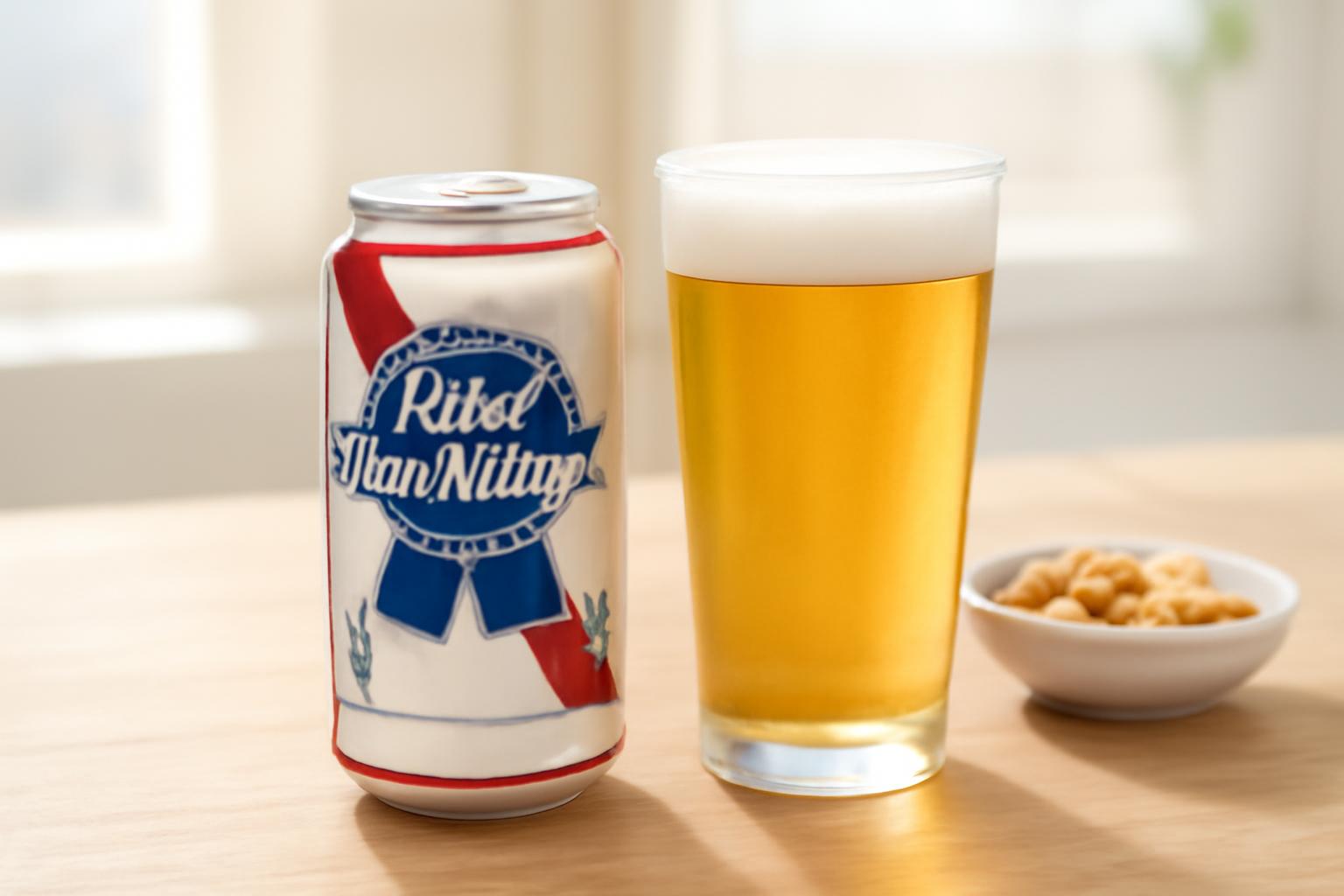
Original is most consistently reported at 4.7% to 4.74% ABV. Light, Extra and Strong differ, so match the can before logging.
When people search for PBR alcohol by volume, they usually want two answers at once: how strong the beer is, and what that means for calories in a real-world food log.
The most defensible short answer from the reviewed evidence is straightforward: standard Pabst Blue Ribbon is consistently reported by third-party sources at about 4.7% to 4.74% ABV, and a 12-ounce serving is commonly listed at about 140 to 144 calories. That is precise enough for most drink tracking, maintenance budgeting, and TDEE calibration. It is not a reason to pretend every app entry is official lab data.
If you found this piece through the CaloriePages homepage or while browsing the CaloriePages articles index, the practical goal here is simple: pick a solid baseline, match the serving size you actually drank, and understand where the evidence is tight versus where it gets thinner.
Quick takeaways for skimmers:
- PBR Original: usually reported at 4.7% to 4.74% ABV
- 12-ounce standard serving: usually reported at 140 to 144 calories
- PBR Light: reported at 4.2% ABV
- PBR Extra: reported at 6.5% ABV
- PBR Strong: reported at 5.9% ABV in a Canadian retail listing
- PBR Non-Alc: commonly repeated as under 0.5% ABV, but the reviewed tertiary source flags that figure as uncited
How Food Labels Calculate Calories (And Where the Number Can Be Wrong): Food labels use the Atwater system, not direct measurement. Here’s how the 4-4-9 factors work, why they allow a 20% margin of error, and what that means for tracking.
What PBR Alcohol by Volume Means for Drink Trackers
ABV tells you what share of the beverage is alcohol by volume. For trackers, that matters because beer calories do not come only from carbs. Alcohol contributes materially to the total, and higher-alcohol beers often trend higher in calories even when they look broadly similar on the shelf. It also matters because beer nutrition information is less standardized than many people expect: VinePair notes that the Alcohol and Tobacco Tax and Trade Bureau does not require beer brands to list nutritional stats, and it includes Pabst Blue Ribbon among America’s 25 best-selling beers using Circana retail data, which helps explain why so many people end up relying on retailer pages and third-party databases when logging it (VinePair’s beer calorie guide).
That combination matters more than it first appears to. In a calorie log, “beer” is not always a good enough entry. A standard lager and a stronger spin-off may share branding, but they are not the same drink for tracking purposes. If your goal is maintenance, fat loss, or a careful surplus, alcohol creates two common errors at once: it adds calories directly, and it increases the odds that you will pick a generic entry that does not match the actual product or serving size.
The mismatch compounds faster than many people think. That is why ABV belongs in the conversation even when your primary question is calories rather than beer style.
There is also a behavioral reason to care. People often treat beer as a fuzzy category in logs: “one lager,” “couple of beers,” or “close enough.” That works worst when the label family has multiple strength levels. PBR is a good example because the original product sits in a fairly ordinary mainstream spot, while the variants can move meaningfully above or below it. If you log the family name but ignore the actual can, you lose accuracy exactly where it matters most.
Standard Pabst Blue Ribbon ABV and Serving Details
Across the reviewed material, original Pabst Blue Ribbon is most consistently reported at 4.7% to 4.74% ABV. The small spread looks like rounding or listing convention, not evidence of two radically different standard beers. A Fareway retail product page is especially useful here because it shows both 4.74% ABV and a 4.7% ABV reference for the same product listing, which is the kind of minor inconsistency you expect from retailer copy rather than a meaningful formulation split (Fareway’s Pabst Blue Ribbon product page).
For a standard 12-ounce tracking entry, the clearest detailed nutrition breakdown in the reviewed evidence lists 144 calories, 12.8 grams of carbs, 1.3 grams of protein, 0 grams of fat, and 4.74% ABV. That makes it a useful working baseline when your app contains duplicate PBR entries with slightly different names, packaging, or calorie numbers (BeerKulture’s PBR calorie breakdown).
In practice, the serving size usually matters more than the last decimal place of ABV. A 12-ounce can is the cleanest baseline because that is where the most specific calorie and macro reporting appears in the reviewed evidence. Once you move to 16-ounce cans, 24-ounce tallboys, or multi-can sessions, the beer itself may still be “standard PBR,” but the total intake rises with the amount consumed.
That is why a simple logging rule beats perfectionism. If the can says ordinary Pabst Blue Ribbon, a 12-ounce entry around the low 140s with mid-4% ABV is a defensible default. If your app shows 140 instead of 144, that is usually not the meaningful error. If it shows the wrong serving size, a different variant, or a suspiciously low calorie count, that is where the log starts to break.
PBR is not an obscure release with one local taproom listing and no retail trail. It is a large-market lager with many database entries and retailer pages floating around. That increases duplication and minor inconsistency, but it also creates a useful consensus. For standard PBR, that consensus is unusually clear: regular lager, about 4.7% to 4.74% ABV, roughly 140 to 144 calories per 12 ounces.
PBR Variants: ABV Comparison Table
The original beer is the stable part of the picture. The variants are where the evidence becomes more uneven, and where reading the actual package matters more than assuming all PBR products are interchangeable.
A tertiary reference entry for Pabst Blue Ribbon reports PBR Light at 4.2% ABV and PBR Non-Alc at less than 0.5% ABV, but it also flags the Non-Alc figure as citation needed. So Light is a reasonable reported number from the reviewed evidence, while the Non-Alc figure should be treated as commonly repeated but less firmly verified (Wikipedia’s Pabst Blue Ribbon entry).
For PBR Extra, the clearest support comes from 2019 launch coverage. Beer Street Journal described Pabst Blue Ribbon Extra as a 6.5% ABV lager, reported regular PBR at 4.74% ABV, and said Extra was expected in 12-ounce cans and draft in Spring 2019. That is enough to support Extra as a real higher-ABV variant, while still leaving open the question of current shelf presence by market (Beer Street Journal’s PBR Extra launch report).
A separate Canadian retail listing reports Pabst Blue Ribbon Strong at 5.90% ABV in a 710 mL can. Regional retail pages can reflect local packaging, local naming, or limited market strategy, so Strong is better treated as a variant with regional context rather than a standard baseline (BSW Liquor’s Pabst Blue Ribbon Strong listing).
| Variant | Reported ABV | Notes for trackers |
|---|---|---|
| PBR Original | 4.7–4.74% | Best-supported standard version; sensible default for regular Pabst Blue Ribbon. |
| PBR Light | 4.2% | Lower reported strength than Original; better match when the can specifically says Light. |
| PBR Extra | 6.5% | Higher-strength lager reported in 2019 launch coverage; likely a higher-calorie choice than Original, though full nutrition support is thinner. |
| PBR Strong | 5.9% | Reported in a Canadian 710 mL retail listing; treat as regional, not standard U.S. PBR. |
| PBR Non-Alc | Reported as <0.5% | Commonly repeated, but the reviewed tertiary source flags the claim as uncited. |
This table is useful because it separates two questions that drink trackers often blur together. First: what product did you actually have? Second: what app entry best matches it? If the can just says Pabst Blue Ribbon, Original is the logical baseline. If it says Light, Extra, Strong, or Non-Alc, that extra word is exactly what you should not ignore.
That distinction matters more as volume rises. One wrong can may not change much. Several cans, larger formats, or a stronger variant can turn a harmless rounding issue into a real undercount. The biggest logging mistake with beer is rarely choosing 140 instead of 144. It is choosing the wrong beer in the first place.
How ABV Translates to Calories in PBR Servings
The cleanest way to think about ABV and calories is this: ABV is a clue, not a calorie label.
A beer’s total calories depend on more than alcohol percentage alone. Alcohol helps explain direction, but residual carbs and formulation still matter. VinePair gives a useful non-PBR example: Miller High Life and Corona Extra can share the same ABV while still differing in calories, which is exactly why “same strength” does not automatically mean “same calorie count” (VinePair’s beer calorie guide).
Applied to PBR, the honest rule is simpler than trying to reverse-engineer exact calories from ABV:
- standard PBR is reported around 4.7% to 4.74% ABV
- third-party nutrition listings place a 12-ounce serving around 140 to 144 calories
- those calories reflect alcohol plus remaining carbs and a small amount of protein, not ABV by itself
A short numerical check helps show why shortcut math goes wrong so easily. A 12-ounce beer is about 355 mL. At 4.74% ABV, only about 4.74% of that volume is alcohol by volume, which is roughly 16.8 mL of alcohol in the can. The rest is not pure ethanol. That is why bad internet calculations can drift into nonsense when they confuse beverage volume with alcohol content or act as if the whole can were alcohol. For tracking, the reviewed serving totals of about 140 to 144 calories per 12 ounces are a better anchor than back-of-the-envelope formulas.
That is also why the “ABV equals calories” shortcut breaks down so often in apps. ABV tells you something important, but not everything. If a quick estimate produces a calorie number that looks wildly out of line with the reported serving total for a standard lager, the shortcut is the problem. The better workflow is to start from a serving-specific entry and then use ABV as a reasonableness check.
Variants still change the direction even when you do not have a perfectly verified nutrition panel for each one. If you move from Original to Extra at 6.5% ABV, you should expect a stronger drink and, all else equal, likely more calories. If you move from Original to Light at 4.2% ABV, you should generally expect the opposite. “Likely” is the right word because the reviewed evidence is much firmer on ABV than on complete nutrition panels for every variant.
There is also a broader trust limit on label-style numbers. The CaloriePages About page explains that calorie labeling relies on standard measurement systems and that label counts can be off by 20%. Beer adds another layer of uncertainty because nutrition disclosure is not as routine as it is for many packaged foods.
So the tracker’s rule is simple: use ABV to understand direction, use a serving-specific calorie entry to log the drink, and keep a little humility about the last few calories.
PBR ABV vs Other Popular Lagers
In practical drinking terms, standard PBR reads as a middle-strength option within its own family. It is not the lowest-strength PBR product reported in the reviewed material, and it is not one of the stronger extensions either.
You can see that most clearly inside the lineup already established. PBR Light at 4.2% ABV sits below Original. PBR Strong at 5.9% ABV sits above it in the Canadian retail listing. PBR Extra at 6.5% ABV sits higher again in the 2019 launch reporting. So if your can simply says Pabst Blue Ribbon and nothing more, you are usually dealing with the middle case rather than a deliberately lighter or deliberately stronger offshoot.
That middle-ground position is part of what makes regular PBR easy to budget. The practical value is predictability rather than novelty.
At the same time, ABV still does not tell the whole story when you compare one mainstream lager with another. As noted earlier, beers can share a similar alcohol strength and still differ in calories because the rest of the recipe matters too. So if your app offers both a generic “lager” entry and a brand-specific Pabst Blue Ribbon entry, the brand-specific one is usually the better choice.
That is especially true for people who habitually undercount alcohol. Logging “beer” instead of “Pabst Blue Ribbon,” or logging standard PBR when you actually drank Extra or Strong, is a more consequential error than splitting hairs over whether Original is rounded to 4.7 or 4.74.
The useful takeaway is modest, not dramatic: standard PBR is not an extreme outlier. It is a workable mainstream-lager baseline. That does not make it low-calorie. It just makes it easier to log without surprises than a stronger variant would.
Tracking PBR in Your TDEE and Food Logs
If you want the simplest defensible method, use a 12-ounce standard PBR entry in the 140 to 144 calorie range as your baseline for regular Pabst Blue Ribbon, and then scale only when the package size or the product name changes.
That framing matters because the biggest source of error in calorie tracking is usually not a tiny disagreement between two beer listings. It is the whole system around the listing. In the CaloriePages TDEE explainer, common calculator formulas are described as having a mean error of about ±10%, and NEAT is described as varying by up to 2,000 calories per day between otherwise similar people. The same piece recommends comparing logged intake against your body-weight trend over two to four weeks rather than treating a single calculator result as exact.
That changes how you should think about “accuracy” with beer. Getting the product and serving size right usually matters more than shaving off a few calories within a plausible range. One unlogged extra can matters more than a small disagreement between 140 and 144 for the first one.
A practical checklist helps:
- Use the regular PBR entry only for regular PBR.
- Match the container size you actually drank.
- Do not use generic “beer” if a brand-specific PBR entry is available.
- Log the second or third can, not just the first.
- If the label says Light, Extra, Strong, or Non-Alc, log that actual product rather than assuming the standard entry is close enough.
There is also a behavioral layer that matters more than many people expect. The beer’s calories do not change because you had it with dinner, but the rest of the evening often does. If drinks tend to lead to grazing, takeout, or a vague “I’ll log it later” mentality, the knock-on calories can exceed the beer itself. Some people find it easier to keep a night coherent when drinks are paired with a planned meal and some lean, filling food; if that is relevant to you, CaloriePages has a separate explainer on protein and calorie density.
For maintenance, cutting, or recomposition work, the boring method is still the best one: log consistently, weigh consistently, and adjust from observed results rather than treating any one beer entry as sacred.
Caveats: ABV Reporting Limits and Label Trust
The main caveat with PBR alcohol by volume is not that the evidence is chaotic. It is that the evidence is mostly third-party.
In the reviewed material, the recurring numbers come from retailer listings, beer media, database-style pages, and product summaries rather than a transcribed official Pabst technical sheet. That does not make the figures useless. It just means the right tone is well-supported and probable, not official and exact. If you need the most current verification for a specific package, the best next step is to check the can, box, or a current producer page for your market.
For standard PBR, the disagreement is mild. That is very different from one source claiming something like 4.2% and another 6.0% for the same standard product. The cluster for Original is tight enough to be useful.
The bigger uncertainty sits with the variants. Strong appears in a Canadian retail context. Extra is well-supported as a 2019 launch, but launch reporting is not proof of current nationwide availability. Non-Alc is commonly repeated as under 0.5% ABV in the reviewed tertiary source, but that specific number is not firmly sourced there. So the original beer is the dependable part of the picture; the variants are where you should verify the current package more carefully.
That same humility should carry over to calorie logging. Third-party beer entries are useful, but they are still estimates filtered through retailer data, editorial summaries, or crowd-sourced databases. For tracking, they are good enough to build a sensible baseline. They are not a reason to pretend every can in every market is measured and published to the last decimal and gram.
As with the rest of the site, this article is for general reading under the CaloriePages terms of use, and site data practices are described in the CaloriePages privacy policy.
What is the alcohol by volume of standard PBR?
Standard Pabst Blue Ribbon is most commonly reported in third-party sources at about 4.7% to 4.74% ABV. If you see either figure in a logging app, it is usually close enough to represent the standard beer accurately (WorldFood.Guide’s PBR entry).
PBR Extra alcohol by volume?
PBR Extra is reported at 6.5% ABV in 2019 launch coverage, which also described it as a lager planned for 12-ounce cans and draft in Spring 2019 (Beer Street Journal’s PBR Extra launch report).
What is PBR Light ABV and calories?
The reviewed evidence supports PBR Light at 4.2% ABV. Pabst Light comes in at 96 calories and 3.5 grams of carbs per 12-ounce can, with 4.2% ABV The Real Calorie Count in a Can of PBR.
Calories in 12-oz PBR based on ABV?
A reasonable working number for a 12-ounce standard PBR is about 144 calories. ABV helps explain why the beer lands in that neighborhood, but it does not determine calories by itself; serving-specific entries are still the better logging tool (Fareway’s Pabst Blue Ribbon product page).
Is PBR Non-Alcoholic truly under 0.5% ABV?
It is reported as less than 0.5% ABV in the reviewed tertiary source, but that same source flags the claim as citation needed. So the figure is plausible and commonly repeated, but not strongly confirmed by the material reviewed. If that threshold matters for health, pregnancy, recovery, or religious reasons, verify it from the current package or a current producer listing before relying on it (Wikipedia’s Pabst Blue Ribbon entry).