
Tia Maria's Alcohol Percentage, Calories, and What Trackers Need to Know
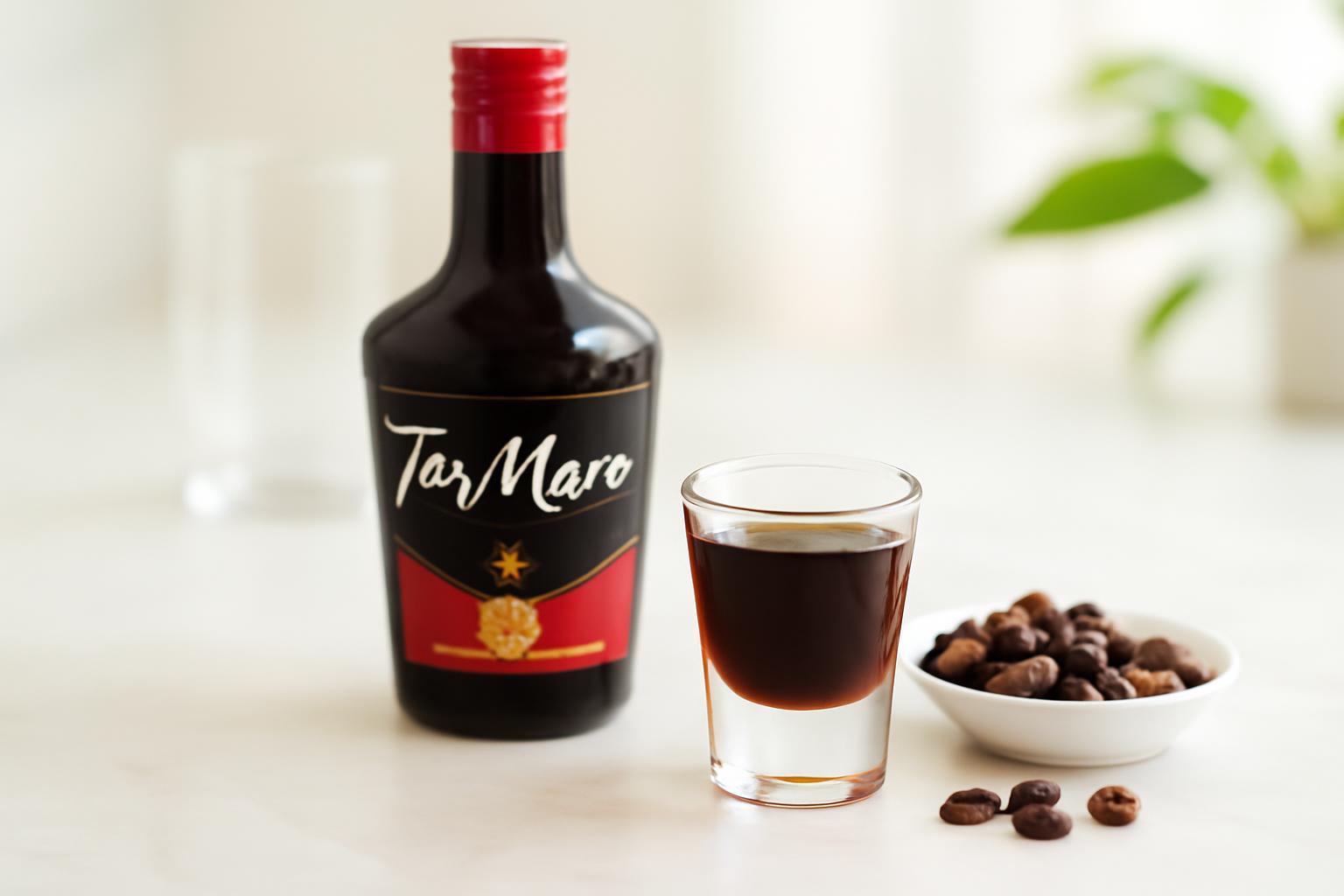
The name Tia Maria stays the same, but the exact expression in the bottle can change the ABV you should log. Use a measured pour, not a generic app entry.
If you searched for tia maria alcohol, the short answer is yes: Tia Maria is alcoholic. The less simple answer is that search results often blur together different bottles, different alcohol strengths, and very different-quality nutrition entries.
For tracking purposes, that matters more than the basic yes-or-no question. A plain spirit is fairly easy to log because the category is stable: vodka is vodka, whiskey is whiskey, and the calorie math is mostly about proof and pour size. Tia Maria is different. It is a sweet coffee liqueur, so part of its energy comes from alcohol and part from sugar. That means it sits in the awkward middle ground between a spirit and a dessert ingredient.
The bigger problem is not that information is unavailable. It is that the available information is uneven. Retailer pages are usually fairly consistent on bottle size and ABV, but nutrition databases for coffee liqueurs range from broad category estimates to product-specific entries that appear internally inconsistent. Some are useful as rough logging tools. Some are not.
The practical approach is therefore straightforward: identify the exact Tia Maria variant, measure the actual pour, and treat calorie logging as an estimate rather than a lab result. If you do that, you will avoid most of the common errors people make with coffee liqueurs.
What follows is the version that calorie and macro trackers actually need: what Tia Maria is, how much alcohol is typically in the standard bottle versus Cold Brew, what the best available calorie range looks like, where the data conflict, and how to log it without overtrusting a bad app entry.
What Is Tia Maria?
Tia Maria is best understood as an alcoholic coffee liqueur, not as a syrup, coffee flavoring, or low-alcohol afterthought. A widely used reference entry describes it as a dark coffee liqueur made in Italy with coffee beans, South Jamaican rum, vanilla, and sugar, with current alcohol content listed at 20% and brand roots tied to Jamaica (Wikipedia).
That basic description matches the product category people encounter in stores and bars: a sweetened, rum-based coffee liqueur that is used in cocktails, after-dinner drinks, and dessert-style serves. For trackers, the important point is not the romance of the brand story. It is that Tia Maria belongs in the same general family as other coffee liqueurs, which means it brings both ethanol calories and sugar calories to the glass.
There is also a Cold Brew expression, and that is where online confusion starts to build. One retailer page lists Tia Maria Cold Brew Coffee Liqueur at 40 Proof Tia Maria Cold Brew Coffee Liqueur | Order Online | Curiada.
That means a search result for “Tia Maria alcohol content” can easily mix together two different answers without clearly telling you why. One set of pages is talking about the standard coffee liqueur. Another is talking about Cold Brew. If you are counting drinks, calories, or both, that distinction matters immediately.
It also explains why people sometimes think the product information is contradictory when it is really just variant-specific. The name Tia Maria stays the same, but the exact expression in the bottle can change the ABV you should log.
Tia Maria ABV and Alcohol Variants
For the standard bottle, the most consistent figure across the evidence pack is 20% ABV. That figure appears in the general reference description of Tia Maria and lines up with how the standard coffee liqueur is usually described in third-party coverage. In plain English, this is not a high-proof spirit; it is a moderate-strength liqueur with enough sugar and flavoring to behave differently from straight rum or vodka.
For the Cold Brew bottle, the repeated figure is higher: 26.5% ABV. That higher number shows up across retailer pages for the Cold Brew expression and is the cleanest explanation for why some app entries or search snippets seem to disagree with the usual 20% figure attached to standard Tia Maria.
The variant split matters more than most casual drinkers realize. A free-poured splash from a 20% ABV liqueur and the same volume from a 26.5% ABV liqueur are still in the same broad product family, but they are not identical for alcohol intake. If you are trying to keep a realistic log, the first question is not “Was it Tia Maria?” but “Which Tia Maria?”
For trackers, this is where bottle-first logging beats database-first logging. Retailer pages for the standard product and the Cold Brew product may vary in wording, but they are much more stable on the one piece of information you absolutely need: the ABV printed on the bottle or reflected in the bottle listing.
One thing that should not be treated as reliable product math is the alcohol-grams field from a third-party weight-loss database. That entry lists a 35 ml serving at 105 calories and also reports 14 g alcohol, while its 100 ml entry reports 300 calories and 40 g alcohol (Weight Loss Resources). Because those alcohol-gram figures conflict with the much more consistent retailer-reported ABV for standard Tia Maria, and because the same entry also lists the drink as having zero carbohydrate, they should be treated as an internally inconsistent database record rather than as a trustworthy composition breakdown.
That distinction is important. A flawed entry can still sometimes offer a usable ballpark calorie estimate, but once the underlying alcohol and macro fields stop fitting the rest of the evidence, it should no longer be used as proof of what is physically in the glass.
So the clean tracker summary is simple:
- Standard Tia Maria is commonly reported at 20% ABV
- Tia Maria Cold Brew is commonly reported at 26.5% ABV
- Search results often mix the two
- A measured pour from the right bottle is more useful than a generic app match
Key Ingredients in Tia Maria
Across the stronger descriptions in the evidence pack, the ingredient pattern is stable even when some finer details shift. Tia Maria is repeatedly described around the same core structure: coffee, rum, vanilla, and sugar.
For a tracker, that matters because it tells you what kind of calories you are dealing with. Tia Maria is not just alcohol with a coffee aroma. It is a sweetened coffee liqueur built on coffee flavor, rum character, vanilla, and added sweetness. That alone is enough reason to be skeptical of any app entry that tries to treat it like a plain spirit.
One retailer page for Cold Brew says the product is crafted in Italy with 100% Arabica beans grown in Brazil, and the same page describes the bottle as vegan-friendly (Curiada). Other descriptions lean harder on Jamaican identity and Jamaican rum. The sensible reading is not that one page must be false, but that marketing descriptions are mixing brand heritage, production location, and ingredient sourcing in different ways.
That is why it helps to separate what is stable from what is variable.
Stable across the evidence - Coffee or Arabica coffee - Rum, often described as Jamaican rum - Vanilla - Sugar - A sweet coffee-liqueur profile rather than a dry spirit profile
Variable across the evidence - Whether the coffee is described as Jamaican, Brazilian, or simply Arabica - Whether cold-brew extraction language is used for the standard bottle, Cold Brew bottle, or both - Whether promotional copy emphasizes Italy, Jamaica, or both
For calorie tracking, the variable details are mostly secondary. If the beans are described one way on one page and another way on the next, that does not meaningfully change how you should log the drink.
This is also why sparse macro panels should be read cautiously. If a tracker entry lists 0 g protein and 0 g fat, that is not surprising for a liqueur. If it lists 0 g carbohydrate for a sweet coffee liqueur built around sugar, that is a sign to stop treating the entry as literal.
The practical takeaway is that Tia Maria should be logged as a sweet coffee liqueur with a rum base, not as a zero-carb spirit and not as a nutrition-label certainty.
Calories in Tia Maria: Per Serving Estimates
For a Tia Maria-specific estimate, the most commonly cited figure in the evidence pack is the third-party database entry listing 105 calories per 35 ml pub shot and 300 calories per 100 ml (Weight Loss Resources). That gives you a real-world starting point for a measured pub-style shot, but it should be used with caution because the same entry becomes unreliable when it tries to break the drink down into alcohol grams and zero carbohydrate.
The safest way to use that source is narrow: treat the calorie figure as a rough estimate, not a product nutrition panel.
A broader health reference for alcohol calories lists coffee liqueur at 160 calories per 1.5 oz (45 ml) and coffee liqueur with cream at 154 calories per 1.5 oz (45 ml) (UF Health). That is not Tia Maria-specific, but it is useful because many people log liqueurs in 1.5 oz / 45 ml cocktail measures rather than UK-style pub shots.
That is a meaningful amount of energy for a small volume. In logging terms, the bigger mistakes usually come from underestimating the pour, not from missing the “perfect” database entry by 10 or 20 calories.
At the 100 ml level, the range gets wider. Another alcohol-calorie chart lists Tia Maria at 155 calories per 100 ml and also summarizes the general nutrition rule that alcohol provides 7 calories per gram and is metabolized before fat (Disabled World). That is far lower than the 300 calories per 100 ml figure from the weight-loss database, which tells you something important: with Tia Maria, published calorie counts are not converging on a single neat number.
That wide spread does not make logging useless. It just changes how honest your logging should be. If a product category has conflicting third-party calorie data, the right move is not to pretend certainty. It is to use a sensible range and tighten the variable you can control most easily: the volume you actually poured.
A measured 25 ml splash, a 35 ml pub shot, and a 45 ml cocktail pour are different drinks in tracking terms even before you worry about brand variation or database noise. That is why a jigger usually improves accuracy more than endlessly switching between app entries.
In practice, the most useful tracker habit is this:
- Confirm whether you have standard Tia Maria or Cold Brew
- Measure the pour in ml or oz
- Use a best-fit entry in the range supported by the evidence
- Stay consistent from week to week unless you find stronger product data
That approach will not give you a lab-grade calorie value, but it will usually give you a much better log than guessing from memory after the drink is gone.
Full Nutrition Breakdown for Tia Maria
The most honest nutrition summary for Tia Maria is that the calorie total is more usable than the detailed macro line.
The third-party Tia Maria database entry already mentioned reports a 35 ml serving at 105 calories with 0 g protein, 0 g carbohydrate, 0 g fat, and 0 g fibre, then gives alcohol figures that do not fit well with the rest of the evidence. That combination is exactly why calorie trackers should avoid reading a database row as if it were a verified label.
That is the part of the entry that matches the broader product description, even if the exact macro fields do not.
A third-party comparison from Derw Coffee reports Tia Maria at 33.3 g sugar per 100 ml, compared with 39.3 g sugar per 100 ml for Kahlúa (Derw Coffee). Because that comparison comes from a commercial blog rather than an official Tia Maria label, it is best treated as a useful estimate, not as a guaranteed bottle value. Still, it fits the common-sense structure of the drink much better than a zero-carb database claim does.
For trackers, that leads to a practical logging rule:
- do not log Tia Maria like vodka or rum
- do not assume it is carb-free because one database says so
- do log it like a sweet liqueur where alcohol and sugar are the main calorie sources
That rule also helps when apps offer a pile of near-matching entries. If one entry says “Tia Maria 20%,” another says “coffee liqueur,” and another gives a suspiciously clean zero-carb profile, the best choice is usually the one that matches the bottle strength and the measured pour, while accepting that the energy total is still an estimate.
There is also a broader reason not to chase false precision. CaloriePages notes that calorie counts on labels can be off by up to 20% (CaloriePages About). For alcohol products with patchy public nutrition data, that uncertainty gets worse, not better.
That should change your workflow more than your anxiety level. If you care about accurate tracking, the highest-return habit is not obsessing over tiny database differences. It is measuring your pour, keeping your entry consistent, and watching the result over time.
One other detail that comes up in searches is vegan status. Some retailer copy describes Tia Maria Cold Brew as vegan-friendly, but the evidence here does not include a formal certification or a manufacturer-issued vegan statement. The cautious wording is therefore the only defensible one: some retailer pages call it vegan-friendly, but that is not the same thing as confirmed certification.
Tia Maria in Cocktails: Calorie Impact
Tia Maria rarely appears by itself in tracking logs. Much more often, it shows up inside drinks like an espresso martini, White Russian, dessert-style cocktails, or simple pours over ice. From a calorie perspective, that matters because the liqueur is already energy-dense before any other ingredient is added.
That is a substantial chunk of the drink before vodka, cream, milk, syrup, or ice cream enter the picture.
Generic alcohol-calorie guidance is useful here even when it is not brand-specific. MedlinePlus notes that alcoholic drinks contain calories that add up quickly and that cocktails mixed with soda, juice, cream, or ice cream can be especially high in calories (MedlinePlus).
That pattern is exactly what makes coffee-liqueur drinks tricky. A Tia Maria serve over ice may stay fairly contained if the pour is measured. A creamy mixed drink can escalate much faster, because the liqueur is only one calorie source among several.
This is where the generic coffee-liqueur numbers are helpful again. A 45 ml serving of coffee liqueur is listed at 160 calories, and a full White Russian is listed at 568 calories for 8 oz in the same health reference used above. Even though those are category figures rather than Tia Maria-specific recipe analyses, they illustrate the main tracking lesson correctly: the creamier the build, the less useful it is to think only about the liqueur.
For lower-calorie logging, the most effective habits are basic:
- measure the Tia Maria rather than free-pouring
- track each component separately when possible
- use diet or no-calorie mixers where that fits the drink
- be especially cautious with cream, half-and-half, ice cream, sweet syrups, and oversized glasses
An espresso martini can look light because coffee is involved, but the drink is only as light as its liqueur, sweetener, and pour sizes allow. A White Russian can look small and still land much higher because the dairy changes the entire profile of the drink.
For most people, the best logging move is boring but reliable: enter the actual ml of Tia Maria, then add the actual vodka, cream, milk, syrup, or other ingredients separately instead of trusting a prebuilt cocktail entry with an unknown recipe.
Tia Maria vs. Kahlúa: Alcohol and Calorie Comparison
From a tracker’s perspective, Tia Maria and Kahlúa occupy the same broad lane: sweet coffee liqueurs used in many of the same drinks. That is why recipe guides often point to Kahlúa as the obvious substitute when Tia Maria is not available, and why the two tend to be treated as comparable bar ingredients rather than radically different categories (A Couple Cooks).
That does not mean the bottles are identical. It means they are similar enough in use that the major logging question is usually not “coffee liqueur or not?” but “which brand, which strength, and how much?”
For macro tracking, the most concrete comparison in the evidence pack is sugar. The Derw Coffee comparison reports Tia Maria at 33.3 g sugar per 100 ml and Kahlúa at 39.3 g per 100 ml.
That is the right scale of difference to keep in mind. If you swap one coffee liqueur for the other in a cocktail, the brand change may matter somewhat for precision, but it usually matters less than the pour size, the presence of cream, or the total volume of the drink.
So the sensible tracker comparison looks like this:
- both belong to the coffee liqueur category
- both are used in many of the same cocktails
- both should be logged as sweet liqueurs, not plain spirits
- any calorie difference between them is usually smaller than the error from an unmeasured pour
That is enough detail for logging. Taste debates about which is smoother or more refined are personal preference, not calorie math.
Pricing, Sizes, and Buying Tia Maria
For shoppers, 750 ml is the standard size that appears repeatedly in retailer listings. One current retailer page lists Tia Maria Coffee Dark Liqueur at 750 ml for $29.99 (Jensen’s Liquors).
Another retailer collection page lists both Tia Maria Coffee Liqueur and Tia Maria Cold Brew at 750 ml and $34.99 (CW Spirits).
A separate third-party guide places a standard 750 ml bottle around $25, which suggests that a realistic buying range depends on retailer, region, and timing rather than one fixed national price (A Couple Cooks).
That means a practical working range is roughly mid-$20s to mid-$30s for 750 ml, before shipping, tax, or local markup. For tracking, though, the most important buying habit is not price comparison. It is label verification.
Before you log the bottle, check:
- the exact expression: standard or Cold Brew
- the ABV on the bottle
- the bottle size
- whether a market-specific panel gives any additional nutrition information
FAQ
Is Tia Maria alcoholic?
Yes. Tia Maria is an alcoholic coffee liqueur, not a non-alcoholic coffee syrup or flavoring (Wikipedia).
What is Tia Maria’s ABV?
For the standard coffee liqueur, retailer listings commonly show 20% ABV / 40 proof (Jensen’s Liquors).
For Tia Maria Cold Brew, retailer listings commonly show 26.5% ABV (Holiday Wine Cellar).
Calories in 1 shot (35-45ml) of Tia Maria?
A Tia Maria-specific database entry lists 105 calories per 35 ml (Weight Loss Resources).
A broader health reference lists coffee liqueur at 160 calories per 45 ml, so a sensible tracking range for a shot-sized pour is roughly 100 to 160 calories, depending on size and entry choice (UF Health).
Sugar content in Tia Maria?
A third-party coffee-liqueur comparison reports Tia Maria at 33.3 g sugar per 100 ml. That is useful as an estimate, but it is still not the same thing as an official brand nutrition panel (Derw Coffee).
Tia Maria vs. Kahlúa alcohol and calories?
They are best treated as similar coffee liqueurs used in many of the same drinks, which is why recipe guides commonly present Kahlúa as the obvious substitute when Tia Maria is unavailable (A Couple Cooks).
For the cleaner nutrition comparison, the same third-party sugar comparison reports 33.3 g sugar per 100 ml for Tia Maria versus 39.3 g per 100 ml for Kahlúa, suggesting the two belong in the same general calorie neighborhood rather than entirely different tracking categories.
For logging, the best final rule is still the simplest one: identify the exact bottle, measure the pour, and use a consistent estimate rather than chasing a fake precision that the public data do not support. This article is for general informational purposes only and is not medical or dietary advice. If you have a health condition or need individualized guidance, consult a registered dietitian or physician before changing your diet or alcohol intake.