
How to Find a High-Iron Cereal Without Trusting an Outdated List
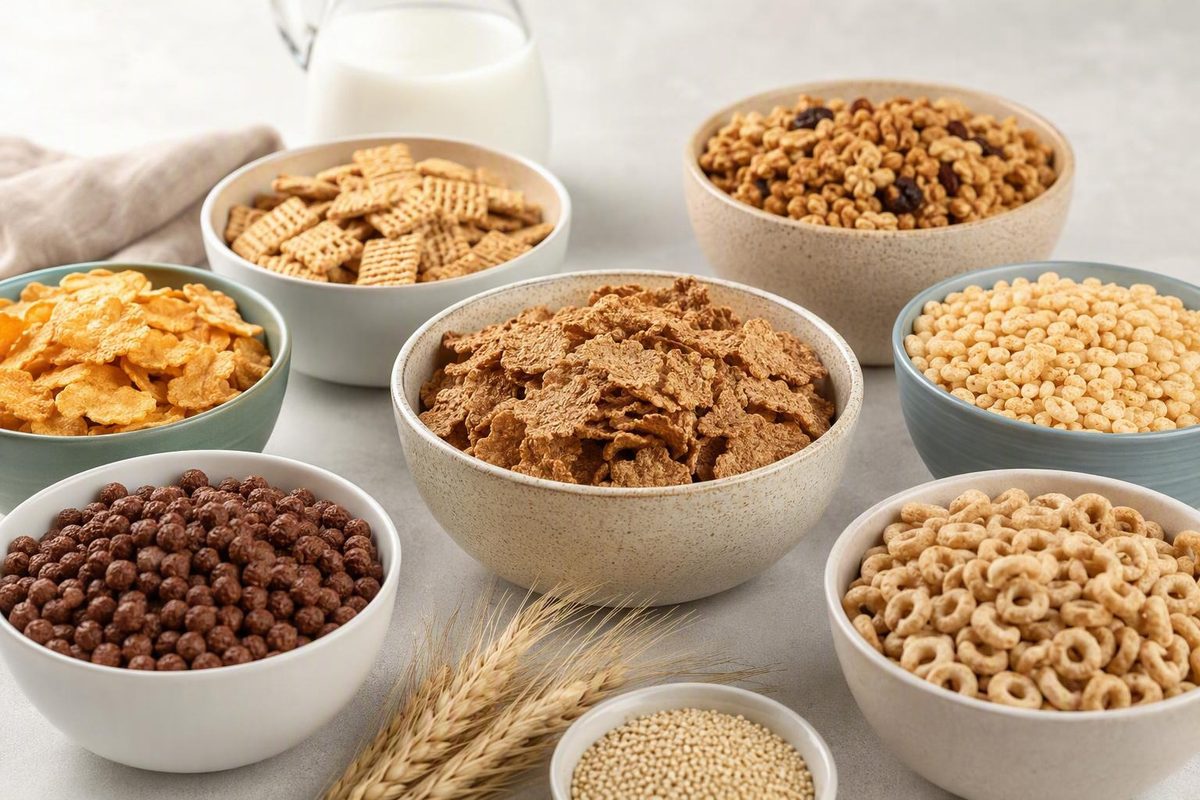
Use the 20% DV cutoff—3.6 mg per labeled serving—and verify the current package because cereal formulas, regions, and serving sizes can differ.
To find a high-iron cereal in the United States, check the current Nutrition Facts label for at least 20% Daily Value (DV) of iron per serving. The iron DV is 18 mg for adults and children age 4 or older, so the high-iron threshold is 3.6 mg per labeled serving. Fortified breakfast cereals are the likeliest candidates, but formulas, regional versions, and serving sizes can change. Treat product names as shopping leads and let the current package label settle the answer.
The quick answer: look for at least 20% Daily Value
The FDA considers 20% DV or more per serving high in a nutrient and 5% DV or less low. NIH identifies the iron DV as 18 mg for adults and children age 4 or older. Therefore:
18 mg × 20% = 3.6 mg
A cereal qualifies as high in iron when one labeled serving contains at least 3.6 mg, or its label shows 20% DV or more. The FDA’s Nutrition Facts guidance explains the high and low thresholds, while the NIH iron fact sheet provides the 18 mg Daily Value.
“Fortified” means iron has been added to the food. Whole-grain and enriched cereals can also provide iron, but those terms alone do not prove that a serving reaches 20% DV. Check the iron line on the exact box.
The 18 mg DV is a standardized labeling reference, not a personal prescription. Individual iron recommendations vary by age, sex, life stage, menstruation, pregnancy, breastfeeding, and dietary pattern.
Cereals to check first
The following products or product families appear in undated secondary cereal compilations. They are leads to verify on the package, not confirmed current recommendations. For any one of them, the box must show at least 20% DV of iron per serving to qualify as high in iron:
- Multigrain Cheerios
- Frosted Mini-Wheats
- Grape-Nuts
- Honey Bunches of Oats
- Rice Chex
- Corn Flakes
- Rice Krispies
- Special K
- Kix
No publication or update date was visible in the reviewed text of the compilations, and their reported figures conflict for some cereals. Grape-Nuts differs between the lists, while the discrepancy for Raisin Bran is especially large. The reason is unknown. Different varieties, formulations, markets, dates, serving sizes, or source errors are all possible. The disagreement is why a current package check is more reliable than adopting a secondary article’s ranking. These names appear across compilations from The Geriatric Dietitian and Holly Larson Nutrition.
At the store, match four details:
- Brand
- Exact variety
- Country of sale
- Labeled serving size
A parent brand such as “Special K” or “Cheerios” is not specific enough. Varieties can differ, so original, flavored, multigrain, and gluten-free products should each be checked individually rather than treated as nutritionally interchangeable.
Keep U.S. and UK products separate as well. A UK guide includes some similarly named cereals but limits its figures to UK products, uses different serving formats, and sometimes reports values for cereal with milk. Those figures should not be transferred to U.S. packages. The guide itself advises checking each current package.
Use this label checklist at the cereal aisle
Start with the iron %DV for one labeled serving:
| Iron per labeled serving | Interpretation | Decision |
|---|---|---|
| 5% DV or less | Low | Not high in iron |
| 6%–19% DV | Between low and high | Does not meet the high threshold |
| 20% DV or more | High | Qualifies as high in iron |
Then check the details behind that percentage:
- Confirm the exact variety name, not only the parent brand.
- Record the serving in household units and grams—for example, 1 cup (40 g) or 25 biscuits (60 g).
- Find iron near the bottom of the Nutrition Facts panel.
- Note the iron amount in milligrams, the %DV, or both.
- Determine whether the figures describe cereal alone or cereal prepared with milk.
- When comparing products, use equal serving weights rather than assuming the labeled servings are equivalent.
- Prefer the current package over an undated article or an older database record.
If a source gives only %DV, convert it to milligrams with:
Iron (mg) = iron %DV as a decimal × 18 mg
For example:
- 25% DV: 0.25 × 18 = 4.5 mg
- 50% DV: 0.50 × 18 = 9 mg
- 100% DV: 1.00 × 18 = 18 mg
For an online cross-check, search the exact product in USDA FoodData Central and select a Branded Foods record. USDA describes Branded Foods as commercially supplied label data that are updated monthly. That schedule applies to the dataset; it does not guarantee that every individual product entry matches the box currently in your hand. These records are also not necessarily independent laboratory measurements. Check the record date, exact product, and serving size, then give the current physical package priority if the figures differ.
Serving size can change the comparison
Iron per serving is useful for estimating what is in your bowl, but manufacturer-defined servings do not always create a fair product ranking. One cereal’s serving may weigh 39 g and another’s 60 g. The larger serving can contain more iron partly because it includes more cereal.
For a more useful comparison:
- Keep the labeled serving as the practical eating reference.
- Convert both products to the same weight, such as iron per 40 g or per 100 g.
- Compare calories, fiber, added sugar, and sodium on that same weight basis.
To estimate the iron in the portion you actually eat, use:
Iron consumed = labeled iron × (amount eaten ÷ labeled serving amount)
Suppose one labeled serving supplies 12 mg of iron, but you eat half a serving:
12 mg × 0.5 = 6 mg
Your portion supplies about 6 mg of iron.
Use the same unit on both sides of the calculation. If the serving is 40 g and you eat 30 g, calculate in grams. Do not treat one cup of flakes, one cup of dense nuggets, 25 biscuits, and half a cup of cooked cereal as equivalent portions.
Prepared-with-milk and cereal-only figures should not be mixed. They represent different portions and can differ in total weight, calories, and other nutrients.
High iron is not the whole nutrition label
A large iron %DV does not automatically make a cereal the best overall choice. On equal-weight portions, also compare:
- Calories
- Dietary fiber
- Added sugar
- Sodium
This prevents a larger manufacturer-defined serving from appearing better simply because it contains more of everything. It also keeps “high in iron” separate from a broader judgment about the product’s nutritional profile.
Iron added to fortified cereal is nonheme iron. The label states how much iron is present, not exactly how much the body will absorb. Absorption varies with the rest of the meal and the overall dietary pattern.
One practical option is to serve cereal with a vitamin C source, such as strawberries or citrus fruit. Vitamin C can improve absorption of nonheme iron, although no particular pairing guarantees a specific absorbed amount. The NIH consumer iron fact sheet explains nonheme iron absorption and identifies strawberries and citrus as vitamin C sources.
Daily Value is not a personal iron prescription
The label’s 18 mg DV provides a consistent reference for comparing foods. It is not the recommended intake for every person. NIH gives these examples of daily recommended amounts:
- Adult men ages 19–50: 8 mg
- Adult women ages 19–50: 18 mg
- Adults age 51 or older: 8 mg
- Pregnancy: 27 mg
Requirements also vary during childhood and breastfeeding. NIH says people following vegetarian diets need more iron because nonheme iron is absorbed less efficiently than heme iron.
Cereal can make a substantial contribution to dietary iron, but cereal intake or symptoms alone cannot establish iron deficiency. Assessing iron status can require multiple blood measurements, and suspected deficiency should be evaluated by a qualified healthcare professional rather than self-diagnosed or treated solely by changing cereal. The NIH health-professional fact sheet explains the limits and methods of assessing iron status.
Does unfortified cereal contain no iron?
No. “Unfortified” means the manufacturer has not added iron. Grains and other ingredients can still contain naturally occurring iron, so check the Nutrition Facts label rather than treating “unfortified” as “iron-free.”
Can one serving of cereal provide 100% of the iron Daily Value?
Yes. NIH lists a generic breakfast cereal fortified to 100% DV as providing 18 mg of iron per serving. That example does not establish the current value of any named product. It also does not mean the body absorbs all 18 mg or that 18 mg is every person’s recommended daily intake.