
Magnesium-Rich Foods, Compared by the Portion You Eat
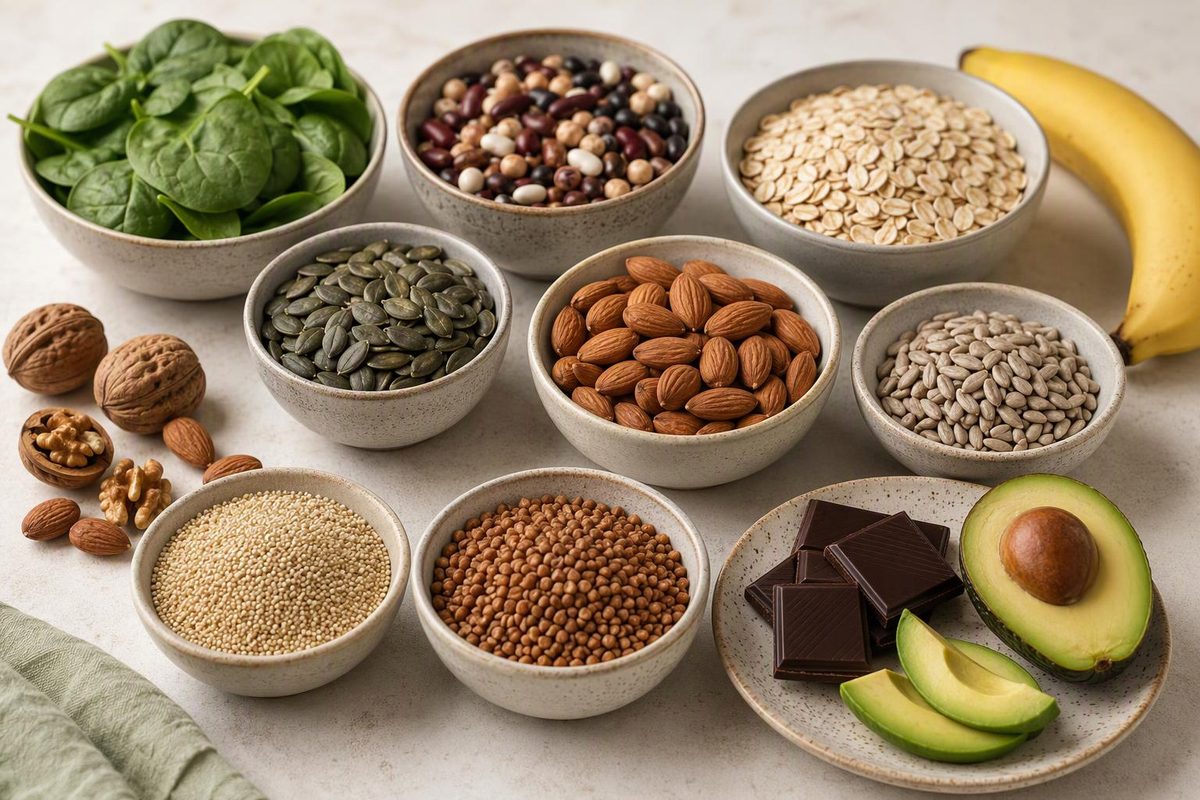
Compare magnesium in seeds, nuts, beans, spinach, grains and everyday foods by serving size, plus daily needs and practical meal combinations.
Seeds, nuts, beans, leafy greens and whole grains are useful sources of magnesium. Milk, yogurt, bananas, avocados and fish contain it too, though usually in smaller amounts per serving. Among the foods in the NIH magnesium table, roasted pumpkin seeds stand out: 1 ounce provides about 156 mg, compared with 32 mg in a medium banana.
The portion matters as much as the food name. An ounce of seeds, half a cup of cooked vegetables and a whole piece of fruit are different serving sizes—not equal-weight comparisons.
Magnesium in common foods
These are reference amounts, not exact values for every brand or recipe. Match the listed preparation and serving to what you actually eat. One ounce by weight is approximately 28 g.
| Food and preparation | Serving | Magnesium |
|---|---|---|
| Pumpkin seeds, roasted | 1 oz | 156 mg |
| Chia seeds | 1 oz | 111 mg |
| Almonds, dry roasted | 1 oz | 80 mg |
| Spinach, boiled | ½ cup | 78 mg |
| Cashews, dry roasted | 1 oz | 74 mg |
| Soymilk, plain or vanilla | 1 cup | 61 mg |
| Black beans, cooked | ½ cup | 60 mg |
| Edamame, shelled and cooked | ½ cup | 50 mg |
| Peanut butter, smooth | 2 tbsp | 49 mg |
| Brown rice, cooked | ½ cup | 42 mg |
| Plain low-fat yogurt | 8 oz by weight | 42 mg |
| Instant oatmeal | 1 packet | 36 mg |
| Banana | 1 medium | 32 mg |
| Milk | 1 cup | 27 mg |
| Atlantic farmed salmon, cooked | 3 oz | 26 mg |
| Avocado, cubed | ½ cup | 22 mg |
Source: NIH Office of Dietary Supplements, selected food sources, accessed October 18, 2026. Values are rounded reference estimates; products and portions vary.
How much magnesium do adults need?
U.S. recommended daily allowances depend on age and sex:
| Age | Men | Women, not pregnant or breastfeeding |
|---|---|---|
| 19–30 | 400 mg | 310 mg |
| 31 and older | 420 mg | 320 mg |
During pregnancy, the adult recommendation is 350 mg at ages 19–30 and 360 mg at ages 31–50. During breastfeeding, it is 310 mg at ages 19–30 and 320 mg at ages 31–50. These are general reference intakes for healthy people, not individualized prescriptions. NIH recommended intakes
The Daily Value used on U.S. labels is 420 mg, which is a comparison reference rather than everyone’s personal requirement. An ounce of roasted pumpkin seeds supplies about 37% of that value. NIH Daily Value explanation
Practical ways to add magnesium to a meal
You do not need to get it all from one food. Using the table’s portions, ½ cup each of cooked black beans, brown rice and boiled spinach provides about 180 mg combined. That is a calculated estimate for those three ingredients, not a complete meal’s nutrition total.
Other straightforward options include almonds alongside yogurt, chia seeds stirred into oatmeal, or edamame as a side. For tracking, weigh nuts and seeds rather than assuming every handful is an ounce. A half-ounce portion of the listed pumpkin seeds would provide roughly 78 mg—not the full 156 mg.
Whole grains can also make a difference. NIH lists 42 mg in ½ cup cooked brown rice versus 10 mg in the same volume of cooked white rice. Refining grains removes magnesium-containing bran and germ; this comparison concerns magnesium, not an overall ranking of the two foods. NIH food sources
For packaged foods, use the product’s magnesium amount when available, especially for fortified cereals. Magnesium is not generally required on a standard U.S. Nutrition Facts label, so a missing line does not mean the food contains none. If it is absent, use a nutrient-database entry that matches the food and preparation. NIH food-label explanation