
Fireball Alcohol Content: 33% ABV for Whisky, Lower for Cinnamon Variants
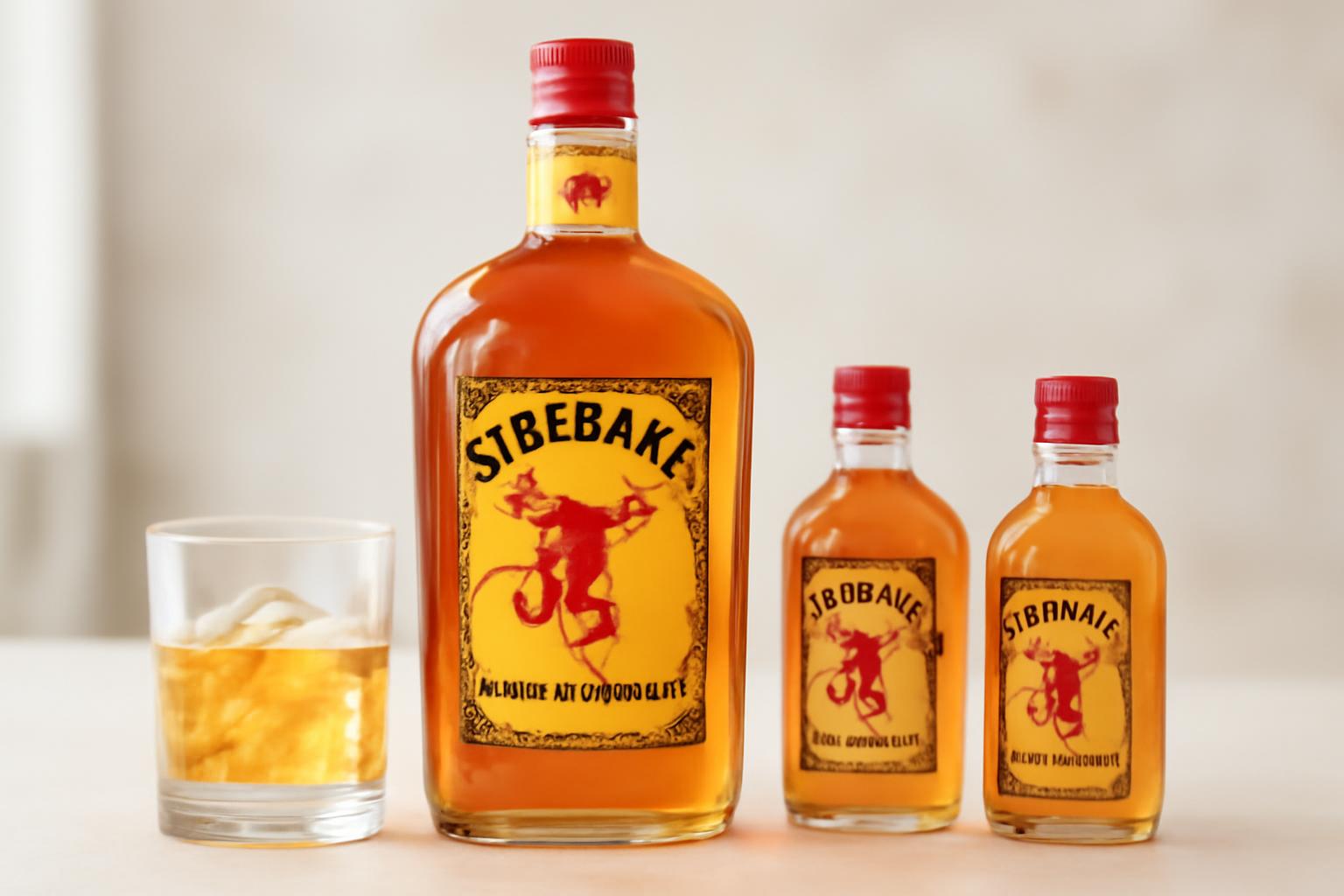
Standard Fireball Whisky is 33% ABV. Lower-strength Fireball Cinnamon variants are 16.5% or 21%; check the full front label before logging it.
If you are trying to pin down the alcohol percent of Fireball for calorie logging, macro tracking, or a cleaner drink entry, the short answer is that there is no single ABV for every Fireball-branded bottle. Fireball’s official FAQ says the standard whisky-based Fireball Whisky is 66 proof, or 33% ABV, while lower-alcohol Fireball Cinnamon products also exist at 33 proof / 16.5% ABV and 42 proof / 21% ABV.
That is the source of most of the confusion. People often say “Fireball” as if it names one fixed product, but the brand now covers more than one alcohol type and more than one strength. For accurate tracking, the best rule is simple: first check whether the front label says “Whisky,” then confirm the proof or ABV printed on the bottle. That gives you a much better answer than guessing from the name, bottle shape, or where you bought it.
Related: Low-Calorie Mixed Drinks: 7 Measured Options and Smarter Swaps.
Standard Fireball Cinnamon Whisky Alcohol Percent
If you mean the regular Fireball most people picture from liquor stores, bars, and the spirits aisle, the alcohol percent is 33% ABV, which is the same as 66 proof. A retailer listing for Fireball Cinnamon Whiskey - 66 Proof at QFC describes it as Canadian whisky blended with real cinnamon and states 33% alcohol by volume.
That figure is not just attached to one odd bottle size. Retailer listings in the evidence pack for both small bottles and larger formats describe Fireball Cinnamon Whisky at the same 33% ABV, which supports the basic takeaway: when the front label says Fireball Cinnamon Whisky, you are generally looking at the familiar whisky-based product, not a shifting range.
That consistency matters if you log drinks carefully. Brand confusion does exist, but it mostly comes from the lower-strength Fireball Cinnamon products, not from random variation inside the standard whisky line. If the bottle says Whisky, the safe default is 33% ABV unless the label itself says otherwise.
It also helps to understand what the standard bottle is. Retail descriptions identify regular Fireball as a Canadian whisky base with cinnamon flavoring, which is why it belongs in the whisky-based product category rather than the lower-ABV malt- or wine-based category. For tracking purposes, the word “Whisky” on the front is your strongest first clue.
Proof vs ABV: How Fireball’s Strength Is Measured
Fireball labels often show both proof and ABV, and in the U.S. those numbers convert directly. Proof is double the ABV percentage, so 66 proof = 33% ABV, 42 proof = 21% ABV, and 33 proof = 16.5% ABV, matching the product breakdown in Fireball’s official FAQ.
That makes label reading easier than many drinkers expect. You do not need a special conversion chart for Fireball. If the bottle says 66 proof, read that as 33% ABV. If it says 42 proof, that means 21% ABV. If it says 33 proof, that means 16.5% ABV.
ABV, or alcohol by volume, is usually the more useful number for calorie and intake tracking because it tells you what share of the liquid is alcohol. Proof is helpful, but mostly as label shorthand. When you are comparing one Fireball product with another or choosing the closest tracking entry, ABV is usually the cleaner number to use.
This is also why two bottles that look broadly similar can belong in different logging categories. The proof number is not decorative. It signals a meaningfully different alcohol concentration.
Fireball Variants and Their Alcohol Percents
The reason people get conflicting answers when they search for the alcohol percent of Fireball is that several Fireball products are sold at different strengths. According to Fireball’s official FAQ, the lineup includes Fireball Whisky at 66 proof / 33% ABV, Fireball Cinnamon malt-based at 33 proof / 16.5% ABV, Fireball Cinnamon wine-based at 42 proof / 21% ABV, and Fireball Whisky 42 Proof at 21% ABV.
That list is worth slowing down over, because it explains most of the online confusion:
- Fireball Whisky = 33% ABV
- Fireball Cinnamon, malt-based = 16.5% ABV
- Fireball Cinnamon, wine-based = 21% ABV
- Fireball Whisky 42 Proof = 21% ABV
The two 21% ABV entries are especially easy to mix up. One is a wine-based Fireball Cinnamon product, and one is a Fireball Whisky 42 Proof product. Same alcohol percentage, different product labeling and base category. If your goal is accurate nutrition logging, “the 21% Fireball” is still too vague unless you also know exactly what the label says.
Fireball says it created the malt- and wine-based Fireball Cinnamon products so they could be sold in stores that cannot legally sell whisky or other higher-proof spirits. In its official FAQ, the brand says that move expands Fireball Cinnamon availability to about 170,000 U.S. stores that can sell beer, malt beverages, and wine products but not whisky.
For shoppers, that means you can find Fireball-branded bottles in very different retail settings without all of them being the same strength.
For trackers, the practical takeaway is simple: Fireball is a brand family, not one fixed alcohol percentage. The standard whisky-based product is 33% ABV, but lower-strength Fireball Cinnamon products at 16.5% and 21% also exist by design.
How to Tell Fireball Whisky from Lower-ABV Cinnamon Products
The fastest way to identify which Fireball you have is to read the exact wording on the front label. Fireball’s own guidance says that any package labeled “Fireball Cinnamon Whisky” is the whisky-based product, while a package labeled “Fireball Cinnamon” without the word “Whisky” is one of the malt- or wine-based products.
That sounds like a small detail, but in practice it is the main distinction that matters. The branding is close enough that many shoppers do not notice the difference at a glance, especially with mini bottles, plastic bottles, or checkout-lane displays.
That is also why mini bottles sold outside liquor stores became controversial. Food & Wine’s reporting on the Fireball mini-bottle lawsuit says those bottles were often Fireball Cinnamon, a malt-based beverage at 16.5% ABV, rather than Fireball Cinnamon Whisky at 33% ABV. The same report describes a class-action lawsuit alleging that the similar packaging confused buyers; those were allegations reported in lawsuit coverage, not a court finding established in that article.
For practical logging, a simple three-step check works well:
- Read the front label carefully. Does it say “Whisky” or only “Cinnamon”?
- Check the proof or ABV. That confirms whether you have 33%, 21%, or 16.5%.
- Use the store context only as a clue, not proof. Convenience-store and gas-station minis are more likely to be lower-ABV variants, but the label is what settles it.
That last point is worth repeating. Where you bought the bottle can suggest what it is, but it does not prove it. Some small bottles are the full whisky product, some are not, and store-law differences vary by state. If you want the right log entry, the label beats assumptions every time.
A good mental shortcut is this: if the product is being sold somewhere that usually carries beer, malt beverages, or wine but not spirits, slow down and inspect the front label before logging it as regular Fireball Whisky. That extra few seconds can prevent a noticeable overestimate or underestimate in both alcohol and calories.
Alcohol Grams and Standard Drinks in a Fireball Shot
For a typical shot, the most useful reference serving is 1.5 oz, or about 45 mL. According to DrinkMeter’s Fireball Whisky calculator page, a 45 mL / 1.5 oz shot of 33% Fireball Whisky contains about 11.7 grams of alcohol and works out to roughly 0.84 U.S. standard drinks.
That matters because many people assume a shot of Fireball must equal a full standard drink just because it is a spirit. In reality, the standard whisky-based Fireball is less alcoholic than a 40% ABV spirit, so a standard 1.5 oz shot lands a bit under one standard drink rather than matching a typical 80-proof pour.
It is still fairly concentrated. At 33% ABV, Fireball is much stronger by concentration than beer or table wine. But concentration and total serving alcohol are not the same thing. A small, concentrated pour can still contain less total alcohol than a larger, weaker beverage.
Lower-ABV Fireball products scale down from there. If the 33% ABV whisky version gives you about 11.7 g of alcohol in a 1.5 oz shot, then the 16.5% ABV version gives you about half that in the same pour, and the 21% ABV version gives you meaningfully less as well. That is why logging every Fireball shot as if it were the regular whisky can noticeably overstate alcohol intake when you actually had one of the weaker variants.
Pour size changes the result immediately. The cited numbers above are for a standard 1.5 oz shot. If your home pour is larger, your alcohol grams rise in direct proportion. That is one reason alcohol is easy to undercount in casual logs: people remember “one shot” but forget that the actual glass, free-pour, or heavy hand may have been more than a standard serving.
For precise tracking, the most reliable sequence is:
- confirm the exact Fireball product
- confirm the ABV
- measure the pour
- then estimate alcohol grams from that actual serving
That approach is much more reliable than trying to reverse-engineer the drink from taste or brand recognition alone.
Calories in Fireball: Tied to Alcohol and Sugars
For the standard whisky-based bottle, retailer nutrition data gives a practical starting point. QFC’s Fireball Cinnamon Whiskey 66 Proof page lists a 1.5 fl oz serving at 125 calories, with 11 g carbohydrate and 11 g sugar.
That is why Fireball does not behave like an unsweetened spirit in a food log. A plain spirit mostly contributes alcohol calories. Fireball contributes alcohol calories and sugar calories. Even though the serving is small, it is still a sweetened product, so the cinnamon-candy taste reflects real energy, not just flavor.
A separate nutrition entry at MyFoodDiary’s Fireball Cinnamon Whisky page lists 33% ABV and 11.6 g of alcohol per serving. That amount of alcohol works out to about 81 calories from alcohol alone, which puts alcohol at close to two-thirds of a 125-calorie serving.
That split is useful for trackers because it shows why Fireball can be easy to underestimate. People often mentally file it under “one shot” and think mainly about the alcohol. But a Fireball serving is not just ethanol in a glass. The sweetness is contributing meaningfully to the total too.
It also explains why you should be careful about assuming all Fireball variants scale perfectly in calories. A lower-ABV Fireball Cinnamon product will contain less alcohol per ounce than the 33% ABV whisky version, but that does not guarantee a perfectly proportional calorie drop, because formulation and sweetness can differ by product type. If you want the most accurate entry, check the exact bottle and use the package label or the closest verified listing for that specific version.
That label-first habit is the same logic used across CaloriePages: start from the actual serving, actual ABV, and actual product rather than a generic category name. With Fireball, that matters more than usual because the brand name alone does not tell you the strength.
Tracking Fireball in Your TDEE or Calorie Log
The best way to log Fireball is to treat it like any other packaged alcoholic drink: start with the actual bottle in your hand. Record the pour size, the ABV or proof, and any listed calories, carbs, or sugars. If you do not have a calorie label, the most defensible estimate is to build from the alcohol content and then account for the carbohydrate or sugar listed for that exact product.
For the standard whisky version, a 1.5 oz serving contains roughly 11.6 to 11.7 g of alcohol based on third-party nutrition and BAC tools discussed above. If your pour is 2 oz instead of 1.5 oz, that alcohol portion rises by about one-third. If you switch to a 16.5% or 21% variant, it falls accordingly. That is why “one shot of Fireball” is too vague for tight tracking unless you also know the bottle and the pour.
The second common mistake is assuming alcohol calories behave more like protein calories than they actually do. As explained in CaloriePages’ TDEE explainer, protein has a much higher thermic effect of food at about 20% to 30% of its calories, while carbohydrates are about 5% to 10% and fat about 0% to 3%; the same guide notes that common TDEE equations have a mean error of about ±10%, and that NEAT can vary by up to 2,000 kcal/day between similar people.
That same point is useful from the satiety side too. CaloriePages’ protein calorie density guide explains why protein tends to fill people up better and costs more energy to process.
So the practical workflow is simple:
- log the specific Fireball product
- log the actual ounces poured
- use the label calories when available
- if needed, estimate from alcohol grams plus carbs or sugars
- compare your weekly average intake with your weight trend, not just one day
That last step matters because alcohol tracking errors are often episodic rather than daily. Many people drink little or nothing during the week, then have several pours on one or two nights. A small underestimate repeated across a weekend can erase the apparent precision of the rest of the week’s food logging.
The broader TDEE lesson is that your log works best as a measurement tool, not a perfect truth machine. If your intake record says you are in a deficit but your multi-week weight trend disagrees, the explanation is usually not that metabolism stopped following arithmetic. More often, the problem is inaccurate portion logging, a loose weekend estimate, or a drink entry that was too generic. Fireball is exactly the kind of product where that error creeps in.
Fireball vs Other Drinks: ABV and Calorie Comparison
By concentration, standard Fireball Whisky is much stronger than ordinary beer or wine. A drink at 33% ABV is far more alcohol-dense ounce for ounce than common reference points like beer in the 4% to 6% range or wine around 12%.
But that does not mean a standard shot of Fireball automatically equals several beers. Using the reference comparisons on DrinkMeter’s Fireball Whisky page, a 1.5 oz shot of 33% Fireball contains about 0.84 of the alcohol in a 12 oz 5% beer and about 0.84 of the alcohol in a 5 oz 12% wine. So the accurate framing is: Fireball is much stronger by concentration, but a standard shot is still in roughly the same serving-level alcohol neighborhood as one ordinary beer or one ordinary glass of wine.
That distinction matters for calories too. If you compare drinks by ABV only, Fireball looks dramatically stronger than beer or wine. If you compare them by typical serving size, the gap narrows. If you compare them by total calories, sugar and mixer choices can matter almost as much as the base alcohol.
That is why drink comparisons are easiest when you decide what question you are actually asking:
- Which is more concentrated? Fireball.
- Which has more alcohol per typical serving? Often fairly similar within ordinary serving sizes.
- Which has more calories in a real drinking occasion? That depends heavily on pour size, sweetness, and what else is in the glass.
If you want more examples of that serving-first approach, see the other drink comparisons on CaloriePages.
For most readers, the practical answer stays the same from start to finish: standard Fireball Whisky is 33% ABV, but the actual alcohol and calorie hit in your glass depends on which Fireball product you bought and how much you poured. Brand recognition alone is not enough.
Conclusion
The cleanest answer is that standard Fireball Cinnamon Whisky is 33% ABV (66 proof), while lower-strength Fireball Cinnamon variants are sold at 16.5% ABV and 21% ABV for stores that cannot sell full-strength whisky. If you are logging calories or alcohol accurately, do not stop at the word “Fireball.” Check whether the label says “Whisky,” then verify the proof or ABV. That one habit gets you much closer to the right entry than any generic app listing.
Is the alcohol percent of Fireball always 33%?
No. The standard whisky-based version is 33% ABV, but Fireball’s official FAQ also lists Fireball Cinnamon products at 16.5% ABV and 21% ABV, plus a Fireball Whisky 42 Proof product at 21% ABV.
What’s the difference between Fireball Whisky and Fireball Cinnamon?
The main difference is the product type on the label. Fireball Cinnamon Whisky is the whisky-based product, while Fireball Cinnamon refers to malt-based or wine-based products in Fireball’s labeling language. The easiest visual cue is the word “Whisky” on the front.
Are mini Fireball bottles at gas stations the same alcohol percent as liquor store ones?
Often, no. Food & Wine reported that mini bottles sold at gas stations and convenience stores were often Fireball Cinnamon, the 16.5% ABV malt-based product, rather than the 33% ABV Fireball Cinnamon Whisky. But “often” is the right word here, not “always.” The label on the exact bottle is what determines the answer.
How many calories from alcohol in a Fireball shot?
Using third-party nutrition listings discussed above, a standard serving of Fireball Cinnamon Whisky contains about 11.6 g of alcohol. That works out to roughly 81 calories from alcohol alone, which is close to two-thirds of a 125-calorie serving.
Does proof tell the full alcohol story for Fireball?
Not by itself. Proof tells you the drink’s strength, and for Fireball products it converts directly to ABV, but Fireball is sold in multiple proofs and multiple product types. So 66 proof, 42 proof, and 33 proof can all appear within the brand family. To know what you are actually drinking, you need both the proof and the full front label.