
How Much Caffeine Is Actually in Your Latte?
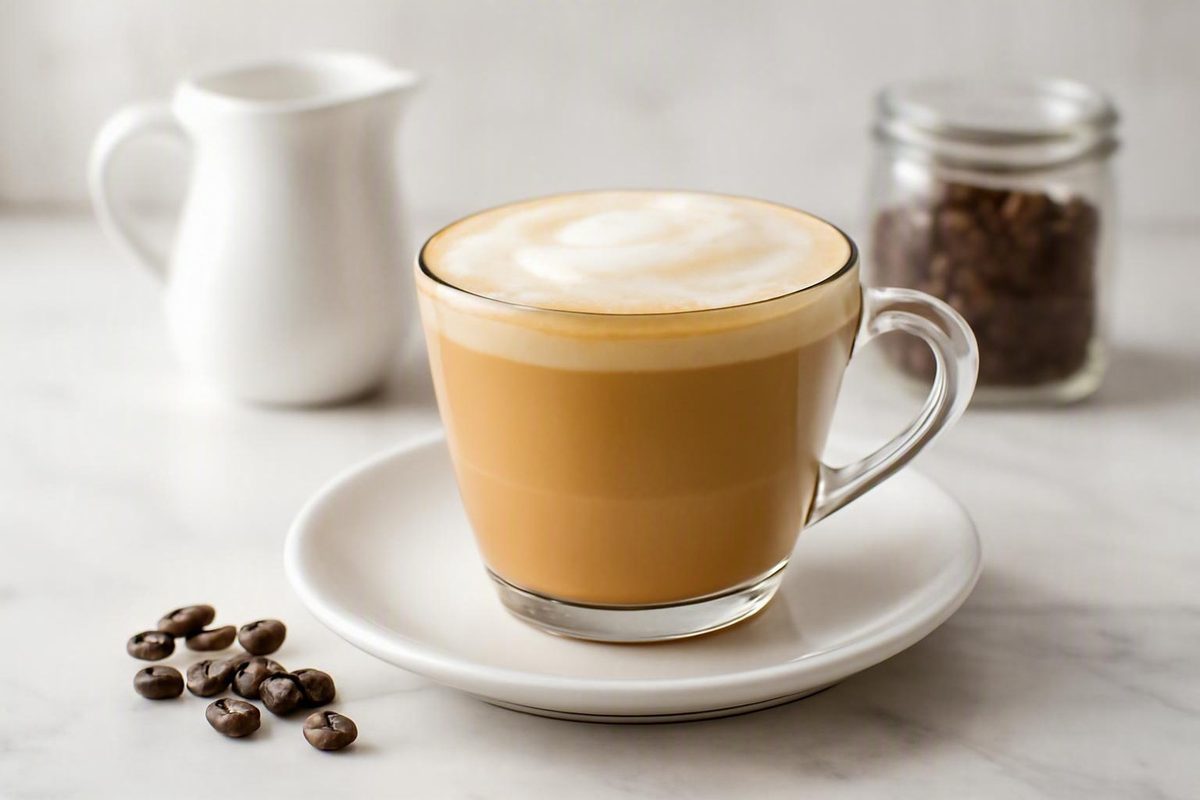
With one regular espresso shot, a useful estimate is 60-75 mg. Milk can make the drink taste milder without removing the caffeine already in the coffee.
The short answer: a regular latte has caffeine
Yes, a regular latte usually contains caffeine. A conventional latte combines espresso with steamed milk, often finished with a light layer of foam. In a plain latte, the espresso supplies the caffeine. Adding milk or foam changes the drink’s volume and flavor, but it does not remove caffeine already present in the coffee.
There is no single caffeine amount that applies to every latte. Cafés can use different espresso doses, blends, extraction recipes, shot sizes, and numbers of shots. Even two drinks sold under the same name and in the same cup size can therefore contain different amounts.
For a useful estimate, ask four questions:
- Is the drink made with espresso?
- How many shots does it contain?
- Are those shots regular, half-caf, or decaf?
- Does the café publish caffeine information for that exact drink and size?
Cup size comes after those questions. A large latte may contain more espresso than a small one, but it may instead contain the same espresso dose plus more milk.
There are also important exceptions. A decaf latte usually contains much less caffeine, although decaf does not necessarily mean caffeine-free. Chai and matcha lattes can obtain their caffeine from tea rather than espresso.
The practical starting point is therefore the caffeine source and dose—not simply the word “latte” on the menu.
How much caffeine is in a one-shot or two-shot latte?
Shot count is generally the most useful way to estimate caffeine in an espresso-based latte. The following figures are planning ranges rather than guaranteed measurements:
| Latte espresso base | Approximate caffeine estimate |
|---|---|
| One regular shot | About 60–75 mg (general reference near 63 mg; café-specific example near 75 mg) |
| Two regular, comparable shots | About 120–150 mg |
| Decaf espresso | A small, variable amount—not necessarily zero (estimated range of 0–15 mg per shot) |
The regular-shot ranges synthesize commonly reported averages near 63–64 mg for a one-ounce espresso with café-specific examples closer to 75 mg. They are deliberately broad because espresso is not made from one universal recipe.
The two-shot estimate assumes that the two shots are reasonably comparable. Multiplying a per-shot estimate by two is a useful shortcut, but it does not mean every café’s “double shot” is exactly twice a standardized single. A double may use a different coffee dose, basket, beverage yield, or house definition.
A simple two-shot calculation
Suppose a café states that its regular espresso contributes approximately 65 mg per shot. A latte made with two comparable shots can be estimated as:
65 mg per shot × 2 shots = approximately 130 mg of caffeine
That is more informative than guessing from the finished cup’s volume. It remains an estimate because the café’s per-shot value may be an average, and individual preparations can vary.
Published latte figures often appear to conflict for the same reason. One source may calculate from a generic espresso average, while another reports a named café product or a particular recipe. Those figures may be answering different questions:
- Generic estimate: What might an average espresso shot contain?
- Recipe estimate: What might a latte made with a stated dose contain?
- Product disclosure: What does a company report for a specific menu item and size?
- Individual preparation: What did one particular drink contain?
For everyday tracking, use current product-specific information when it is available. Otherwise, identify the number and type of shots and apply a cautious range.
Why cup size alone does not tell you the caffeine amount
A larger latte does not necessarily contain more caffeine than a smaller latte. Cup size measures the volume of the complete drink, while total caffeine usually follows the espresso dose.
Consider two hypothetical drinks:
- A 12-ounce latte containing two espresso shots
- A 16-ounce latte containing the same two espresso shots
If the espresso is identical, the drinks contain approximately the same total caffeine. The larger latte has more milk, so the caffeine is spread through more liquid. Its caffeine concentration per ounce is lower, but its total dose is not.
The opposite can also happen. If the café adds a shot when a customer orders a larger size, the larger latte will contain more caffeine—but because it has more espresso, not merely because the cup is larger.
A consumer caffeine chart provides a useful product-specific illustration: it lists a 16-ounce Starbucks latte and a 20-ounce version at the same 150 mg of caffeine. That does not establish a permanent rule for the chain or for lattes generally; it simply demonstrates that caffeine does not always rise with beverage volume (see the listed products and serving sizes).
Cup size can also conceal differences between cafés. Two 12-ounce lattes might contain different shot counts, coffee doses, or espresso recipes. Even the term “double” may be defined differently from one shop to another.
Avoid assuming that:
- Every small latte has one shot.
- Every medium latte has two shots.
- Every large latte has more caffeine than a medium.
- Every café uses the same shot volume or coffee dose.
- A 16-ounce cup predicts one fixed caffeine amount.
The most useful ordering question is: “How many espresso shots are included in this size?” If the café publishes nutrition information, compare the answer with the disclosure for that exact product and serving.
Milk makes a latte milder, but it does not remove caffeine
Milk changes a latte’s volume, texture, flavor, and caffeine concentration. It does not subtract the caffeine supplied by the espresso.
For a simple numerical illustration, suppose the espresso contributes an estimated 65 mg of caffeine:
- Add enough milk to make an 8-ounce latte: approximately 65 mg total
- Add more milk to make a 12-ounce latte: approximately 65 mg total
These are hypothetical drinks, not measured café recipes. The second latte contains fewer milligrams per ounce because the same amount of caffeine is distributed through more liquid. Its total stays the same unless the espresso dose changes or another caffeinated ingredient is added.
This distinction explains why a latte can taste milder than straight espresso. Espresso has an intense coffee flavor concentrated in a small serving. Steamed milk softens that flavor and changes the texture, but the caffeine from the espresso remains in the drink.
Taste is therefore a poor caffeine meter. A sweet, milk-heavy latte may contain several espresso shots, while a smaller or sharper-tasting drink may contain only one. Sweetness, temperature, milk ratio, and roast character can all change perceived intensity without revealing the total caffeine dose.
Ordinary dairy milk, uncaffeinated plant-based milk, and foam should not be used to estimate caffeine. The relevant factors are the espresso and any other caffeine-containing ingredients.
Flavored drinks require an additional check. It is not safe to assume that every addition is caffeine-free. Ingredients containing coffee, tea, cocoa, chocolate, or added caffeine can increase the total. A mocha-style latte, dirty chai, or drink with a coffee-based topping should be evaluated as a complete recipe rather than treated as plain espresso and milk.
The defensible arithmetic is simple: adding milk can reduce caffeine concentration and coffee intensity, but it does not neutralize or erase the caffeine already in the espresso.
Why two espresso shots can have different caffeine totals
Knowing the shot count improves an estimate, but it does not turn the drink into a laboratory measurement. “Two shots” describes portions or preparation; it does not guarantee one fixed quantity of caffeine.
Variables that can affect how much caffeine reaches the cup include:
- Coffee dose: The amount of ground coffee used
- Bean species or blend: Different coffees can have different caffeine levels
- Beverage yield: The amount of liquid espresso produced
- Grind: Particle size affects extraction
- Brew ratio: The relationship between dry coffee dose and liquid yield
- Extraction method and time: How water moves through the coffee
- Preparation: Equipment settings and barista technique
- Shot count: The number of espresso portions included
Coffee Friend reports approximately 63 mg for a one-ounce espresso and 126 mg for a double while noting that beans, measurement, and brewing method affect the result (review its reported coffee and espresso figures). Other references use approximately 64 mg, and café-specific recipes can be higher. That variation supports using ranges rather than presenting one number as exact.
Variation occurs at two levels. First, cafés use different recipes. One may prepare espresso with a larger dry coffee dose, a different blend, or a different beverage yield. Second, repeated preparations based on the same nominal recipe may not perfectly match a generic published average.
“Strong” can also describe several different qualities:
- A concentrated coffee-to-milk ratio
- A dark or intense flavor
- More espresso
- A larger coffee dose
- More caffeine
Those qualities can overlap, but they are not interchangeable. A darker, more bitter, or more intense-tasting latte does not automatically contain more caffeine. Taste, roast label, and cup dimensions cannot reveal an exact dose.
When several types of information are available, use this order:
- Current nutrition data for the named product and size
- The café’s stated caffeine amount or espresso dose
- Shot count multiplied by a cautious per-shot range
- A category estimate based only on the word “latte”
Product-specific information takes priority because it is intended to describe the café’s own recipe. Generic shot arithmetic is the fallback.
Regular, decaf, chai, matcha, and bottled lattes are not interchangeable
“Latte” can describe several different drinks. The name alone does not identify either the caffeine source or the amount.
Regular espresso latte
A conventional café latte combines espresso with steamed milk. Its caffeine comes primarily from the espresso, so regular shot count is the best starting point.
Use the one-shot or two-shot planning ranges in the table above when product-specific information is unavailable. If the drink contains an extra shot, include that shot in the total rather than assuming it is already represented by the cup size.
Decaf latte
A decaf latte replaces regular espresso with decaffeinated espresso. It generally contains substantially less caffeine than a regular latte, but it should not automatically be described as caffeine-free.
The remaining amount depends on the decaf coffee, dose, extraction, and number of shots. If small quantities matter to you, ask the café for current product information rather than relying on the word “decaf.”
Half-caf latte
Although the name suggests less caffeine than the regular version, the actual total depends on how the café constructs the drink.
For example, a two-shot latte made with one regular shot and one decaf shot should be estimated from those two components. Cup size alone does not provide the answer.
Chai latte
A chai latte is normally tea-based rather than espresso-based. Its caffeine may come from brewed tea or a chai concentrate, so the ordinary espresso-shot shortcut does not apply unless espresso is also included.
- The chai or tea base
- The added espresso
Both must be counted.
Matcha latte
A matcha latte can contain caffeine from matcha even when it contains no espresso. Its total depends on the amount and formulation of matcha used. Scoops of powder, premixed products, and branded café recipes are not necessarily equivalent.
The CSPI product chart illustrates the category problem by listing coffee-shop lattes, chai lattes, matcha lattes, and bottled coffee drinks with substantially different product-specific values. Those entries show why the exact formulation matters; they should not be generalized to every brand or future recipe (browse the product-specific caffeine chart).
Bottled and ready-to-drink lattes
Do not apply a café shot formula unless the manufacturer clearly identifies the espresso content. Instead:
- Read the package for a caffeine disclosure.
- Check whether the amount applies per serving or per bottle.
- Confirm how many servings the container holds.
- Consult the manufacturer’s current product page if the label is unclear.
- Recheck occasionally because formulations and serving information can change.
Across all latte types, use this hierarchy:
Current product label or brand disclosure first; recipe and shot count second; generic category estimate last.
Does a latte have more caffeine than coffee or a cappuccino?
There is no reliable blanket ranking. A latte may contain more or less caffeine than brewed coffee or a cappuccino depending on the serving sizes and recipes being compared.
Espresso is concentrated, so it can contain substantial caffeine per ounce. A latte, however, contains only the espresso dose used in its recipe; most of the finished cup may be milk.
Brewed coffee uses a larger volume of coffee rather than one or two small espresso portions. Bean Box lists approximate averages of 95 mg for an eight-ounce brewed coffee and 64 mg for a shot of espresso, while emphasizing that the figures vary with the beans, grind, roast, and brewing time (compare its estimated coffee values). These are category estimates, not directly comparable product measurements.
Depending on the actual servings:
- An eight-ounce brewed coffee could contain more caffeine than a one-shot latte.
- A two-shot latte could contain more caffeine than some smaller or weaker brewed coffees.
- A large brewed coffee could exceed a two-shot latte.
- A latte with extra espresso could exceed an ordinary serving of brewed coffee.
None of those outcomes follows from the drink name alone.
Latte-versus-cappuccino comparisons are simpler when the espresso dose is matched. A latte generally contains more steamed milk, while a cappuccino uses a different balance of espresso, milk, and foam. If both drinks contain the same espresso dose, their caffeine totals should be similar even though their volume, texture, and flavor intensity differ. Coffee Bros likewise describes traditional latte and cappuccino recipes as having similar caffeine when the espresso dose is the same (see its recipe-based comparison).
That does not mean every latte and cappuccino contain identical amounts. A café may assign different shot counts to the drinks or change the dose by serving size.
Before deciding which drink has more caffeine:
- Match the total serving sizes.
- Identify whether the coffee is brewed or espresso-based.
- Count the espresso shots.
- Confirm whether the shots are regular, half-caf, or decaf.
- Check for tea, chocolate, coffee concentrate, or added caffeine.
- Prefer current product data over generic averages.
Milk ratio and foam texture affect the drinking experience, but they do not create caffeine. The relevant comparison is the amount and type of caffeinated coffee—or another caffeinated ingredient—used in each recipe.
How to check the caffeine in your specific latte
A repeatable checking method is more reliable than memorizing one universal latte number.
1. Identify the type of latte
Determine whether the drink is:
- A regular espresso latte
- A decaf or half-caf espresso latte
- A chai latte
- A matcha latte
- A bottled or ready-to-drink product
- A flavored drink containing another coffee, tea, or chocolate ingredient
This tells you whether espresso-shot arithmetic is appropriate.
2. Find the shot count or serving-specific disclosure
For a regular café latte, ask how many shots are included in that particular size. Do not infer the answer from cup volume.
Useful questions include:
- How many espresso shots are in this size?
- Are the shots regular, half-caf, or decaf?
- Does the chai or matcha base contain caffeine?
- Is there another caffeinated ingredient in the drink?
- Do you publish a caffeine amount for this exact menu item?
3. Use the café’s current information when available
If a café publishes caffeine data for the named product and size, use that figure before applying a generic estimate. It is more likely to reflect the company’s blend, dose, recipe, and serving conventions.
Check that you selected the correct:
- Drink
- Hot or iced version
- Size
- Shot customization
- Flavor or recipe variation, if it changes the disclosure
4. Apply a cautious range when no specific figure exists
For an ordinary espresso latte without product-specific data, use the cited planning ranges in the table above. Recipes can fall outside them, so do not treat the estimate as a measurement of the individual drink.
If the café states its own approximate caffeine amount per shot, use that figure instead of a generic online average.
5. Include added shots
If you order an extra espresso shot, add it to the original shot count. Do not assume that an “extra shot” is already reflected in a generic figure for the cup size.
If the standard drink has two shots and you add one, estimate it as a three-shot recipe—or use the café’s customization calculator if one is available.
6. Handle exceptions separately
The regular-shot shortcut may not work for:
- Decaf espresso
- Half-caf combinations
- Chai concentrates
- Matcha powders
- Bottled formulations
- Coffee extracts
- Drinks with added caffeine
- Mixed coffee-and-tea recipes
For these products, ask the café or consult the current package and manufacturer information.
7. Keep precision in perspective
A tracking app may invite you to enter one exact number, but the available information may support only a range. If a café says its espresso contains “about 65 mg per shot,” recording approximately 130 mg for a two-shot latte is reasonable. It does not mean the individual drink was measured at exactly 130 mg.
This article is for general information and does not provide individualized medical or dietary advice. Readers who need personal guidance should consult an appropriate qualified professional, consistent with the site’s Terms of Use.
Frequently asked questions
How much caffeine is in a one-shot latte?
A practical estimate is about 60–75 mg of caffeine for a latte made with one regular espresso shot. A commonly reported generic figure is approximately 64 mg, although the actual amount can be higher or lower depending on the café’s coffee and recipe (see the one-shot estimate).
For a more accurate answer, check whether the café publishes caffeine information for its espresso or complete drink. Confirm that the shot is regular rather than decaf or half-caf.
Does a large latte always have more caffeine than a small latte?
No. A large latte contains more caffeine only if it includes more espresso or another additional caffeinated ingredient.
If the small and large drinks contain the same espresso dose, their total caffeine is approximately the same. The larger drink simply has more milk and a lower caffeine concentration per ounce. Ask how many shots are included in each size.
Does milk reduce the caffeine in a latte?
No. Milk increases the drink’s volume and reduces its caffeine concentration per ounce, but it does not remove caffeine already supplied by the espresso.
A milk-heavy latte may taste less intense than straight espresso, yet still contain the full caffeine dose from its coffee.
Does a decaf latte still contain caffeine?
It can. Decaffeinated espresso may retain a small and variable amount of caffeine, so a decaf latte is not necessarily caffeine-free.
The total depends on the decaf espresso, preparation, and number of shots. If small quantities matter, request current product-specific information.
Do chai and matcha lattes have caffeine?
They can. Chai lattes may contain caffeine from tea, while matcha lattes may contain caffeine from matcha. Neither drink needs espresso to be caffeinated.
The amount depends on the tea, concentrate, powder, serving size, and recipe. If espresso is added, count the tea base and espresso separately.
The bottom line
A regular espresso-based latte contains caffeine. A useful planning estimate is about 60–75 mg for one regular shot, based on general espresso references near 63 mg and café examples that can be higher (general espresso estimate).
For two comparable shots, plan on about 120–150 mg, while recognizing that a café’s recipe may fall outside that range (café-specific espresso example). These are estimates, not guarantees.
The fastest reliable check is to identify the caffeine source, confirm the number and type of espresso shots, and consult current café or package information. Milk volume and cup size alone cannot tell you how much caffeine is in the drink.