
Pink Whitney: Nutrition Breakdown for the Podcast-Inspired Lemonade Vodka
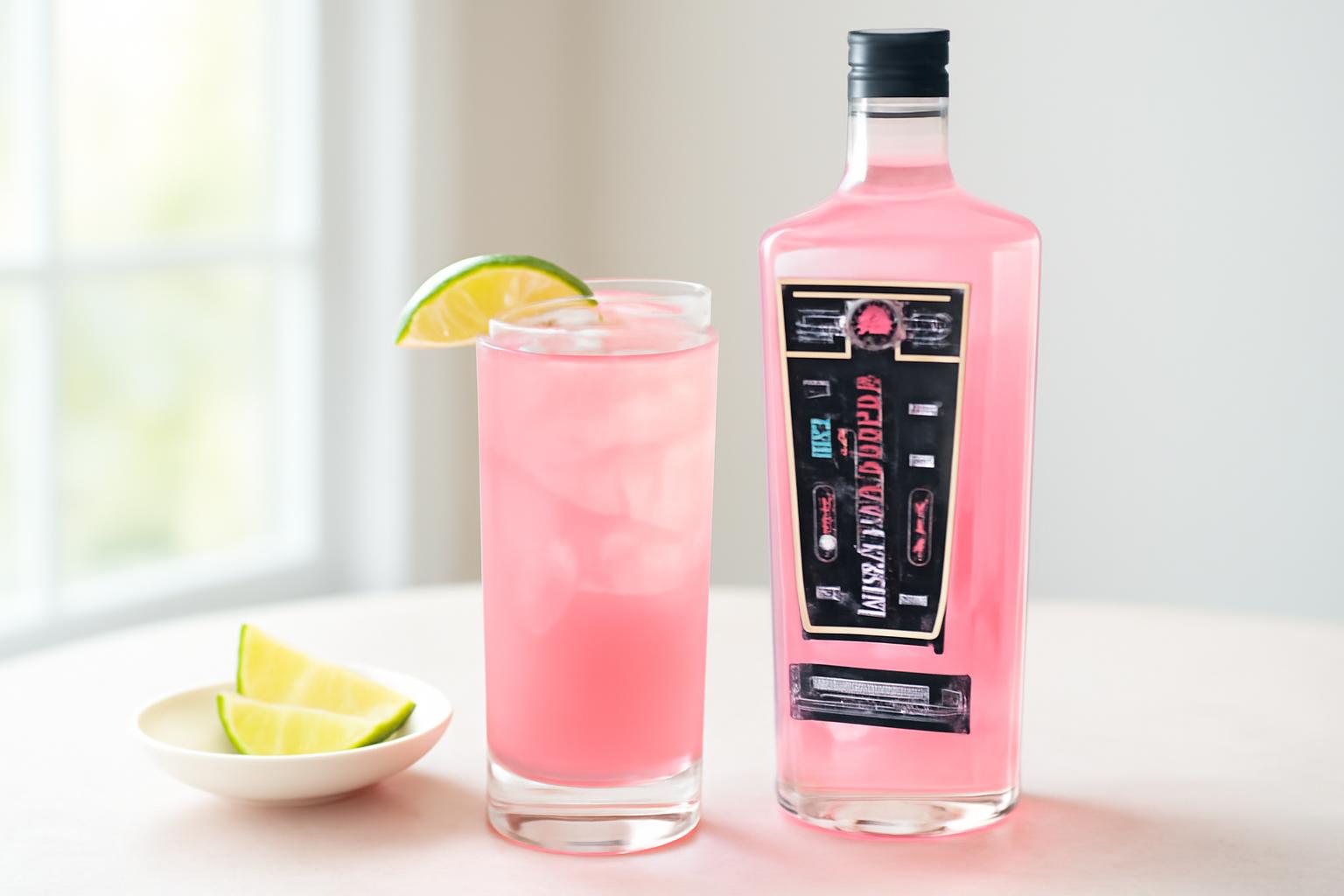
It is 30% ABV and usually makes sense to log at about 100 calories per 1.5 oz shot. Sugar is likely present, but exact carb details remain uncertain.
If you are trying to log alcohol accurately, Pink Whitney is easiest to understand as a flavored vodka, not as a vague “pink drink.” Retail and brand materials consistently describe it as New Amsterdam pink lemonade flavored vodka, and current retailer listings place it at 30% ABV rather than the 40% ABV many people associate with standard vodka. That makes it a real spirit, but not the same product nutritionally as plain 80-proof vodka. (Marketview Liquor)
For calorie tracking, the useful shorthand is not perfection but consistency. Secondary sources reviewed for this piece most often put a 1.5 oz shot at about 93 to 100 calories, and one widely repeated estimate places sugar at about 6.6 grams per 1.5 oz serving. Because those figures do not come from a clearly published manufacturer nutrition panel in the evidence pack, they are best treated as reasonable estimates rather than exact guarantees. (Anaheim Lighthouse)
That uncertainty matters because alcohol labels and calorie arithmetic are not perfectly precise to begin with. CaloriePages notes that calorie labels can be off by about 20% under standard calorie-accounting methods, which is a good reason to avoid false precision when logging flavored spirits. (CaloriePages About)
So the practical answer to “what is Pink Whitney?” is simple: it is a lower-proof pink lemonade flavored vodka, usually close enough to log as about 100 calories per 1.5 oz shot, while remembering that its sugar and carb details are estimate territory rather than settled label law.
Related: Calories and Alcohol in Prosecco: A Serving-by-Serving Guide.
Product Overview
Pink Whitney is sold as a New Amsterdam flavored vodka built around pink lemonade flavor on a vodka base. That category point is more important than it sounds. If a bottle is sold as flavored vodka, it should not automatically be logged like unflavored vodka just because both sit in the vodka aisle. The alcohol still drives most of the calories, but flavoring changes the nutrition profile enough to matter for anyone tracking intake carefully.
One current retailer page lists Pink Whitney in 750 mL, 1.0 L, and 1.75 L sizes, which is a standard lineup for a broadly distributed liquor brand. (Wheatley Wine & Spirits)
Availability appears broad across the U.S., but not perfectly predictable at the store level. The official Pink Whitney site includes a ZIP-code locator for stores, bars, and restaurants, and it explicitly says those results are approximate and based on distributor information rather than guaranteed live inventory. That supports saying Pink Whitney has broad retail distribution without promising shelf stock in any specific shop today. (Pink Whitney official site)
That distinction matters to both shoppers and trackers. For shoppers, “widely distributed” is not the same as “in stock right now.” For trackers, “flavored vodka” is not the same as “plain vodka with pink branding.” Those are small wording differences, but they lead to different expectations about proof, calories, sugar, and serving math.
People sometimes blur those categories because its origin story begins with a simple vodka-and-pink-lemonade mix, but what is sold on shelves is a bottle of flavored vodka. That means you still need to think in pours, ounces, and bottle sizes the way you would with other spirits.
The shortest accurate description, then, is this: Pink Whitney is a nationally sold New Amsterdam pink lemonade flavored vodka available in standard liquor-store bottle formats and commonly tracked as a flavored spirit rather than a premixed drink.
Origin and Backstory
Pink Whitney’s origin story is unusually well known because the product did not begin as an anonymous flavor-lab concept. The official brand story says it started with New Amsterdam Vodka, pink lemonade, and the Spittin’ Chiclets podcast, where hosts Paul Bissonnette and Ryan Whitney mixed the drink that later became the bottled product. The same story says listeners began making it at home and pushed for a packaged version, after which the brand teamed up with Biz and Whit to bottle it. (Pink Whitney Brand Story)
That is the strongest support in the evidence pack for the basic origin: who was involved, what the original mix was, and why the bottled version happened. It also explains why people still ask whether Pink Whitney is a cocktail, a vodka, or a premix. Historically, it comes from a simple mixed drink. Commercially, it is sold as flavored vodka.
Where the timeline becomes less firm is the exact year and sequence of the product’s breakout moment. A retailer summary places the key podcast moment in 2018, which fits the widely repeated public story, but that date should be treated as a common secondary-source marker rather than a fully documented official launch chronology. (Liquor Stars)
That uncertainty is worth naming because internet product histories often harden into fake certainty. In this case, the evidence is strong on the broad narrative and thinner on the exact calendar. The clean version is still clear enough: Ryan Whitney and Paul Bissonnette popularized a vodka-and-pink-lemonade drink in the Spittin’ Chiclets orbit, fans wanted it bottled, and New Amsterdam turned that idea into Pink Whitney.
For readers who care mostly about nutrition, the backstory is not just trivia. It explains why Pink Whitney occupies a middle ground in people’s minds. It feels like a cocktail because it comes from a recognizable mixed-drink formula, yet it is sold and poured like a spirit. That is exactly why calorie tracking gets messy unless you define the product correctly before you log it.
Alcohol Content and Strength
Pink Whitney is generally listed at 30% ABV, and at least one current mini-bottle listing also gives the equivalent as 60 proof. That puts it below the 40% ABV many drinkers think of as standard vodka strength. (Cooklist)
In practical terms, that means Pink Whitney contains less alcohol per ounce than a typical 80-proof vodka. If you compare 30% ABV with 40% ABV, Pink Whitney delivers about 25% less alcohol per ounce by simple ratio. The category is still “spirit,” but ounce for ounce it is a weaker spirit than standard vodka.
For a standard 1.5 oz / 45 mL shot, one Pink Whitney calculator estimates 10.7 grams of pure alcohol and about 0.76 standard drinks. The same source says the human body metabolizes roughly 5 to 7.5 grams of alcohol per hour, which implies that one shot may take roughly 1 to 3 hours to metabolize in a healthy adult, with substantial individual variation. (Drinkmeter)
That last caveat matters. Calculator-style alcohol estimates are useful for direction, not exact prediction. Body size, sex, food intake, medications, health status, drinking pace, and tolerance all affect how alcohol behaves. So “1 to 3 hours” should be read as a rough physiology range from a secondary calculator source, not as a personal safety guarantee.
For tracking purposes, the key lesson is less dramatic than the marketing around the drink. Pink Whitney is weaker than standard vodka by concentration, but it is still a liquor product, still compact relative to beer or wine, and still easy to undercount if the pour is generous.
That is why ounce-based logging beats taste-based guessing. A flavored spirit can seem milder than it is, and a tall glass can make a heavy pour look normal. If you are trying to be accurate, the meaningful unit is the measured pour, not the vibe of the drink.
Calories and Macros Per Serving
The calorie estimate that appears most consistently across the reviewed material is about 93 to 100 calories per 1.5 oz serving. The same cluster of secondary sources often repeats about 6.6 grams of sugar per 1.5 oz serving. Those numbers are plausible and useful, but they should be treated as estimates because the evidence pack does not include a clearly published manufacturer nutrition panel for Pink Whitney.
A third-party calculator offers a helpful way to think about the calorie split. For a 1.5 oz / 45 mL shot, Drinkmeter assigns 100 calories total, with about 75 calories from alcohol and about 25 calories from sugars and carbohydrates. That does not prove an official label value, but it does show why Pink Whitney should not be logged exactly like plain vodka.
That difference is the practical point. Unflavored vodka gets essentially all of its calories from alcohol. Pink Whitney appears to get most of its calories from alcohol, but not all of them. Some share of the total is coming from sugar or other carbohydrate associated with the pink-lemonade flavoring, which is why generic vodka entries can slightly understate the nutritional picture.
Where the evidence becomes muddy is total carbohydrate. One calculated mini-bottle listing shows 4 grams of carbohydrate and 89 calories for a 50 mL serving, but the same page says its nutrition values are calculated from a database and may be inaccurate. Those numbers also do not line up cleanly with the separate 6.6-gram sugar per 1.5 oz estimate repeated elsewhere.
That is why the best logging rule is conservative rather than overconfident: count a standard shot as about 100 calories, recognize that sugar is probably present in a meaningful amount, and avoid pretending you know the exact carb total down to the gram from the current evidence. The calories are probably close enough for most tracking purposes. The carb and sugar specifics are less secure.
This is also where label tolerance matters. CaloriePages’ explanation of label math notes that calorie labels can vary by about 20%, which is a useful reminder that even “official-looking” calorie numbers are not laboratory absolutes in everyday use.
So if your app offers multiple Pink Whitney entries that differ slightly, the better question is not “which one is perfect?” but “which one keeps my weekly logging consistent?” Over time, consistent measurement usually matters more than chasing a single supposedly exact listing that may itself be estimated.
Standard Serving Sizes
For U.S. alcohol tracking, the default base serving is a 1.5 oz shot, which one Pink Whitney calorie calculator expresses as about 44 mL. That is the simplest unit for translating bottles into servings and servings into calories. (Fastic)
Using that shot size, the common bottle formats listed by Wheatley Wine & Spirits work out to approximately 17 servings for 750 mL, about 22 servings for 1.0 L, and about 39 servings for 1.75 L. Those are planning numbers, not promises of what actually lands in a glass, because the math assumes near-perfect 1.5 oz / 44–45 mL pours every time.
That gap between theoretical servings and real pours is where tracking drift begins. If your usual pour runs to 2 oz instead of 1.5 oz, you are drinking about one-third more than your app entry implies before you count any mixer. Using a jigger a few times at home is often enough to show whether your “normal” pour is actually normal by logging standards.
Mini bottles seem like they should simplify the issue, but the evidence here is mixed. The Cooklist page for a 50 mL Pink Whitney mini lists 89 calories and 4 grams of carbohydrate, while also warning that those nutrition values are database-derived and may be inaccurate.
For serious calorie or macro tracking, the most reliable habit is still volume-first logging. Enter the ounces you poured. Then decide how much confidence you want to place in the nutrition estimate attached to those ounces.
That approach may sound fussy, but it prevents the most common alcohol-tracking error: assuming that “one drink” is a nutritionally meaningful unit. In practice, one shot, one heavy shot, and one mixed drink can all look similar while delivering noticeably different calories and alcohol.
Serving Suggestions and Mixes
Retail descriptions are fairly consistent about how Pink Whitney is meant to be consumed. It is commonly suggested as a chilled shot, on the rocks, or lengthened with a simple mixer such as club soda or lemon-lime soda. Marketview Liquor and Walmart both present those kinds of serves in their product copy.
From a tracking standpoint, the cleanest option is a measured shot by itself. Once you mix it, the total becomes “Pink Whitney plus whatever else is in the glass,” and the mixer can easily matter as much as the base spirit if you pour freely.
That does not mean mixed drinks are hard to log. It just means you need to log them as built. Start with the Pink Whitney volume, then add the mixer volume, then decide whether garnish adds anything meaningful. A lemon wedge does not matter much. A long pour of sweet mixer might.
Fastic’s Pink Whitney calculator illustrates the direction of that change even if it is not a manufacturer label: it assigns 0 calories to a club-soda option, while giving added calories to sweeter bases such as tonic water (17 calories) and lemonade (19 calories) in its builder.
So the practical formula is simple:
- measure the Pink Whitney first
- add the mixer by ounces if you can
- treat zero-calorie soda water differently from caloric mixers
- log the whole drink, not just the liquor
In real-world TDEE logging, this often matters more than brand-specific trivia. A 1.5 oz Pink Whitney pour by itself is one thing. The same pour stretched with club soda stays near the liquor’s own calories. The same pour topped with a sweet mixer becomes a meaningfully larger entry.
That is why Pink Whitney can look deceptively easy to log when people only think about the bottle. The bottle is only half the arithmetic. The rest is in the glass.
Pricing and Where to Buy
Pink Whitney is generally positioned as an affordable flavored vodka rather than a premium-priced specialty bottle. Marketview Liquor lists the 750 mL bottle at $14.49, while Liquor Stars cites a $14.99 suggested retail price and also shows a $12.99 site price on its own listing. Those examples support a reasonable shorthand of “roughly low-to-mid teens for 750 mL,” with the usual store-to-store variation.
For larger formats, Elma Wine & Liquor lists the 1 L bottle at $17.99, which fits the same broad value tier while showing how bottle size changes the shelf price. (Elma Wine & Liquor)
Availability appears wide enough that many shoppers will find Pink Whitney through ordinary liquor channels. The official site has a ZIP-code locator, Walmart maintains Pink Whitney shopping pages, and multiple liquor retailers show bottle and mini listings. That supports saying Pink Whitney is easy to find in many U.S. markets, but not uniformly available at every store on every day.
The official locator itself says results are approximate and do not guarantee stock, so it is best used as a starting point rather than a last-mile promise. If you need a bottle the same day, checking the store directly is smarter than assuming the locator is live inventory.
A short legal-and-practical caveat belongs here too. The official site uses age verification, and retailer alcohol fulfillment clearly depends on store policy, pickup rules, delivery rules, and local availability. In other words, “sold online” does not automatically mean “shippable everywhere” or “available to every buyer in every state.” (Pink Whitney official site; Wheatley Wine & Spirits)
For most readers, the shopper summary is enough: expect an affordable flavored vodka, expect location-based variation, and confirm stock before you make the trip.
Tracking Pink Whitney in Your TDEE
For everyday logging, the most defensible shortcut is to treat Pink Whitney as about 100 calories per 1.5 oz shot and then scale from there based on the actual pour. That is more realistic than logging it as plain vodka, and more honest than pretending the current sugar and carb estimates are exact to the gram.
The comparison with standard vodka is still useful, just not for the reason people sometimes expect. Because Pink Whitney is 30% ABV rather than 40% ABV, it carries less alcohol per ounce. But because it is flavored and appears to contain sugar, some of the “saved” alcohol calories are replaced by calories from the added sweetened flavoring. So Pink Whitney is not really a free pass. It is just a different calorie split.
At the whole-diet level, this is where perspective helps. CaloriePages’ TDEE explainer notes that the thermic effect of food averages about 8% to 10% of intake on a mixed diet, that NEAT can vary by up to 2,000 calories per day between similar people, and that the most reliable way to estimate your own TDEE is to compare logged intake with body-weight trends over 2 to 4 weeks. (CaloriePages TDEE Explained)
That means a tiny single-shot discrepancy usually matters less than repeated pattern error. A once-in-a-while entry that is off by a few calories will not break your results. Repeated heavy pours, forgotten mixers, and vague weekend logging can.
A practical Pink Whitney tracking method looks like this:
-
Measure your normal pour at least a few times. The easiest fix for alcohol undercounting is learning what your glass or free-pour actually holds.
-
Log Pink Whitney as Pink Whitney when you can. Treating it as generic vodka misses the fact that it is lower proof and likely not carb-free.
-
Log the mixer separately. Club soda and sweet lemonade are not interchangeable from a calorie standpoint.
-
Audit the pattern, not just the bottle. Most logging drift comes from quantity and build, not from choosing between two near-identical app entries.
-
Check your numbers against trend data. If your intake and your scale trend disagree for several weeks, your alcohol entries are one of the first places to review.
There is also a broader diet-quality point here. Small errors in one spirit entry usually matter less than the overall structure of your diet, including how filling your food is. If you are balancing alcohol within a calorie target, appetite management and calorie density often matter more than shaving a few theoretical calories off a weekend drink; CaloriePages’ article on why protein fills you up on fewer calories is more relevant to satiety than the difference between two nearly identical Pink Whitney database entries.
So if you want the short TDEE answer: log the pour honestly, log the mixer honestly, and judge the system by multi-week results rather than single-day perfection theater.
How many calories in one shot of Pink Whitney?
Most reviewed estimates place a 1.5 oz shot at about 93 to 100 calories. For practical app logging, 100 calories per shot is a reasonable working entry.
What is the ABV of Pink Whitney?
Pink Whitney is typically listed at 30% ABV, and at least one current listing also states 60 proof.
Is Pink Whitney stronger or weaker than regular vodka?
Weaker by alcohol concentration. Pink Whitney is usually listed at 30% ABV, while standard vodka is commonly 40% ABV, so Pink Whitney contains about 25% less alcohol per ounce by simple ratio.
How much sugar is in Pink Whitney per serving?
A commonly repeated estimate is about 6.6 grams of sugar per 1.5 oz serving. Because that figure comes from secondary sources rather than a clearly published manufacturer nutrition panel in the evidence reviewed here, it is better treated as an estimate than a guarantee.
Where did Pink Whitney come from?
According to the official brand story, it grew out of New Amsterdam vodka plus pink lemonade mixed by Spittin’ Chiclets hosts Paul Bissonnette and Ryan Whitney. Fans started making it at home and pushed for a bottled version, which New Amsterdam then released in collaboration with them.
Pink Whitney is straightforward once you strip away the branding. It is a 30% ABV pink lemonade flavored vodka that usually makes sense to log at about 100 calories per 1.5 oz shot, with sugar likely present but exact carb details less certain than many app entries imply. If you track carefully, the big wins are measuring the pour, counting the mixer, and checking your weekly intake against weight trends rather than assuming any single database entry is perfect.
This article is for general informational purposes only, not personalized medical or nutrition advice. If you need advice tailored to your health, medications, or diet goals, consult a qualified professional.