
What to Mix With Pink Whitney—and How Strong Each Pour Is
A Pink Whitney spritz can therefore contain more total alcohol than a highball made with the same Pink Whitney pour.
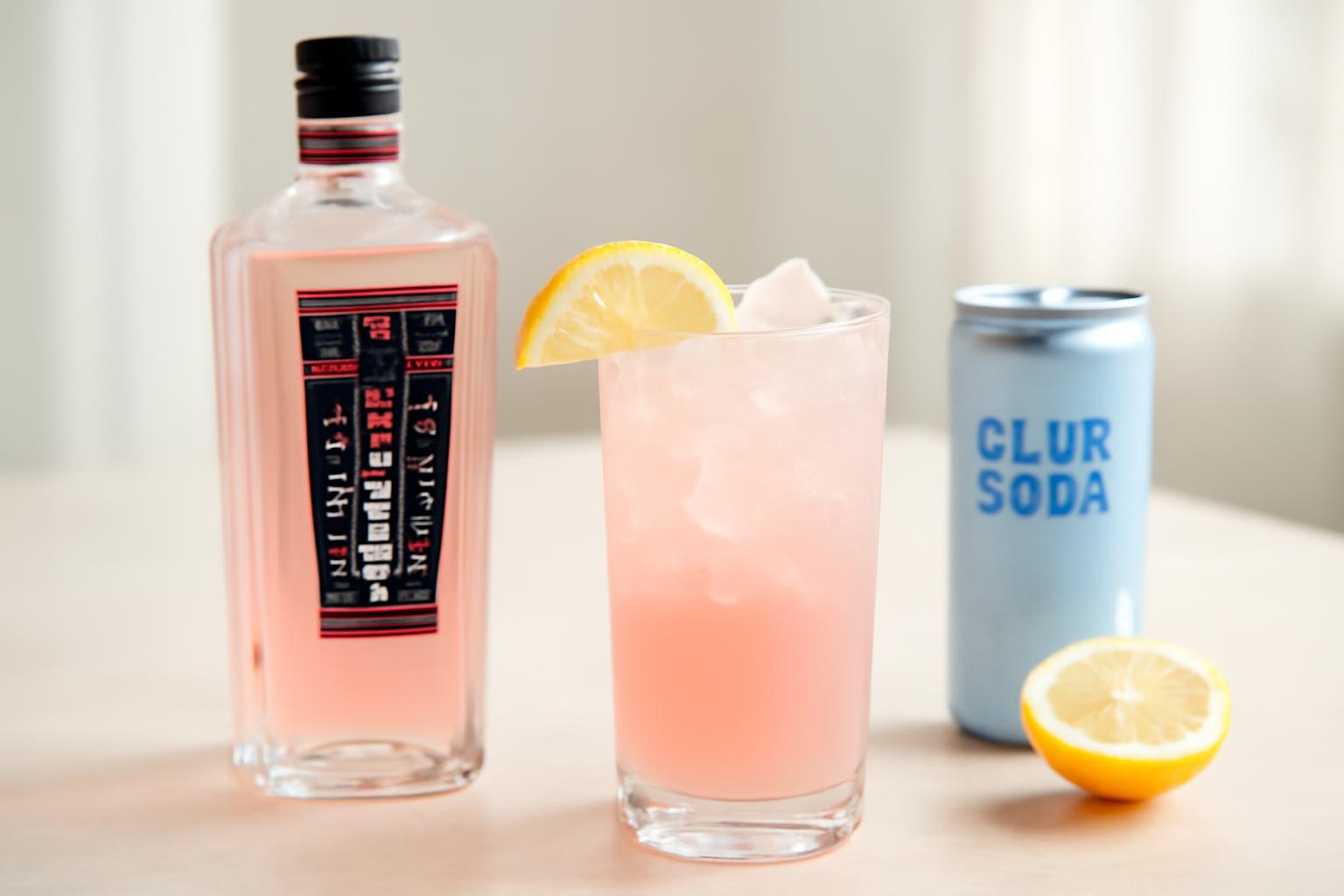
Pink Whitney is already sweet, tart, and lemon-forward, so the most useful mixer depends on what you want to change. Club soda makes a longer, less-sweet drink. Lemon-lime soda reinforces the citrus and sweetness. Cranberry and fresh lime add tart fruit flavor, ginger mixers add spice, and dry sparkling wine creates a spritz while adding more alcohol.
The simplest starting point is a measured 2 oz Pink Whitney pour with 4–5 oz club soda or seltzer over ice. From there, add more carbonation or a small squeeze of fresh citrus to taste. Measuring matters because the Pink Whitney pour, mixer, and any additional wine or liqueur determine the finished drink’s alcohol and estimated calorie total.
What Pink Whitney Is: The Quick Product Primer
Pink Whitney is New Amsterdam pink-lemonade-flavored vodka. It is a flavored spirit, not a ready-to-drink cocktail containing vodka plus a full serving of lemonade. The pink-lemonade flavor is incorporated into the bottled spirit before anything is poured or mixed at home.
That distinction affects how it works in a drink. Because Pink Whitney starts sweet, tart, and lemon-forward, adding lemonade or regular soda intensifies flavors that are already present. Club soda, seltzer, fresh citrus, cranberry juice, ginger mixers, and dry sparkling wine can instead dilute, sharpen, contrast, or redirect that flavor.
Retailer listings report Pink Whitney at 30% alcohol by volume, or 60 proof, although the available brand pages do not display that specification. Treat the current physical bottle as the controlling source; one retailer’s Pink Whitney listing reports 30% ABV.
For comparison, standard vodka is commonly associated with 40% ABV, or 80 proof, while Pink Whitney is reported at 30% ABV. That lower percentage does not make a large or rapidly consumed pour low in alcohol. Pour volume matters alongside ABV.
Common serving options include:
- Freezer-chilled and poured without a mixer
- Served over ice
- Lengthened with a nonalcoholic mixer
- Combined with juice or fresh citrus
- Mixed with another alcoholic ingredient, such as sparkling wine or liqueur
The origin is best understood as the brand’s account rather than independently established product history. According to the official Pink Whitney brand story, Spittin’ Chiclets hosts Paul Bissonnette and Ryan Whitney mixed New Amsterdam Vodka with pink lemonade, and listener interest helped prompt a bottled version featuring lemon notes.
That history does not establish one correct serving method. It does help explain why Pink Whitney behaves differently from plain vodka in a recipe: some of the sweetness and citrus that would ordinarily be added separately are already built into the spirit.
What to Mix With Pink Whitney: Choose by Flavor Outcome
There is no objectively best Pink Whitney mixer. Choose according to whether you want dilution, additional sweetness, acidity, fruit, spice, bitterness, or a second alcoholic component.
| Mixer | Starting amount or ratio | Expected flavor outcome | Optional garnish |
|---|---|---|---|
| Club soda or seltzer | 1 part Pink Whitney to 2–2.5 parts mixer | Lighter, less sweet and more carbonated | Lemon wheel or peel |
| Unsweetened sparkling water | 1 part Pink Whitney to 2–3 parts mixer | Diluted and sparkling; flavored varieties may add aroma | Lemon or lime wedge |
| Lemon-lime soda | 4–12 oz for 2 oz Pink Whitney | Sweeter citrus highball with more dilution as soda increases | Lemon or lime wheel |
| Cranberry juice | 1 oz with 2.5 oz Pink Whitney, plus lime | Tart fruit flavor with concentrated sweetness | Lime wheel |
| Fresh lemon or lime juice | Add in small increments | Sharper acidity and lower perceived sweetness | Citrus twist |
| Ginger beer | Add gradually to taste | More forceful ginger spice and carbonation | Lime wedge |
| Ginger ale | Add gradually to taste | Softer ginger-and-soda character | Lemon wheel |
| Dry sparkling wine and club soda | Equal parts for the measured spritz below | Drier, wine-led spritz with added alcohol | Lemon peel |
| Tonic water | Add gradually to taste | Bitter-sweet contrast and carbonation | Lemon or grapefruit peel |
For the least added sweetness, begin with club soda, seltzer, or unsweetened sparkling water. A practical highball range is 1 part Pink Whitney to 2–2.5 parts carbonated water. These mixers increase volume and carbonation without supplying the sugar found in regular soda.
Lemon-lime soda takes the drink in the opposite direction. With a 2 oz Pink Whitney pour, approximately 4–6 oz soda produces a more spirit-forward highball. Increasing the soda toward 12 oz makes the drink longer, sweeter, and more diluted. A published two-ingredient recipe permits 2 oz Pink Whitney with up to 12 oz lemon-lime soda, while noting that the actual quantity depends on the glass and amount of ice. Twelve ounces is therefore a flexible upper option, not a required universal ratio.
For tart fruit character, use cranberry juice in a restrained quantity and add fresh lime. The measured Pink Cosmo below uses 2.5 oz Pink Whitney, 1 oz cranberry juice, and 0.25 oz lime juice.
Fresh lemon or lime is the most direct correction when a mixed drink tastes too sweet. Add it gradually. Too much citrus can also make the result aggressively sour.
Ginger beer and ginger ale serve different flavor roles. Formulations vary, and either category may contain substantial sugar. Use the individual product’s taste and nutrition label instead of assuming one is always dry or lower in calories.
A spritz combines dry sparkling wine for wine flavor with club soda for nonalcoholic dilution. Unlike club soda, sparkling wine contributes ethanol. A Pink Whitney spritz can therefore contain more total alcohol than a highball made with the same Pink Whitney pour.
Tonic provides bitter-sweet contrast, but it is not automatically sugar-free or low in calories.
These combinations work through several straightforward mechanisms:
- Dilution reduces the intensity of the sweetness, citrus flavor, and alcohol concentration in each sip.
- Acid creates a tart counterpoint to sweetness.
-
Dry, bitter, or spicy flavors provide contrast instead of adding more lemonade character.
-
Additional alcoholic ingredients increase total alcohol even when the finished drink tastes light or sparkling.
Carbonation, sweetness, and glass size do not reveal how much alcohol a drink contains. That requires measuring every alcoholic ingredient.
Five Measured Pink Whitney Drink Recipes
These recipes come from third-party recipe publishers and are not presented as official New Amsterdam or Pink Whitney formulas. Milliliter conversions are approximate, and each recipe yields one drink. They have been standardized here for readability; the source material does not establish that CaloriePages independently tested them.
1. Less-sweet Pink Whitney highball
Yield: 1 drink Sweetness: Lower than a regular-soda build Alcohol beyond Pink Whitney: No
Ingredients
- 2 oz (59 mL) Pink Whitney
- 4–5 oz (118–148 mL) club soda or seltzer
- Ice
- Optional lemon wheel or peel
Method
- Fill a highball glass with ice.
- Add the measured Pink Whitney.
- Top with 4 oz club soda.
- Stir briefly and taste.
- Add the final ounce if you want more dilution.
- Garnish with lemon if desired.
This is a two-ingredient starting recipe rather than an official manufacturer formula. A published cocktail guide similarly uses 2 oz Pink Whitney with approximately 4 oz club soda or seltzer. The fifth ounce provides room to adjust after tasting.
2. Pink Whitney and lemon-lime soda
Yield: 1 drink Sweetness: Medium to high, depending on soda quantity Alcohol beyond Pink Whitney: No
Ingredients
- 2 oz (59 mL) Pink Whitney
- 4–12 oz (118–355 mL) lemon-lime soda
- Ice
- Optional lemon or lime wheel
Method
- Fill a highball glass or large tumbler with ice.
- Pour in the measured Pink Whitney.
- Add 4–6 oz soda for a more spirit-forward build.
- Add more soda if you want a longer, sweeter and more diluted drink.
- Stir gently to preserve carbonation.
The published recipe allows 2 oz Pink Whitney and up to 12 oz soda, with the amount adjusted for the glass and ice. Four ounces creates a 1:2 spirit-to-mixer ratio; 12 oz creates a 1:6 ratio. The larger version contains the same Pink Whitney pour but three times as much soda, so it usually adds more mixer sugar and calories even though the spirit tastes less prominent.
3. Pink Cosmo
Yield: 1 drink Sweetness: Medium, with tart cranberry and lime Alcohol beyond Pink Whitney: No
Ingredients
- 2.5 oz (74 mL) Pink Whitney
- 1 oz (30 mL) cranberry juice
- 0.25 oz (7 mL) fresh lime juice
- Ice
Method
- Add all ingredients to a cocktail shaker filled with ice.
- Shake until chilled.
- Strain into a chilled cocktail glass.
- Garnish with lime if desired.
The published Pink Cosmo formula uses 2.5 oz Pink Whitney, 1 oz cranberry juice, and 0.25 oz fresh lime juice. Cranberry adds fruit flavor and tartness, while lime creates a sharper finish.
This recipe contains 25% more Pink Whitney than a highball made with a 2 oz pour. Its serving glass may look smaller, but glass size does not determine alcohol content.
4. Strawberry Pink Whitney
Yield: 1 drink Sweetness: Medium to high, depending on the fruit Alcohol beyond Pink Whitney: No
Ingredients
- 2–3 strawberries, hulled and sliced
- 3 oz (89 mL) Pink Whitney
- 1 oz (30 mL) club soda
- Ice
Method
- Gently muddle the strawberries in the bottom of a glass.
- Add the measured Pink Whitney and ice.
- Top with club soda.
- Stir to combine.
The published strawberry variation uses 3 oz Pink Whitney, 1 oz club soda, and muddled strawberries. Because the recipe contains only 1 oz club soda, it is considerably more concentrated than the less-sweet highball.
It also uses a larger Pink Whitney pour. Measure the spirit rather than filling the glass by eye. Extra club soda can lengthen the drink without adding another alcoholic ingredient.
5. Pink wine spritzer
Yield: 1 drink Sweetness: Medium; drier when made with dry sparkling wine Alcohol beyond Pink Whitney: Yes—sparkling wine
Ingredients
- 2 oz (59 mL) Pink Whitney
- 2 oz (59 mL) dry sparkling wine
- 2 oz (59 mL) club soda
- Ice
- Optional lemon peel
Method
- Fill a wine glass with ice.
- Add Pink Whitney.
- Pour in the chilled dry sparkling wine.
- Top with club soda and stir gently.
- Garnish with lemon peel if desired.
This published spritzer uses equal 2 oz portions of Pink Whitney, dry sparkling wine, and club soda. Because it contains two alcoholic ingredients, its total strength cannot be assessed from the Pink Whitney measure alone.
Dry sparkling wine limits additional sweetness compared with a sweeter wine style, but it still contributes calories and ethanol. Use the wine’s own ABV and serving information when calculating the complete drink.
Optional advanced variation: Lemonade martini
For a more ingredient-heavy cocktail, shake together:
- 1.5 oz (44 mL) Pink Whitney
- 1.5 oz (44 mL) fresh lemon juice
- 1 oz (30 mL) simple syrup
- 0.5 oz (15 mL) limoncello
- Ice
Strain into a chilled glass. This lemonade martini formula includes simple syrup and limoncello, making it sweeter and more complex than a soda highball. It also contains alcohol beyond Pink Whitney, so the drink’s total cannot be calculated from the vodka pour alone.
How to Make a Pink Whitney Drink Less Sweet
Correct sweetness gradually. It is easy to add more soda or acid, but difficult to remove either one after a drink has become watery or sour.
Use this sequence:
- Add more ice if the glass has room.
- Add 1 oz club soda or seltzer.
- Stir briefly and taste.
- Add another ounce of soda if needed.
- Finish with a small squeeze of fresh lemon or lime.
- Taste again before adding more acid.
When starting from scratch, use a practical build of 1 part Pink Whitney to 2–3 parts nonalcoholic mixer, followed by fresh citrus to taste. For a 2 oz pour, that means 4–6 oz mixer. Begin at the lower end if you want the vodka’s flavor to remain prominent or at the upper end for more dilution.
Replacing regular lemon-lime soda with club soda, seltzer, or unsweetened sparkling water is the most direct way to reduce added sweetness. The finished drink may still taste sweet because Pink Whitney is flavored, but the mixer is not adding the sugar supplied by regular soda.
Ingredients that generally push the drink in a sweeter direction include:
- Lemonade
- Regular lemon-lime soda
- Simple syrup
- Grenadine
- Sweet liqueurs
- Sweet sparkling wine
- Large quantities of sweetened juice
Cranberry juice can provide tart fruit character, but it may also contain sugar and calories.
Fresh citrus offers finer control because it can be added by the teaspoon or quarter-ounce. Lemon reinforces the drink’s existing profile, while lime introduces a different acidic edge. In either case, acidity counters perceived sweetness; it does not extract sugar from the glass.
For a wine spritz, choose dry sparkling wine instead of a sweeter style. This can make the flavor seem less sugary, but wine adds alcohol. If the goal is both less sweetness and no additional alcohol, use club soda instead.
Ice and nonalcoholic mixers increase total volume and lower the alcohol concentration in each sip. They do not remove the ethanol already present in the measured Pink Whitney pour.
How Strong Is a Pink Whitney Drink?
Retailer and third-party listings report Pink Whitney at 30% ABV, but the current bottle label should be checked because the available official brand pages do not display that specification. Under the U.S. proof convention, 30% ABV corresponds to 60 proof.
ABV describes the proportion of a beverage’s volume that is alcohol. Neither figure tells you how much alcohol is in a particular drink until you also know the pour volume.
Drinkmeter, a third-party calculator, estimates that a 1.5 oz (45 mL) pour at 30% ABV contains approximately 10.7 g of ethanol. The same calculator uses 14 g of ethanol as one U.S. standard drink and estimates that pour at approximately 0.76 standard drinks. These are calculator-based estimates assuming 30% ABV and an accurately measured pour, not bottle-specific laboratory results; the source also inconsistently labels 45 mL elsewhere in its interface. See the Pink Whitney alcohol calculation.
Using those cited inputs, the proportional calculation for a 2 oz pour is:
- 1.5 oz Pink Whitney ≈ 10.7 g ethanol
- 2 oz ÷ 1.5 oz ≈ 1.33
- 10.7 g × 1.33 ≈ 14.3 g ethanol
- 14.3 g ÷ 14 g per standard drink ≈ 1.02 standard drinks
Rounded for practical comparison, a 2 oz Pink Whitney pour is approximately one U.S. standard drink, assuming the reported 30% ABV and the calculator’s 14 g definition. This estimate covers only Pink Whitney. It excludes sparkling wine, limoncello, triple sec, or any other alcoholic ingredient.
The table below applies the same proportional calculation to the measured recipes. All values assume 30% ABV and accurate pours.
| Drink | Pink Whitney pour | Estimated standard drinks from Pink Whitney only |
|---|---|---|
| Measured 1.5 oz pour | 1.5 oz | 0.76 |
| Less-sweet highball | 2 oz | About 1.0 |
| Pink Whitney and soda | 2 oz | About 1.0 |
| Pink Cosmo | 2.5 oz | About 1.27 |
| Strawberry variation | 3 oz | About 1.52 |
| Wine spritzer | 2 oz | About 1.0, plus sparkling wine |
| Lemonade martini | 1.5 oz | About 0.76, plus limoncello |
These are proportional estimates, not predictions of impairment or blood alcohol concentration. Individual effects cannot be determined from this table.
Adding 5 oz club soda to 2 oz Pink Whitney creates approximately 7 oz of liquid before ice melt, but the original estimated alcohol amount remains unchanged. The same applies when 12 oz lemon-lime soda is used: the finished drink becomes larger and less concentrated without containing less ethanol from the original spirit pour.
The Pink Cosmo shows why glass size can be misleading. Its 2.5 oz Pink Whitney measure contains 25% more Pink Whitney than a 2 oz highball, even if the strained cocktail appears smaller.
A complete standard-drink estimate is not provided for the wine spritzer or limoncello martini because the ABV of the additional alcoholic ingredients is not specified here. To calculate either one, use the actual wine or liqueur label and count every alcoholic component.
Measure pours and do not infer strength from sweetness, carbonation, or serving-glass size. Alcoholic-beverage warnings advise against driving or operating machinery after drinking; retailer product information reproduces the applicable U.S. government alcohol warning.
Calories and Sugar: What Can and Cannot Be Estimated
The available evidence does not include a current manufacturer-verified Pink Whitney nutrition label. An official calorie or sugar value therefore cannot be presented here.
Drinkmeter estimates about 100 calories in a 1.5 oz (45 mL) pour, attributing approximately 75 calories to alcohol and 25 to sugars and carbohydrates. This is not a manufacturer figure. The calculator’s interface also inconsistently labels 45 mL as both 1 oz and 1.5 oz; 45 mL is approximately 1.5 U.S. fluid ounces. Treat the estimate as a provisional tracking value rather than verified product nutrition.
If that third-party estimate is scaled proportionally, the arithmetic for a 2 oz Pink Whitney portion is:
100 calories × (2 oz ÷ 1.5 oz) ≈ 133 calories
The resulting 133-calorie figure is illustrative and applies only to the Pink Whitney portion. It is not an official label value and excludes soda, juice, syrup, fruit, wine, liqueur and garnish.
Recipe-level totals can vary substantially. The publisher of the lemonade martini estimates 237 calories, 36 g carbohydrate, and 27 g sugar per cocktail. Those figures depend on the brands, measurements, simple syrup, limoncello and preparation, so they do not establish the nutrition of every lemonade martini or Pink Whitney itself. The estimates appear with the publisher’s Pink Whitney lemonade martini recipe.
Mixer choice is often the largest controllable difference:
- Club soda and seltzer provide dilution without the sugar supplied by regular soda.
- Regular soda can add progressively more calories as its quantity increases.
- Juice contributes calories and may contain naturally occurring or added sugar.
- Simple syrup and grenadine are concentrated sweeteners.
- Cream-based ingredients can add fat and calories.
- Wine and liqueurs contribute calories as well as additional alcohol.
MedlinePlus notes that cocktails made with soda, juice, cream, or ice cream can have especially high calorie totals. Its generic value for 1.5 oz of 80-proof vodka should not be applied directly to Pink Whitney, however, because Pink Whitney is flavored and reportedly 60 proof. The alcohol and carbohydrate contributions may differ. See the MedlinePlus alcoholic-beverage calorie overview for general context.
For a more useful estimate of your own drink:
- Check the physical Pink Whitney bottle for current serving or nutrition information, if provided.
- Measure the Pink Whitney pour instead of estimating it by eye.
- Record the labeled calories for the exact soda, juice, wine or other mixer used.
- Add calories from syrups, liqueurs, cream and other ingredients.
- Add the individual ingredient totals.
- For a batch, divide by the number of equal servings actually poured.
For example, if a pitcher is intended to provide eight servings but is poured into six large glasses, dividing its calories by eight understates the amount in each glass. The divisor must match the servings actually produced.
For additional comparisons, CaloriePages has a dedicated guide to measured low-calorie mixed drinks. That does not mean Pink Whitney has been independently analyzed by CaloriePages; it provides a framework for comparing measured spirit pours and mixers.
When exact sugar, ingredients, coloring, or allergen information matters, inspect the current physical bottle or contact the producer. The available retailer descriptions are too incomplete to establish a full ingredient, allergen, sugar, or nutrition profile.
How to Scale Pink Whitney Drinks for a Party
Scale a measured recipe through multiplication rather than pouring by eye. The less-sweet highball uses 2 oz Pink Whitney and 4–5 oz club soda per serving. Multiplying each quantity by eight produces the following service plan:
- 16 oz (473 mL) Pink Whitney
- 32–40 oz (946–1,183 mL) club soda
- Ice for eight glasses
- Optional lemon wheels or peels
The ounce totals are direct arithmetic from the measured single-serving highball:
- Pink Whitney: 2 oz × 8 = 16 oz
- Club soda: 4–5 oz × 8 = 32–40 oz
Measure and chill the 16 oz Pink Whitney in a sealed container. Keep the club soda separate, prepare eight glasses with fresh ice, divide the spirit evenly, and add 4–5 oz club soda to each glass immediately before serving.
You can place the measured Pink Whitney in a chilled pitcher, but hold back the carbonated mixer.
Chill the spirit, mixer, glasses, and serving vessel before assembly.
Avoid filling a pitcher with ice far in advance. Add fresh ice to individual glasses or put it in the pitcher shortly before pouring.
Keep the wine spritzer separate when counting alcohol and servings. An eight-serving highball batch contains Pink Whitney as its only alcoholic ingredient. An eight-serving batch of the equal-parts spritzer would also contain 16 oz sparkling wine, calculated from 2 oz per serving. The two batches therefore do not contain the same alcohol total.
Practical hosting steps include:
- Label alcoholic and nonalcoholic pitchers clearly.
- Use a measuring cup or jigger for the spirit.
- Write the intended serving count on the container.
- Keep extra chilled mixer separate.
- Do not top up a partially emptied alcoholic pitcher without recording what was added.
- Offer water and a clearly differentiated nonalcoholic option.
For a nonalcoholic pink drink, replace Pink Whitney with pink lemonade and combine it with lemon-lime soda or sparkling water. Add fresh lemon if the mixture is too sweet. Because pink lemonade and regular soda may both be sweetened, begin with a modest amount of lemonade and adjust with the carbonated ingredient.
No single batch ratio is appropriate for every brand because sweetness varies. Taste the nonalcoholic mixture before service and add the carbonated component shortly before pouring.
Buying, Bottle Labels, and Facts to Verify
Pink Whitney’s website includes a ZIP-code store locator, but the brand says its results are approximate, based on information from independent distributors, and do not guarantee current inventory. Use the official Pink Whitney locator as a lead rather than proof that a nearby retailer has the bottle.
Before traveling, call the retailer and confirm:
- Whether Pink Whitney is currently in stock
- Which bottle size is available
- The current price
- Any pickup or purchase restrictions
- Whether the listing refers to the flavored vodka rather than another product or package
Retailers display multiple bottle formats, but that does not mean every size is sold in every market. Prices are similarly tied to bottle size, retailer, location, fulfillment method, and date. A captured online price should not be treated as a normal national price.
Check the current physical bottle for:
- Alcohol by volume and proof
- Bottle size
- Serving details
- Ingredient disclosures
- Artificial-color disclosures
- Allergen information
- Nutrition or calorie information, if provided
- Any market-specific labeling
Retailer pages may be incomplete or outdated. The available online evidence does not establish Pink Whitney’s complete ingredient, allergen, sugar, coloring, or nutrition profile.
Frequently Asked Questions
Does Pink Whitney already contain lemonade?
Pink Whitney is pink-lemonade-flavored vodka, not a ready-to-drink glass containing vodka plus a full serving of lemonade. Its bottled flavor is already sweet, tart, and lemon-forward, so lemonade is optional rather than necessary.
The brand says the original drink combined New Amsterdam Vodka with pink lemonade. The commercial product that followed is a flavored spirit, not simply a full vodka-and-lemonade highball packaged in a bottle.
What is the easiest two-ingredient Pink Whitney drink?
Combine 2 oz (59 mL) Pink Whitney with 4–5 oz (118–148 mL) club soda or seltzer over ice and stir briefly. This is the most straightforward option when you want dilution and carbonation without the sugar contributed by regular soda.
For a sweeter two-ingredient drink, use lemon-lime soda. Begin with 4–6 oz and add more after tasting. A published recipe permits up to 12 oz, but that creates a much longer and usually sweeter drink.
Is Pink Whitney 30% alcohol?
Retailer and third-party listings report 30% ABV, or 60 proof. The current physical bottle should be treated as the controlling source because the available official brand pages do not display the ABV specification.
At the reported strength, Pink Whitney is lower in ABV than the 40% commonly associated with standard vodka. A large or unmeasured pour can still contain a substantial amount of alcohol.
How many calories are in a shot of Pink Whitney?
There is no current manufacturer-verified nutrition value in the available evidence. A third-party calculator estimates approximately 100 calories per 1.5 oz (45 mL) pour, but that figure should be treated as provisional rather than official.
“Shot” is imprecise because shot glasses and home pours vary. Record the actual ounces or milliliters. Scaling the third-party estimate gives approximately 133 calories for a 2 oz Pink Whitney portion before mixers, but that remains an illustrative calculation.
Can I make a nonalcoholic version of a Pink Whitney drink?
Yes. Replace Pink Whitney with pink lemonade, then add lemon-lime soda or sparkling water over ice. Fresh lemon can make the result tarter.
Because pink lemonade and regular soda may both contain sugar, use sparkling water for some or all of the carbonated component when you want less added sweetness. Label the nonalcoholic version clearly when serving it alongside cocktails.
A Practical Starting Pour
For a straightforward Pink Whitney drink, start with a measured 2 oz pour and 4–5 oz club soda over ice. Taste before adjusting. Add more soda or a small amount of fresh citrus for a less-sweet result, or substitute lemon-lime soda when more sweetness is wanted.
Cranberry changes the fruit profile, ginger adds spice, and dry sparkling wine produces a spritz while increasing the alcohol total. Whatever the recipe, use the current bottle label for product disclosures and count every alcoholic ingredient—not only the Pink Whitney—when assessing the finished drink. This information is general education, not individualized medical or dietary advice.