
Does Granola Contain Gluten? The Risks of Oats and Additives Explained
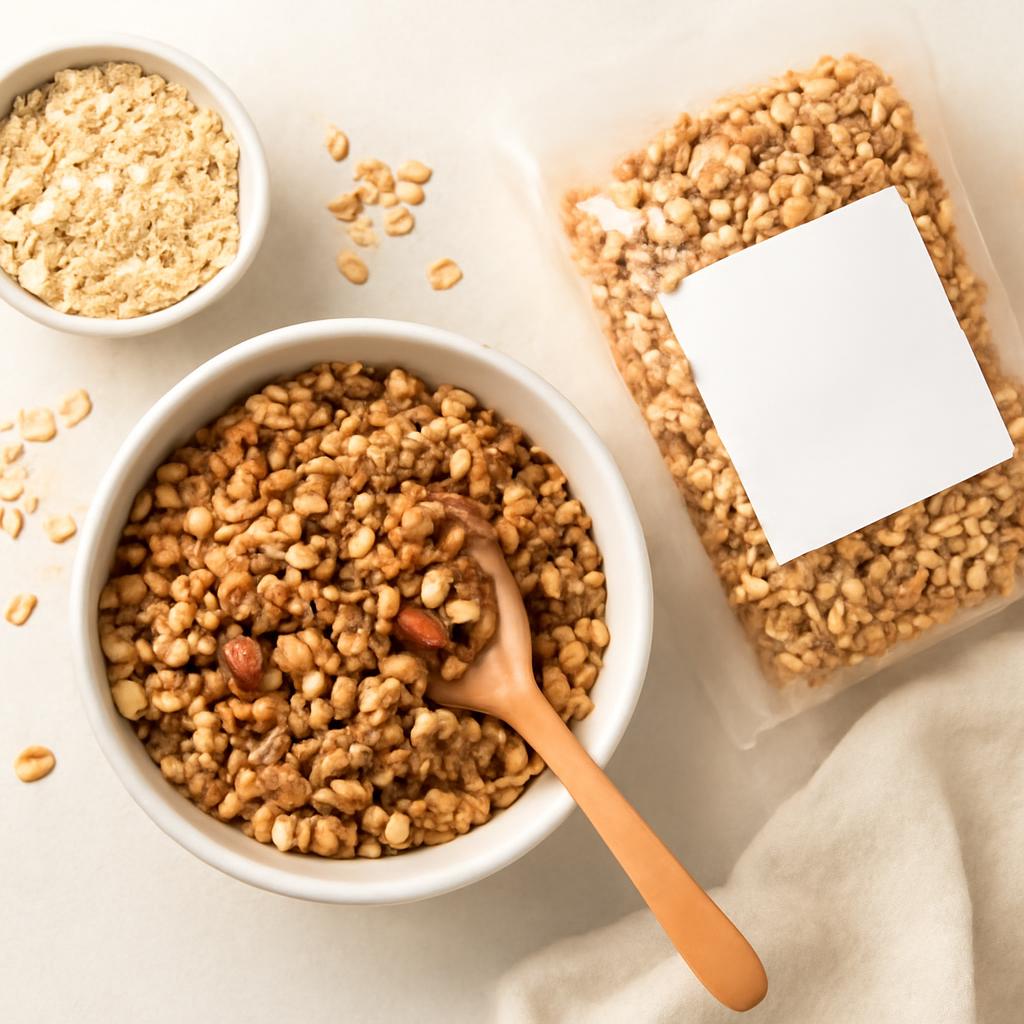
Gluten can enter when oats encounter wheat, barley or rye in the supply chain, or through wheat flour, wheat germ or barley malt added to the recipe.
If you are asking “do granola have gluten,” the most accurate short answer is: not inherently, but you should not assume granola is gluten-free unless the package says so. Plain granola ingredients such as oats, nuts, seeds, oil, and sweeteners do not automatically contain gluten. The trouble is that oats are a known cross-contact risk, and packaged granola may also include direct gluten ingredients such as wheat, barley, rye, or malt. For people with celiac disease, that distinction matters because strict gluten avoidance is the treatment. (Celiac Disease Foundation, AGA GI Patient Center)
So the practical shelf answer is simple: granola can be gluten-free, but it is not a food you should treat as gluten-free by default. The label, ingredient list, and oat sourcing matter more than the product category name. And if you also track carbohydrates, why gluten-free and low-carb are different labels explains why those two ideas overlap less than many shoppers expect.
What Is Gluten and Why Check Granola?
Gluten is a protein found in wheat, barley, rye, and related grains, while pure oats do not naturally contain gluten. That is why granola is tricky: its basic idea sounds gluten-free, but the finished product may not be. (Celiac Disease Foundation, Wheat by the Wayside)
Traditional granola is usually built from rolled oats, nuts, seeds, oil, and a sweetener such as honey or maple syrup. None of those ingredients requires gluten. Risk enters later, when oats have been exposed to gluten-containing grains somewhere in the supply chain, or when the recipe adds ingredients like wheat flour, wheat germ, barley malt, or rye.
In the United States, a packaged food may be labeled “gluten-free” if it contains less than 20 parts per million of gluten, including gluten introduced by cross-contact. The same rule applies to oats labeled gluten-free. But the FDA framework does not require manufacturers to run routine gluten testing before making that claim. That means a gluten-free label is legally meaningful, but it is not the same thing as a promise of zero gluten.
For people with celiac disease, this is not a minor technicality. The AGA states that a strict, lifelong gluten-free diet is the treatment for celiac disease and emphasizes careful label reading. (AGA GI Patient Center)
Are Oats in Granola Gluten-Free?
Pure oats themselves do not contain gluten, but ordinary oat-based granola is still not automatically safe. The central problem is cross-contact. Oats may share fields, harvesting equipment, trucks, storage, or mills with wheat, barley, and rye, which is why regular oats are often not treated as gluten-free unless they are specifically labeled that way.
That is the first important distinction: “oats” and “gluten-free oats” are not the same shopping signal. Both the Celiac Disease Foundation and AGA advise avoiding oats unless the product is labeled gluten-free.
A second distinction is between a standard gluten-free oat claim and purity protocol oats. Specialty gluten-free guidance uses “purity protocol” to mean oats produced through a dedicated gluten-free chain, with controls from growing through milling and distribution. In other words, the contamination-prevention step happens earlier, before the oats ever become a finished cereal or granola ingredient. A standard gluten-free claim tells you the food is supposed to meet the legal threshold; purity protocol describes a stricter approach to keeping gluten out of the oat supply itself.
That does not mean all other gluten-free oats are unsafe, and it does not mean purity protocol is a guarantee. It is better understood as a stronger sourcing signal for shoppers who are especially cautious about oat contamination.
There is also a separate tolerance question. The Celiac Disease Foundation notes that some people may react to avenin, the protein in oats, even when the oats meet gluten-free labeling standards. So even a carefully sourced, labeled gluten-free oat granola may not work for every person.
The practical rule is:
- pure oats do not inherently contain gluten,
- ordinary oats may be contaminated,
- gluten-free oats reduce that risk,
- purity protocol oats try to control risk earlier,
- and some people still do better avoiding oats entirely.
Hidden Gluten Sources in Commercial Granola
Oats are only part of the problem. Many packaged granolas also contain direct gluten ingredients.
The clearest red flags are wheat flour, wheat germ, barley, rye, malt, malt extract, malt vinegar, malt flavor, and brewer’s yeast. If those appear on a granola label, the product is not a safe gluten-free choice.
Some ingredients are less straightforward. Terms such as modified starch, modified food starch, natural flavors, artificial flavors, dextrin, or certain proteins do not always mean gluten is present, but they may deserve a closer look when the package is not clearly labeled gluten-free. Verywell Health specifically recommends extra caution with ingredients like modified starch, flavors, dextrin, and oats unless the source is confirmed.
Granola bars usually deserve more suspicion than loose granola. The reason is not that bars must contain gluten, but that they often involve more binders, coatings, crisped grains, flavor systems, and processing steps. Verywell Health lists granola bars among foods especially likely to require label checking, and the AGA’s avoid-list shows how easily barley- or malt-based ingredients can enter processed snack foods.
So when you scan commercial granola, think in two layers:
- Is the oat base itself controlled?
- Did the manufacturer add gluten back in through binders, flavorings, or grain-based extras?
That is the same label-reading skill used in other foods with hidden grain ingredients. If you have already practiced checking soy-based sauces for hidden gluten, the logic is very similar here.
How to Read Granola Labels for Gluten-Free Safety
Granola label reading works best as a sequence, not a glance.
1. Look first for a clear gluten-free claim. Under FDA rules, that means the food should contain less than 20 ppm gluten. That standard includes cross-contact, not just deliberate ingredients.
2. Prefer third-party certification when you can get it. The Gluten-Free Certification Organization (GFCO), described by GIG, uses a stricter threshold of less than 10 ppm gluten and includes ingredient review, plant audits, and ongoing testing. Beyond Celiac also presents certified gluten-free products as the safest products to buy. Certification is not required for a product to be safe, but it adds another layer of oversight beyond a manufacturer’s own label claim. (GIG)
3. Read the ingredient list for the direct problem grains. Check for wheat in all forms, barley, rye, malt, malt flavor, malt extract, and brewer’s yeast. If the product contains oats, confirm that they are represented as gluten-free oats, not just oats.
4. Read the allergen statement, but do not stop there. If the label says “Contains: Wheat,” avoid it. But the absence of wheat is not enough to clear the product, because barley and rye are not covered the same way under U.S. major-allergen labeling. A package can omit wheat from the allergen statement and still contain gluten from another grain source. (GIG)
5. Do not confuse “wheat-free” with “gluten-free.” A product can be wheat-free and still contain barley or rye. Conversely, the Celiac Disease Foundation notes that some foods may legally contain gluten-free wheat starch and still meet the FDA gluten-free standard. “Wheat-free” answers a narrower question than “gluten-free.”
6. Treat advisory statements as weak signals. Phrases like “may contain wheat” or “processed in a facility with wheat” are voluntary and unregulated. The AGA says such statements are unreliable for predicting actual gluten risk, and GIG emphasizes that they should not outweigh a compliant gluten-free label or a trusted certification. The right takeaway is not to ignore them universally, but to understand that they are not standardized safety ratings.
7. If the label is unclear, contact the manufacturer. That is most useful when a product has oats, ambiguous additives, or no certification. Verywell Health recommends manufacturer follow-up when ingredient sourcing is unclear.
For label readers who also care about calorie math, the larger lesson is the same as in how food labels calculate calories: a printed claim is useful, but you still need to know what standard produced it and where uncertainty remains.
Certified Gluten-Free Granola: Examples and Caveats
If you want the most reliable packaged option, look for a stack of signals, not just one:
- a clear gluten-free claim,
- third-party certification when possible,
- oats that are specifically identified as gluten-free,
- and transparent manufacturing controls.
The strongest independent signal in the evidence is certification. GIG describes GFCO certification as stricter than the FDA minimum, and Beyond Celiac treats certified gluten-free products as the safest products to buy. (Beyond Celiac)
After that, look for transparency. Some manufacturers disclose details such as dedicated gluten-free production, separate production schedules, or lab testing. Those details are useful, but they are still self-reported manufacturer claims, not independent proof. In practice, that means a current certification mark or compliant package label should carry more weight than a marketing page or an old “safe brands” roundup.
This is also where shoppers often overgeneralize. Brand reputation is weaker than SKU-level verification. One product line may be labeled gluten-free while another is not, and certification or formulation can change over time. So the best buying habit is:
- prefer certified or clearly labeled gluten-free products,
- verify the exact variety in your hand,
- and recheck labels when you buy again.
That caveat matters because granola is a category where oats, flavor blends, and binders can change without the front of the bag looking very different.
Grain-Free Granola: The Safest Option for Celiacs
If oats are what make granola feel uncertain, the cleanest workaround is to remove them.
Grain-free granola is usually made from nuts, seeds, coconut, and sweeteners instead of oats. That does not automatically make it gluten-free, but it does remove the most common granola-specific contamination pathway: the oat supply chain. A specialty gluten-free source explicitly describes grain-free granola as the safest option for people with celiac disease for that reason. The cautious way to read that is: it may be the lowest oat-related risk format, not an automatic guarantee of safety.
For highly sensitive shoppers, grain-free granola has three practical advantages:
-
No oat sourcing question. You are not depending on whether the oats were controlled well enough to avoid wheat, barley, or rye contamination.
-
No avenin question. If you are one of the people who react poorly even to gluten-free oats, grain-free products avoid that issue entirely.
-
Same basic use cases. Grain-free clusters can still work as toppings, snack mixes, or a cereal substitute.
The important limit is simple: grain-free is not the same as verified gluten-free. You still need to read the label for malt, flavorings, or facility claims and look for a gluten-free statement or certification.
For nutrition trackers, grain-free granolas are often nut- and seed-heavy, which can make them more calorie-dense than oat-based versions. If you want a clearer comparison point for satiety and calories, see high-protein foods by calorie density.
Homemade Gluten-Free Granola: Control Your Risks
Homemade granola can be easier to trust because you control the ingredient list directly.
The key ingredient choice is straightforward: use certified gluten-free rolled oats, not generic oats, if you want an oat-based batch that fits a strict gluten-free approach. The AGA advises avoiding oats unless they are labeled gluten-free, and Well Plated’s gluten-free granola recipe does the same. (Well Plated)
A basic homemade formula is simple: combine gluten-free rolled oats with nuts and seeds, coat with oil plus honey or maple syrup, and bake at 350°F for about 15 to 20 minutes. Well Plated also notes that the template is easy to adapt for vegan or nut-free versions depending on your mix-ins. (Well Plated)
Homemade granola also gives you more control over variables that matter to label readers and trackers:
- sweetness,
- oil level,
- serving size,
- and optional add-ins like dried fruit or chocolate.
One recipe publisher notes that many store-bought granolas are heavy on added sugar and oil. That is partly a taste issue and partly a transparency issue: home batches make it easier to know exactly what went in.
If you are changing staple snacks and want body-weight trends to stay interpretable while symptoms or food choices shift, a broader practical TDEE explanation can help separate food-selection changes from overall energy balance.
Granola Bars vs Loose Granola: Key Differences
If you are choosing with limited information, loose granola is often easier to evaluate than a granola bar.
Loose granola usually comes down to two questions: are the oats actually gluten-free, and did the manufacturer add a direct gluten ingredient? Bars add more moving parts. They are more likely to include binders, coatings, crisped grains, and compound flavor systems, which creates more chances for gluten to enter. Verywell Health specifically lists granola bars among foods that commonly require careful gluten label checking.
That does not mean bars are unsafe by definition. It means the ingredient and production picture is usually more complex.
So the shelf-level comparison is:
- Loose granola: the main risks are oat contamination and obvious gluten add-ins.
- Granola bars: all the same oat risk, plus more opportunities for gluten through binders, coatings, and processed inclusions.
The bottom line is the same one that answers the original question: granola can be gluten-free, but assumptions are the problem. If you need the lower-risk packaged choice, start with a clearly labeled gluten-free product, prefer third-party certification when available, verify the oats, and consider grain-free if you want to avoid oat-related uncertainty altogether.
Is all granola gluten-free if it uses oats?
No. Using oats does not make granola automatically gluten-free. Pure oats do not naturally contain gluten, but ordinary oats are often exposed to wheat, barley, or rye during farming, transport, storage, or milling. On top of that, many granolas add direct gluten ingredients such as malt or wheat-based binders.
What matters is whether the oats are specifically represented as gluten-free and whether the finished product avoids gluten-containing additives.
What are purity protocol oats and why do they matter?
Purity protocol oats are oats produced through a dedicated gluten-free chain, with controls from growing through milling and distribution. They matter because oat contamination can happen long before the oats reach a granola factory. Compared with ordinary commercial oats, purity protocol oats aim to prevent contamination earlier in the process.
That does not make them perfect, but it does make them one of the strongest sourcing signals available for oat-based granola.
Can celiacs eat certified gluten-free granola safely?
In general, certified or clearly labeled gluten-free granola is the safest packaged category choice for people who need to avoid gluten, because it is tied to a formal standard rather than guesswork. The AGA says products labeled gluten-free are safe for people with celiac disease, GIG explains that certification adds audits and stricter thresholds in some programs, and Beyond Celiac presents certified gluten-free products as the safest products to buy.
The key nuance is that safe does not mean zero theoretical risk. It means the product is supposed to meet a defined standard, which is far better than relying on assumptions from the ingredient theme alone.
How reliable is the FDA gluten-free label on granola?
It is meaningful and useful, but not perfect. Under FDA rules, a packaged food labeled gluten-free must contain less than 20 ppm gluten, including gluten from cross-contact. That is a real legal standard. But manufacturers are not required to run routine testing before using the claim.
Third-party certification can improve confidence because some programs, such as GFCO, use stricter thresholds and auditing. Also remember that “gluten-free” does not mean zero gluten, and “wheat-free” does not mean gluten-free.
Are grain-free granolas always safe?
No. Grain-free is not the same as verified gluten-free. Removing oats eliminates the biggest granola-specific contamination pathway, which is why grain-free can be appealing to highly sensitive shoppers. But the finished product can still include problematic flavorings, additives, or manufacturing exposure if the label does not support it.
That is why grain-free granola is best understood as a lower-oat-risk format, not a free pass to skip label checking.
Sources
- Medical Organization · Label Reading & the FDA | Celiac Disease Foundation.
- Medical Organization · Gluten: reading a label - AGA GI Patient Center.
- Nonprofit Certification Organization · 3 Tips for Gluten-Free Label Reading - GIG® Gluten Intolerance Group®.
- Advocacy Organization · Reading Food Labels | BeyondCeliac.org.
- Health Publisher · Other Names for Gluten: Ingredients to Watch For.
- Specialty Gluten-Free Blog · Is Granola Gluten-Free? What to Look For and List of Safe Brands.
- Recipe Publisher · Gluten Free Granola – WellPlated.com.